Listening Skills
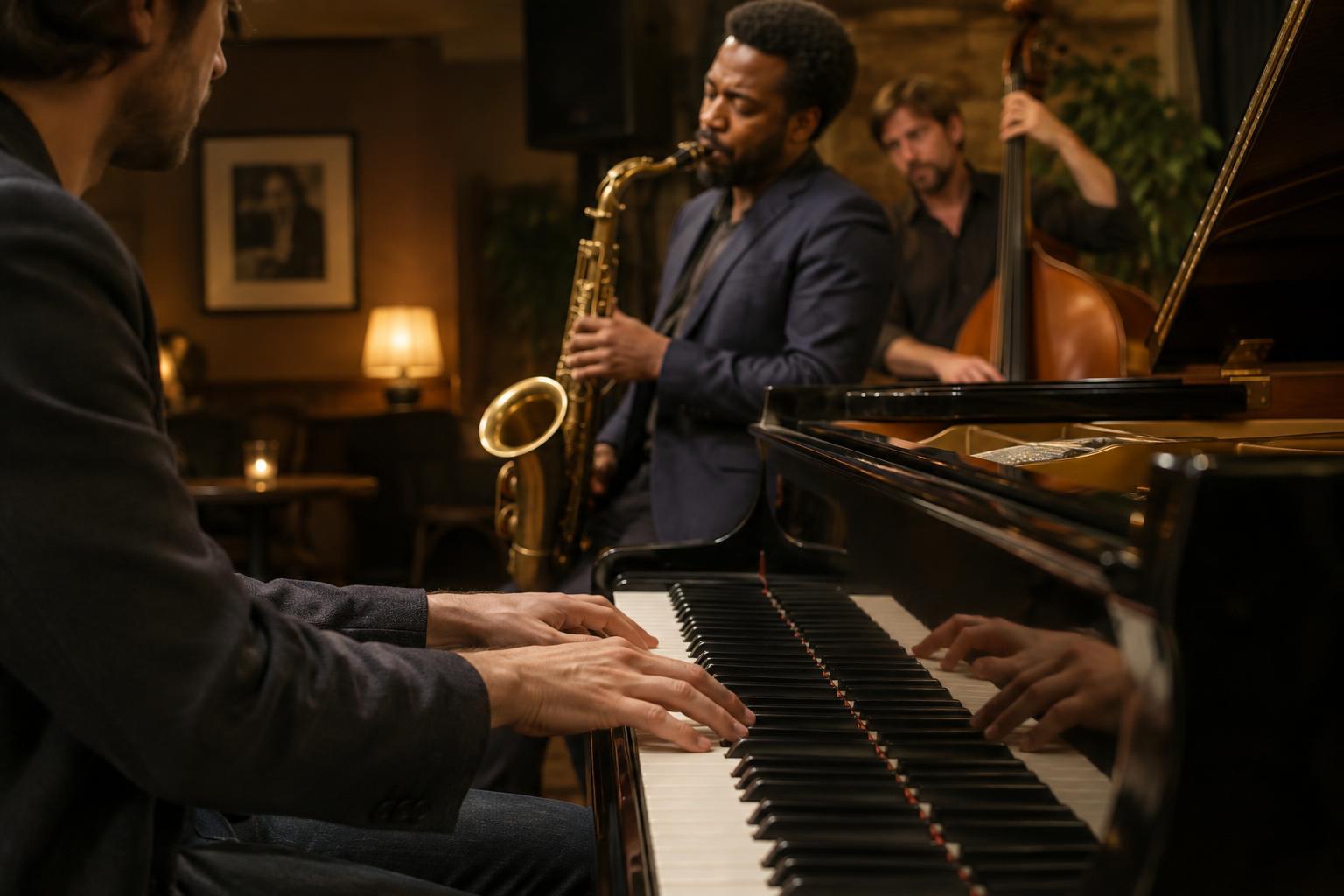
How to Listen to Jazz Comping Behind a Solo
The chords behind a jazz solo can shape its rhythm, color and momentum. Learn how to hear what a pianist or guitarist is doing without losing track of the soloist.
Read article · 3 min↗Jazz Styles
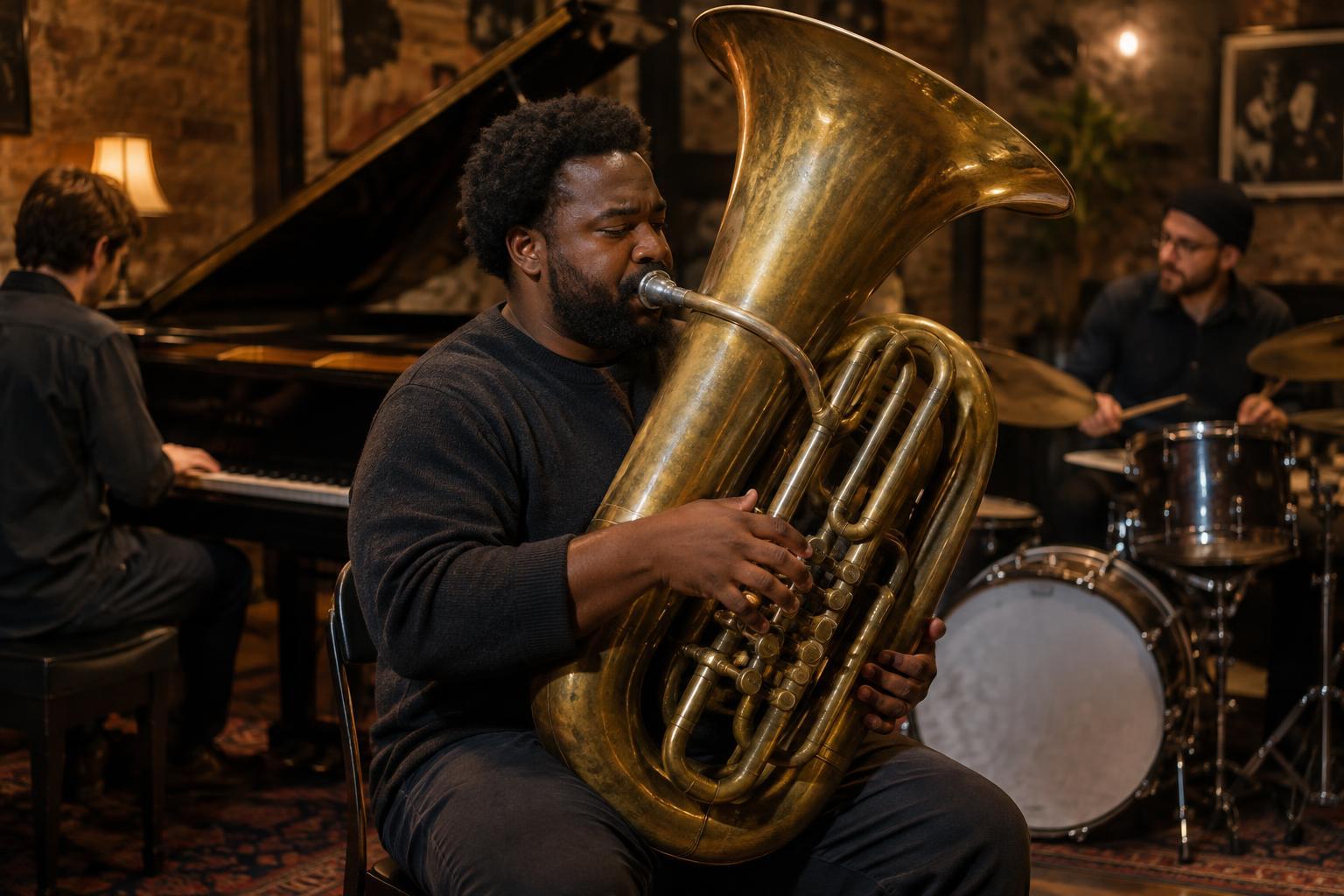
More to discover ↗The tuba can anchor a jazz ensemble, answer a melody, or step forward as a solo voice. Learn how to hear its different roles and the choices that make each one work.
Read article ↗The chords behind a jazz solo can shape its rhythm, color and momentum. Learn how to hear what a pianist or guitarist is doing without losing track of the soloist.
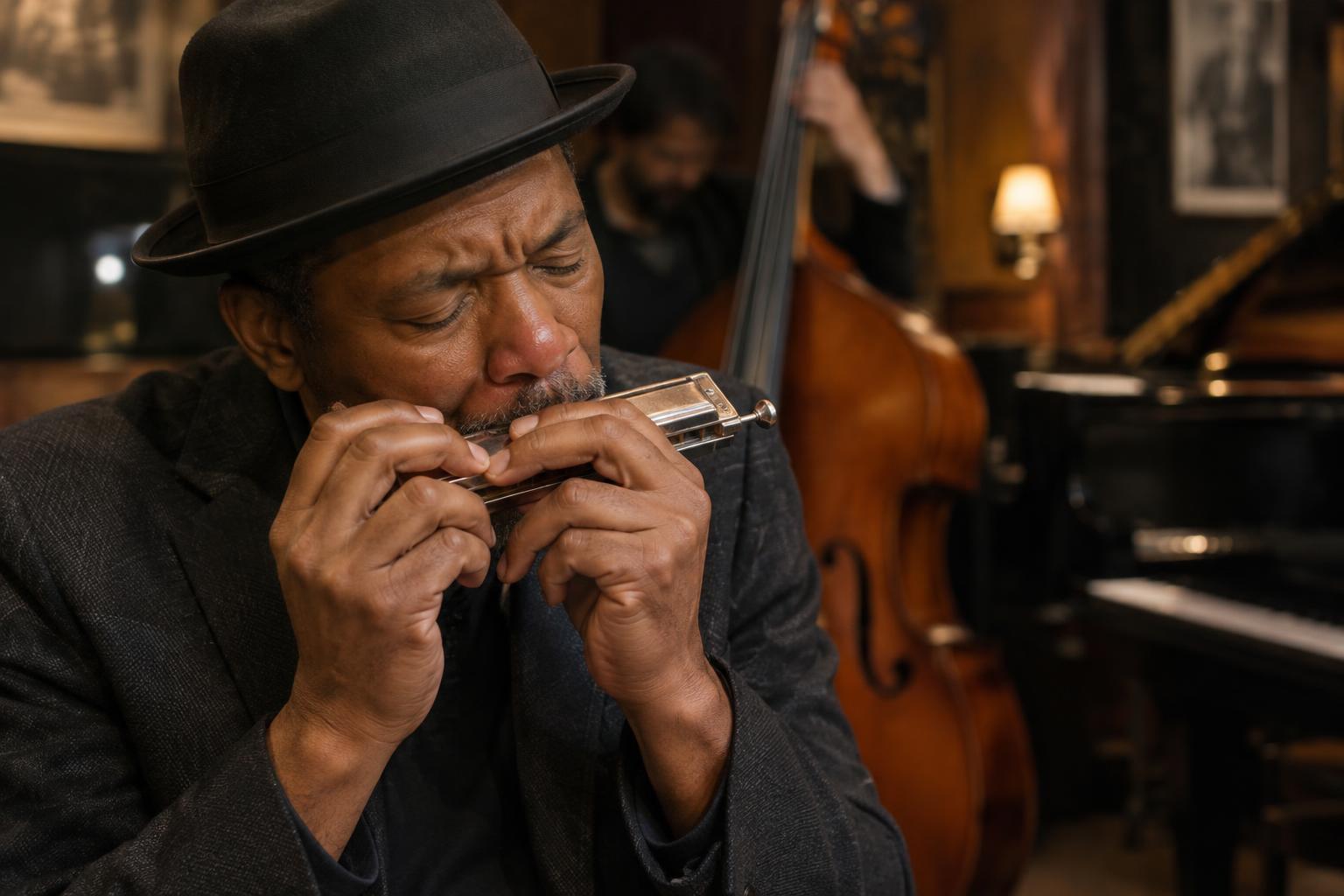
Read article · 3 min↗The chromatic harmonica can move from a clear melodic line to a soft, breath-shaped phrase. Learn how its slide, articulation, and placement in an ensemble affect what you hear.
Read article · 3 min↗Two jazz recordings can begin with the same melody and take it in very different directions. This guide offers a practical way to compare their arrangements, rhythms, solos and ensemble choices without treating either performance as the definitive version.
Read article · 4 min↗Jump blues brings together blues forms, punchy horn riffs, lively vocals, and a rhythm section built for movement. Learn how to hear its musical layers and how it differs from a large swing-band sound.
Read article · 3 min↗Running late to a jazz performance does not have to mean missing the whole set. A little patience at the door, a quiet entrance and attention to the room can help you settle in without interrupting the music.
Read article · 4 min↗A jazz night can involve table service, a bar, a cover charge and a musician’s tip jar. Here’s how to tell which payments support the staff or performers, when a tip makes sense and how to handle unfamiliar venues without interrupting the music.
Read article · 3 min↗A little planning can make a live jazz outing easier to navigate. Learn what to check about entrances, seating, ticketing, and the route from the door to your seat—and what to ask when a venue’s access information is unclear.
Read article · 4 min↗A jazz bill can name a leader, a band, an opening act, or a special guest without telling you exactly how the night will unfold. Learn what those labels usually mean, how a sit-in differs from a scheduled appearance, and how to listen when the lineup changes.
Read article · 4 min↗A jazz bandleader does more than announce tunes. On a club stage, the leader helps shape the set, guide transitions, make room for improvisation and keep the musicians connected to the room.
Read article · 4 min↗A song request can be a friendly way to connect with jazz musicians, but timing and tone matter. Learn when to ask, what to say, and how to enjoy the set if the band has other plans.
Read article · 4 min↗A memorable jazz photograph should not come at the expense of the performance. Learn how to check venue rules, avoid distracting light and sound, choose your moments, and share images with care.
Read article · 4 min↗Live jazz can move from a quiet solo to a full-band surge in a moment. A few choices about where you sit, how you use earplugs, and when you take a break can help you enjoy the details without treating loudness as part of the price of admission.
Read article · 3 min↗The same jazz group can feel strikingly different in an intimate club and a large hall. Learn how distance, acoustics, amplification and the audience shape what you hear—and how to listen well in either setting.
Read article · 4 min↗A multi-stage jazz festival offers more music than any one listener can catch. Build a flexible plan around a few priorities, allow time to move between stages, and leave room for an unexpected set.
Read article · 4 min↗A jazz club calendar offers clues about more than who is playing. Learn how to interpret lineups, set times, musical descriptions and booking details so you can choose a show that suits your curiosity, schedule and budget.
Read article · 4 min↗A jazz jam session works best when musicians make room for one another. Learn how to read the room, ask to sit in, call a tune clearly, share solos, and leave the bandstand gracefully.
Read article · 4 min↗A jazz jam session can feel unpredictable from the audience, but there is often a familiar shape beneath the spontaneity. Learn how musicians choose tunes, trade solos and respond to one another—and how to enjoy your first visit without knowing every musical term.
Read article · 4 min↗A jazz club evening may include one performance, two separate shows, or multiple sets with a break. Learn what those arrangements mean, what to check before booking, and how to settle in for the music.
Read article · 4 min↗A jazz club night can involve more than a ticket price. Learn what cover charges, table minimums, set times, and reservations usually mean, and what to check before you go.
Read article · 4 min↗The best seat at a jazz club depends on what you want to notice. Learn how distance from the band, room acoustics, sightlines, and nearby activity can shape your evening.
Read article · 4 min↗The same jazz group can feel different in an intimate club, a seated concert hall, or an open-air setting. Learn how to choose a show that fits the way you want to listen, the people you are going with, and the practical details of the night.
Read article · 4 min↗Jazz audiences often applaud in places that might seem unexpected to a first-time listener. Learn how to recognize a solo handoff, a tune ending, and the close of a set—and why attentive listening matters more than following a rigid rule.
Read article · 4 min↗A jazz club can be a listening room, a social gathering, and a workplace all at once. Learn how to enjoy the music while making space for the musicians, staff, and people around you.
Read article · 4 min↗A first jazz club visit can feel unfamiliar, but you do not need to know every tune or rule. Here is a practical guide to arriving, finding a seat, listening through the sets, and leaving at the end of the night.
Read article · 4 min↗A jazz ballad may begin with a melody that stretches and pauses before the rhythm section establishes a shared pulse. Learn to hear the difference between rubato and steady time, and to notice the musical cues that mark the transition.
Read article · 4 min↗The bass and drums can make a jazz performance feel steady, buoyant or restless without playing the same notes. Learn how to follow the pulse, hear where their sounds meet, and notice the small choices that give a groove its character.
Read article · 4 min↗When several horns enter together, are they playing the same notes or different notes that fit together? Learn to hear unison, octave doubling and harmony by following a phrase, noticing its shape and listening for the space between the parts.
Read article · 4 min↗A jazz solo can command your attention, but much of the music’s character comes from what happens around it. This two-pass exercise helps you hear both the featured voice and the musicians shaping its path.
Read article · 4 min↗A jazz performance can change direction with no announcement. Learn to hear the rhythmic, melodic and visual cues musicians use to pass a solo, return to a tune and bring it to a close.
Read article · 4 min↗An improvised solo can feel as though it leans forward, pauses, and settles. Learn to hear how phrasing, rhythm, harmony, and repetition create tension and release without needing to identify every note.
Read article · 4 min↗You do not need to name chords to hear a jazz tune move. Learn to notice shifts in the bass, the mood behind a melody, and the moments when the music settles or keeps you waiting.
Read article · 4 min↗A jazz performance does not need to get louder to become more exciting. Learn how musicians use soft passages, accents, crescendos and shifts in ensemble balance to guide your attention.
Read article · 3 min↗A jazz phrase can feel eager, relaxed, or firmly centered even when its notes fall close to the same beats. Learn to hear rhythmic placement by finding the pulse, comparing instruments, and listening for patterns across a phrase.
Read article · 4 min↗A jazz solo is shaped by more than the notes a musician plays. Pauses, held tones and the responses of the rhythm section can give a phrase its meaning. Learn how to hear the space around a solo and use it as a guide to the music.
Read article · 4 min↗A jazz solo does not need a new idea in every bar. Learn to hear how players repeat, reshape and answer a small musical phrase, turning a few notes into a coherent improvisation.
Read article · 4 min↗Call and response is more than one musician playing after another. Learn to hear how jazz players echo, answer, challenge and leave space for each other, from a two-note exchange to an entire ensemble passage.
Read article · 5 min↗When jazz musicians trade fours or eights, they take short turns within an ongoing tune. Learn how to hear the handoffs, follow the form, and notice the ideas that pass between soloists.
Read article · 4 min↗In jazz, a chorus is one complete pass through a tune’s form. Learn how to hear where a soloist begins another pass, count along without losing the music, and handle common exceptions such as intros, tags, and trading fours.
Read article · 4 min↗A jazz performance can feel unpredictable until you recognize its recurring landmarks. Learn how the opening melody, solo turns, and returning melody can help you follow a tune without counting every beat.
Read article · 4 min↗AABA form gives many jazz standards a shape you can hear, even when the band changes the melody or harmony. Learn to recognize the return of the A section, spot the contrasting bridge, and keep your place through a solo.
Read article · 4 min↗A 12-bar blues is easier to hear when you listen for its repeating shape rather than trying to identify every chord. Learn how to count the bars, notice the move away from home, and recognize the turnaround that leads into the next chorus.
Read article · 4 min↗Syncopation can make a jazz phrase feel as though it leans against the beat. Learn how to find the pulse, notice unexpected accents, and follow the rhythmic conversation between players.
Read article · 4 min↗What changes when a steady beat is divided into swung rather than straight eighth notes? This listening exercise helps you hear the difference, follow the pulse, and notice why swing is more than a fixed long-short pattern.
Read article · 4 min↗Jazz drummers often leave space, play around the beat, or shift attention between parts of the kit. Learn how to hear the underlying pulse by listening to the bass, cymbals, phrases, and the way the ensemble moves together.
Read article · 4 min↗Straight-ahead jazz is a useful listening label, but not a strict genre with fixed rules. Learn which musical habits it often describes, how to hear them, and why the boundaries become blurry.
Read article · 4 min↗Scat singing and vocalese both bring the human voice into conversation with jazz instruments, but they work differently. Learn what to listen for, how each approach handles rhythm and phrasing, and why the distinction can make a performance more rewarding.
Read article · 4 min↗Spiritual jazz is easier to hear than to pin down. This listening guide explores how repeating figures, collective playing, and flexible forms can give the music its sense of momentum and possibility.
Read article · 4 min↗Third Stream jazz brings jazz improvisation into conversation with classical composition. Learn what sets it apart, how its arrangements work, and what to listen for when written music and spontaneous playing meet.
Read article · 3 min↗Jazz-funk often builds its momentum from a short bass line and a firm backbeat. Learn how repetition gives players a shared rhythmic center—and how small changes in timing, texture and harmony keep the music moving.
Read article · 4 min↗Jazz fusion brought electric keyboards, guitars, amplified bass and rock-influenced rhythms into the jazz ensemble. Learn how those sounds changed the roles of the players—and what to listen for when a fusion group improvises.
Read article · 4 min↗Bossa nova can sound effortless, but its quiet surface holds a lively conversation between bass notes, offbeat chords, melody and drums. Learn how to follow that pulse without reducing this Brazilian style to background music.
Read article · 4 min↗Clave is more than a sound made by two wooden sticks. In Afro-Cuban jazz, it can be the organizing pattern that helps percussion, bass, piano and horns fit together. Learn how to hear its two sides and follow it through a performance.
Read article · 4 min↗Post-bop kept the conversation of small-group jazz alive while opening up its harmony, rhythm and song forms. Learn what to listen for, how it relates to hard bop and free jazz, and where to begin with recordings.
Read article · 4 min↗Free jazz can feel disorienting when there is no familiar melody to return to or steady beat to follow. Try listening instead for gestures, textures, changing relationships between players, and the ways an improvisation finds its own shape.
Read article · 4 min↗Chord changes can give a soloist a moving harmonic route; modal jazz often asks what can happen when that route slows down. Learn how modes shape improvisation, what to listen for, and why fewer chord changes do not mean fewer musical possibilities.
Read article · 4 min↗Soul jazz brings the energy of blues, gospel and rhythm and blues into the conversation of small-group jazz. Learn how to hear its grooves, organ textures, ensemble roles and improvisation without treating the style as a rigid formula.
Read article · 4 min↗Hard bop kept bebop’s improvisational energy while giving blues phrases, gospel-inflected melodies and strong ensemble grooves a prominent place. Learn what to listen for and where to start.
Read article · 4 min↗Cool jazz is often described as relaxed, but its restraint comes from more than a slow tempo. Hear how tone, phrasing, arrangements and rhythm create space without sacrificing energy.
Read article · 3 min↗Bebop can sound like a rush of notes at first. Learn to hear its pulse, phrases, chord changes and rhythm-section cues without needing to identify every note.
Read article · 4 min↗Explore the sound of Hot Club–style jazz through its driving rhythm guitar, melodic improvisation, and close conversation between players. Learn what to listen for, from la pompe to the way a soloist reshapes a familiar tune.
Read article · 4 min↗A big band can sound like one powerful instrument or a conversation among many players. Learn how swing-era arrangements use reeds, brass, rhythm, written passages, and improvised solos to create that balance.
Read article · 4 min↗Kansas City jazz rewards listeners who follow what repeats and what changes. Learn to hear the blues form beneath the performance, the short riffs that give a band momentum, and the space that lets a soloist develop an idea.
Read article · 4 min↗In New Orleans jazz, several musicians can shape the melody at once without playing the same thing. Learn how trumpet or cornet, clarinet, trombone, and rhythm section make room for one another—and what to listen for when the whole band joins in.
Read article · 4 min↗Ragtime and early jazz share a love of rhythm that plays against a steady beat, but they are not simply two stages of the same style. Learn what ragtime brought to the conversation, what early jazz added, and how to hear the difference.
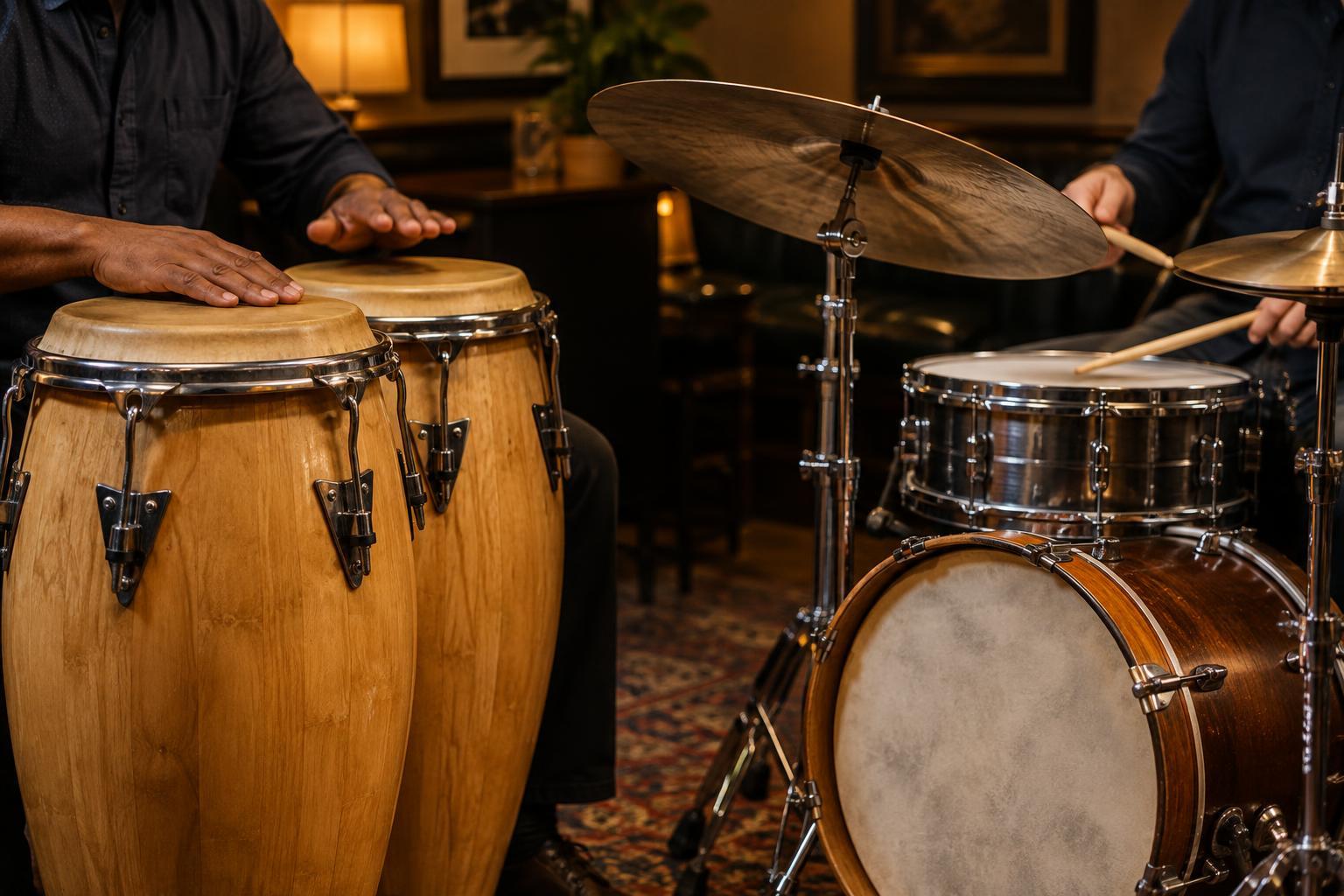
Read article · 4 min↗Congas and the drum kit can share a rhythm section without doing the same job. Learn how their sounds, patterns, and interactions shape a Latin jazz groove—and what to listen for when both are playing.
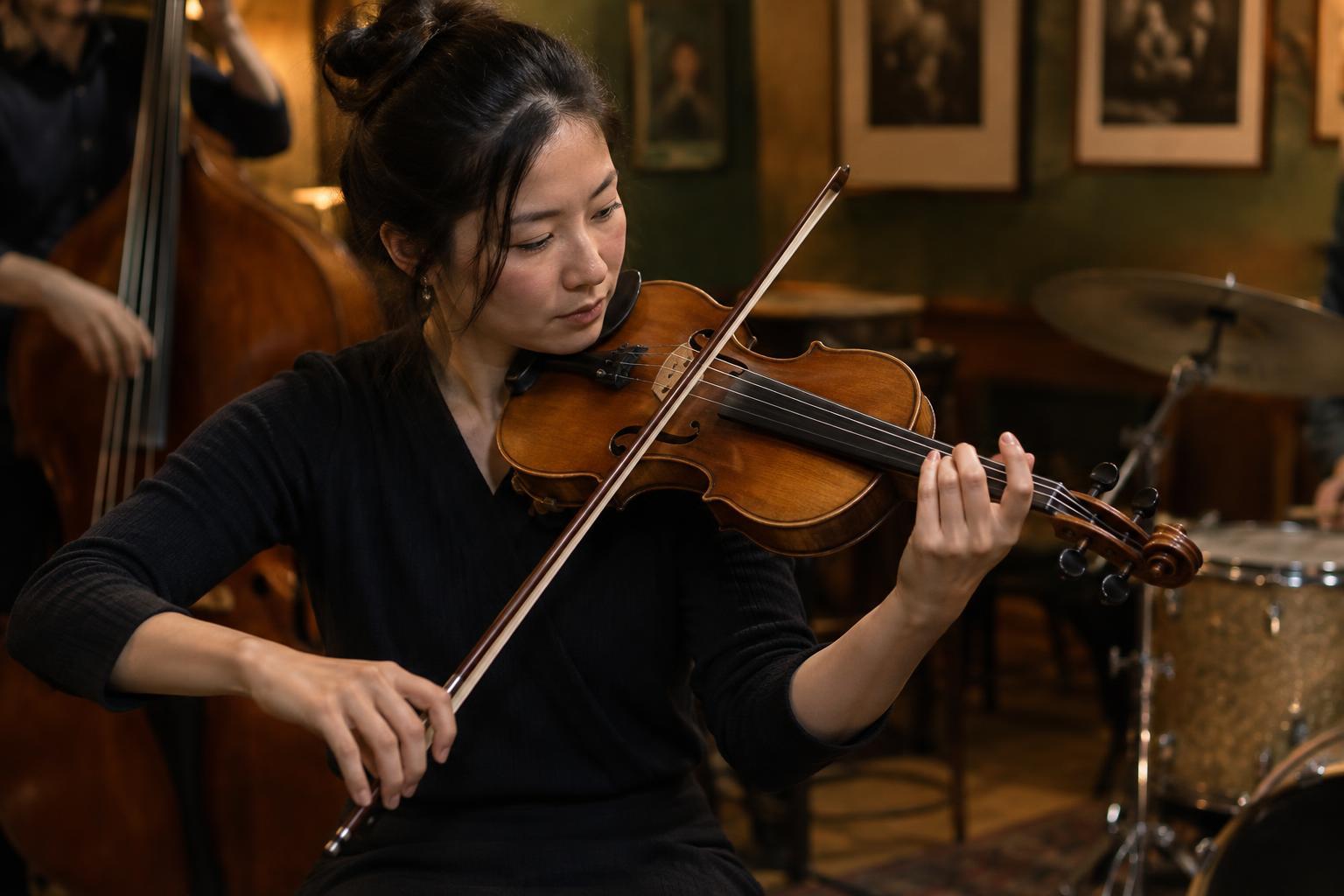
Read article · 4 min↗A jazz violinist can sustain a note with the bow or pluck it for a short, pointed sound. Learn how these two approaches shape phrasing, rhythm and a violinist’s place in the ensemble.
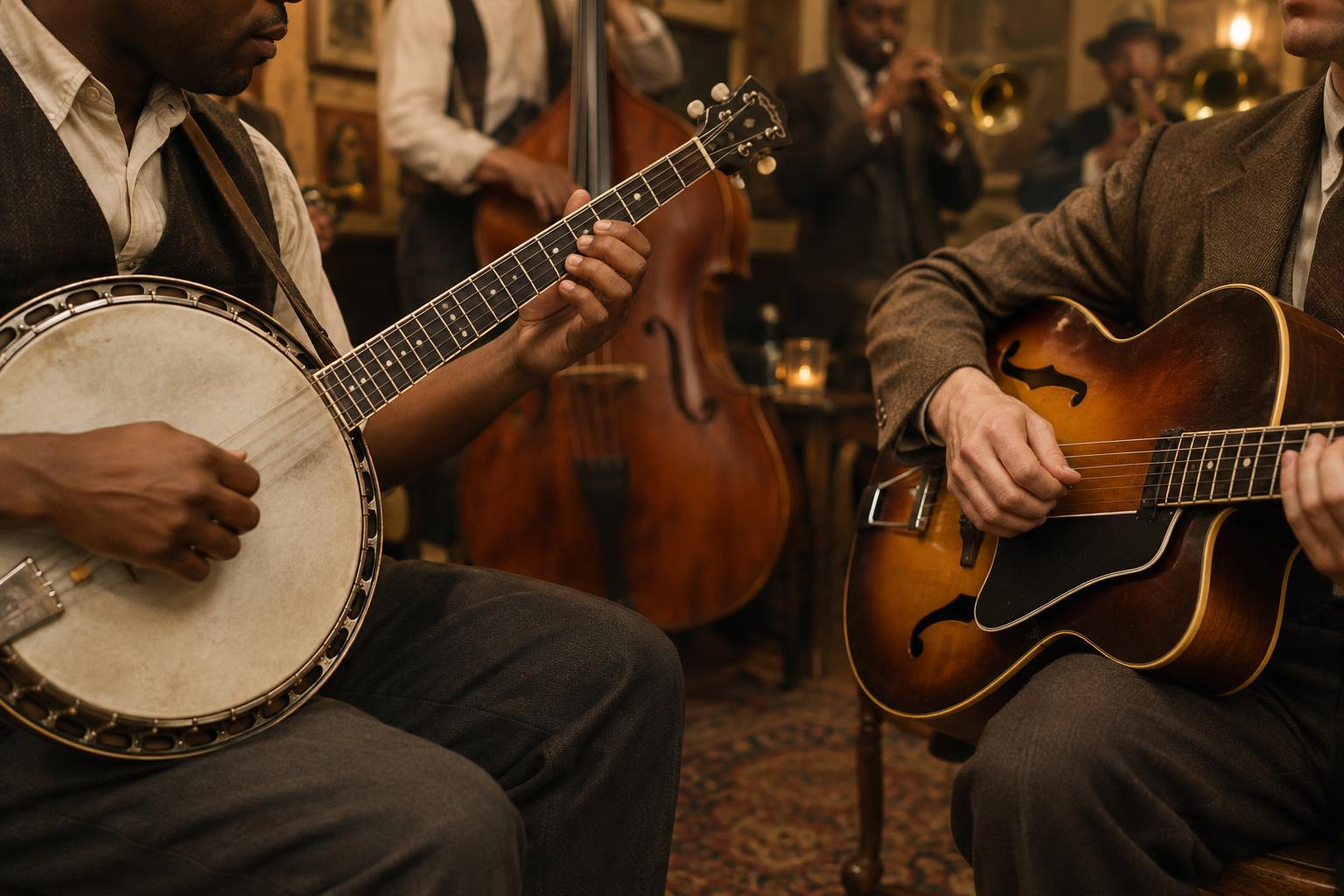
Read article · 4 min↗Why does a banjo cut through an early jazz ensemble while a guitar often blends in? Compare their sound, playing techniques and changing roles in the rhythm section, then try a few simple listening cues.
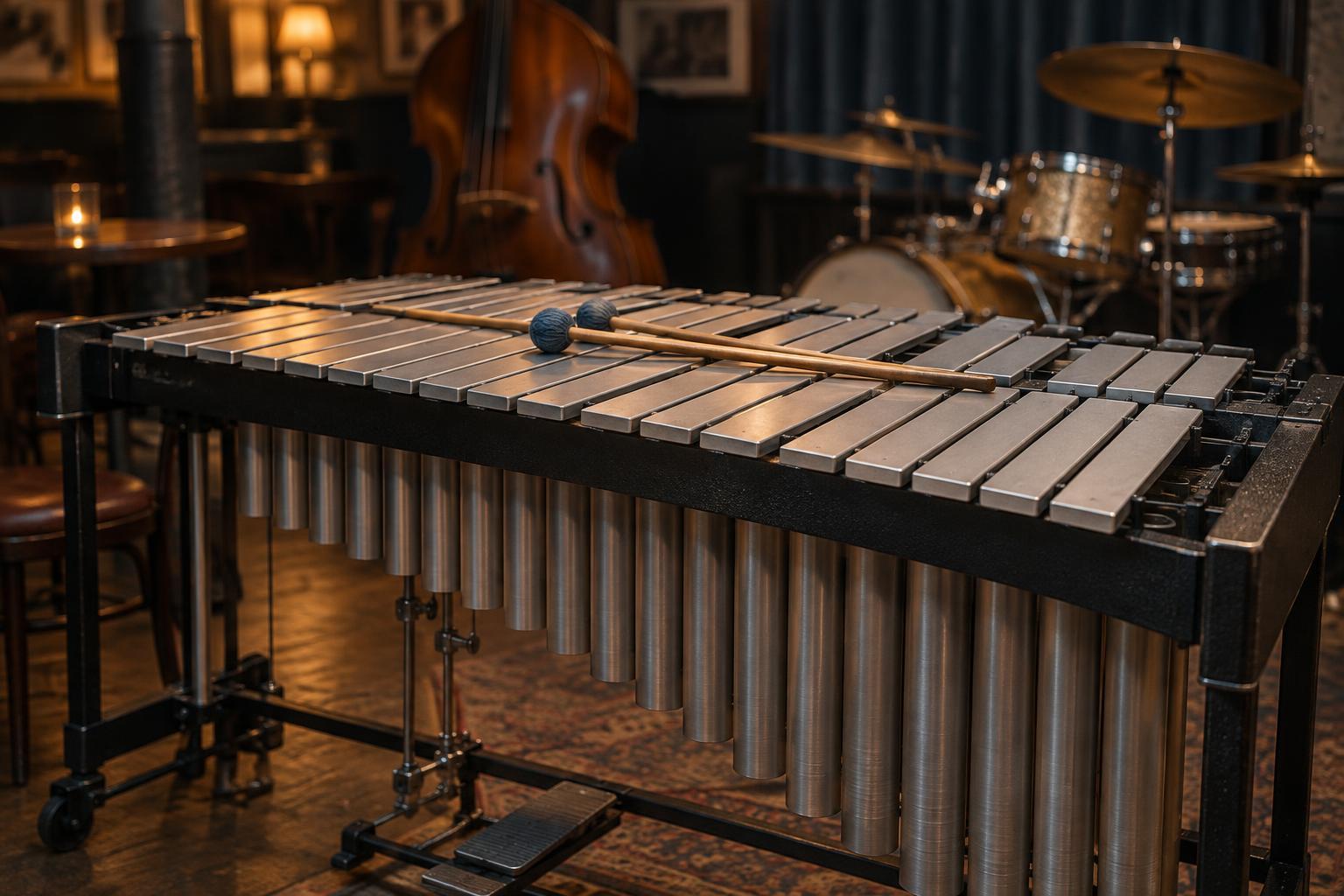
Read article · 4 min↗The vibraphone can sound bright and percussive one moment, warm and floating the next. Learn how its bars, pedal and motor shape the sound, what vibraphone players do in a jazz group, and what to listen for as a beginner.
Read article · 4 min↗The Hammond organ can fill several roles at once: shaping chords with drawbars, laying down a bass line, and holding tones that connect one phrase to the next. Here is a listening guide to how those parts work together in jazz.
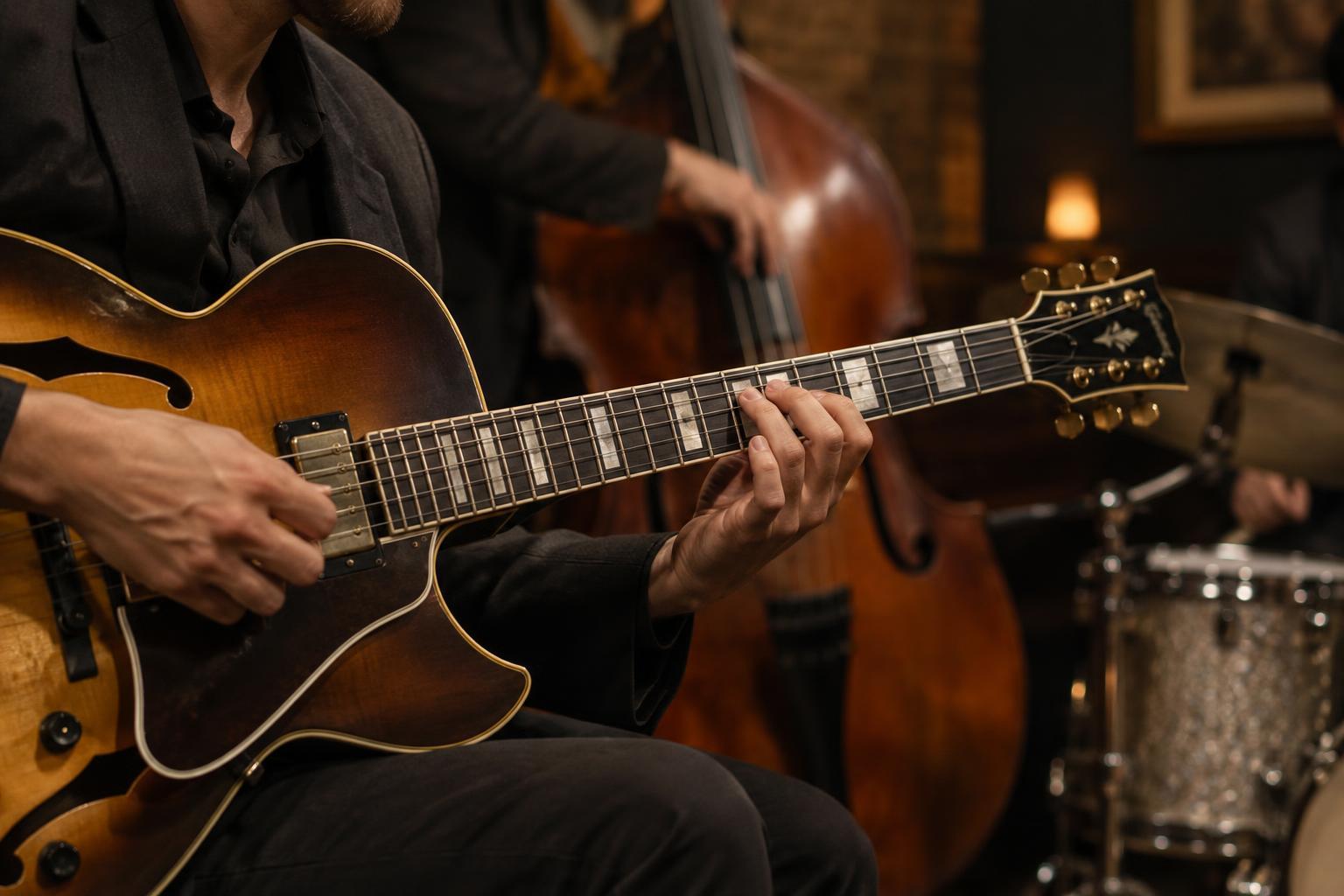
Read article · 4 min↗A jazz guitarist can support a group with chords one moment and lead it with a melodic line the next. Learn how comping and single-note soloing differ in rhythm, note choice, space and interaction—and what to listen for in each role.
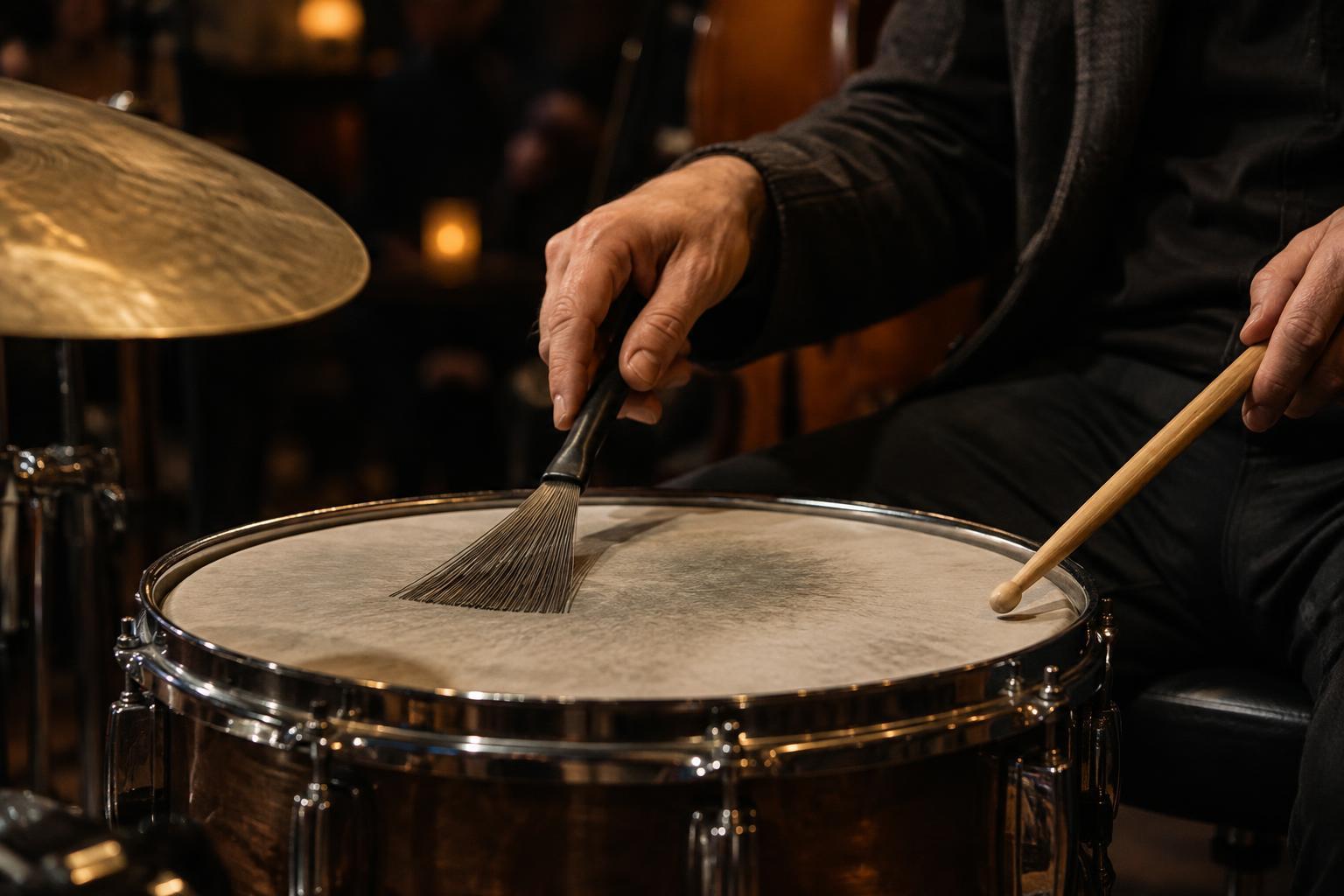
Read article · 4 min↗A drummer can change the feel of a jazz performance without changing the tempo. Learn how brushes and sticks shape rhythm, volume and space, and what to listen for when a player switches between them.
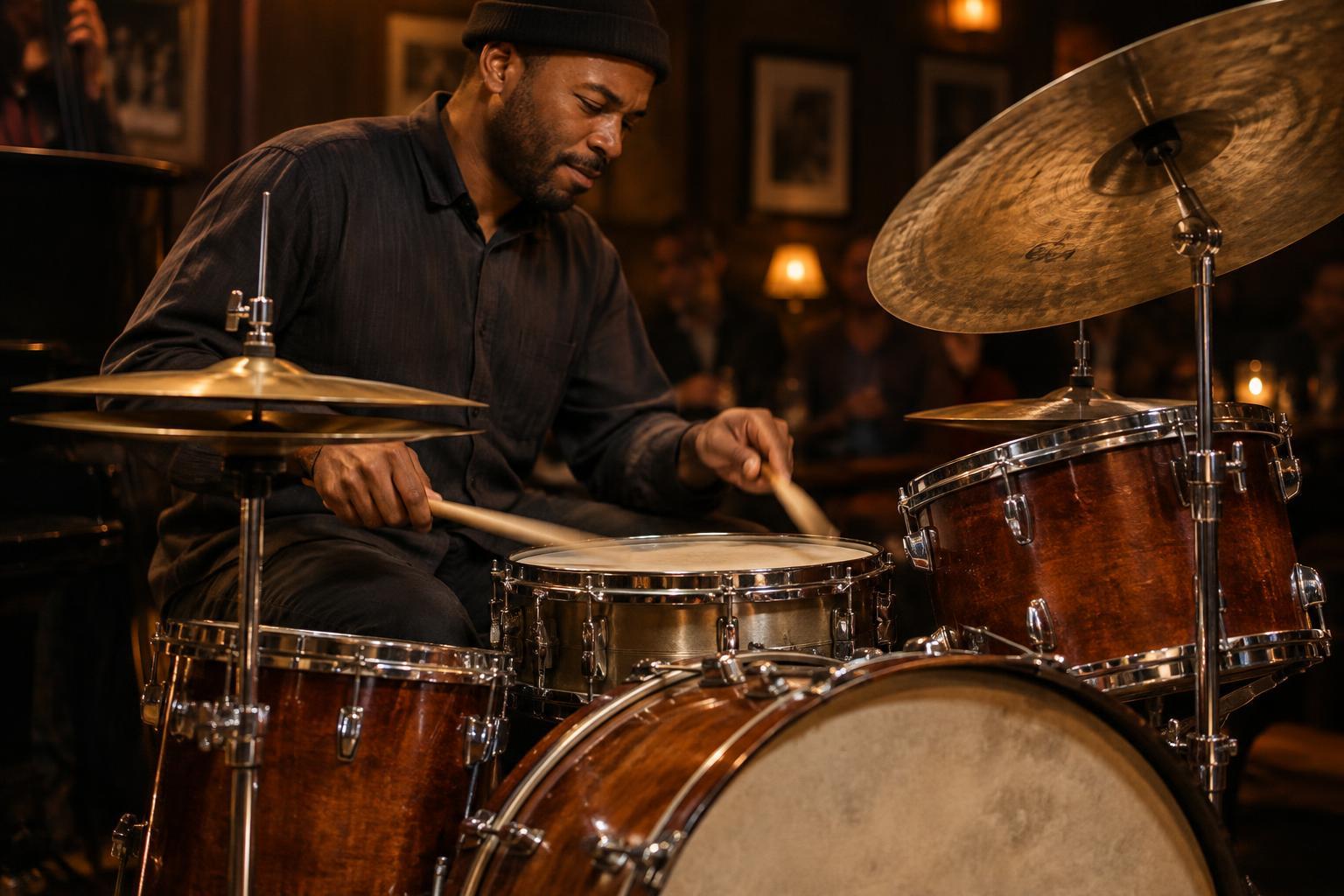
Read article · 4 min↗A jazz drummer does more than keep time. Learn how the ride cymbal, hi-hat, snare, and bass drum each shape the pulse, respond to soloists, and give a performance its sense of motion.
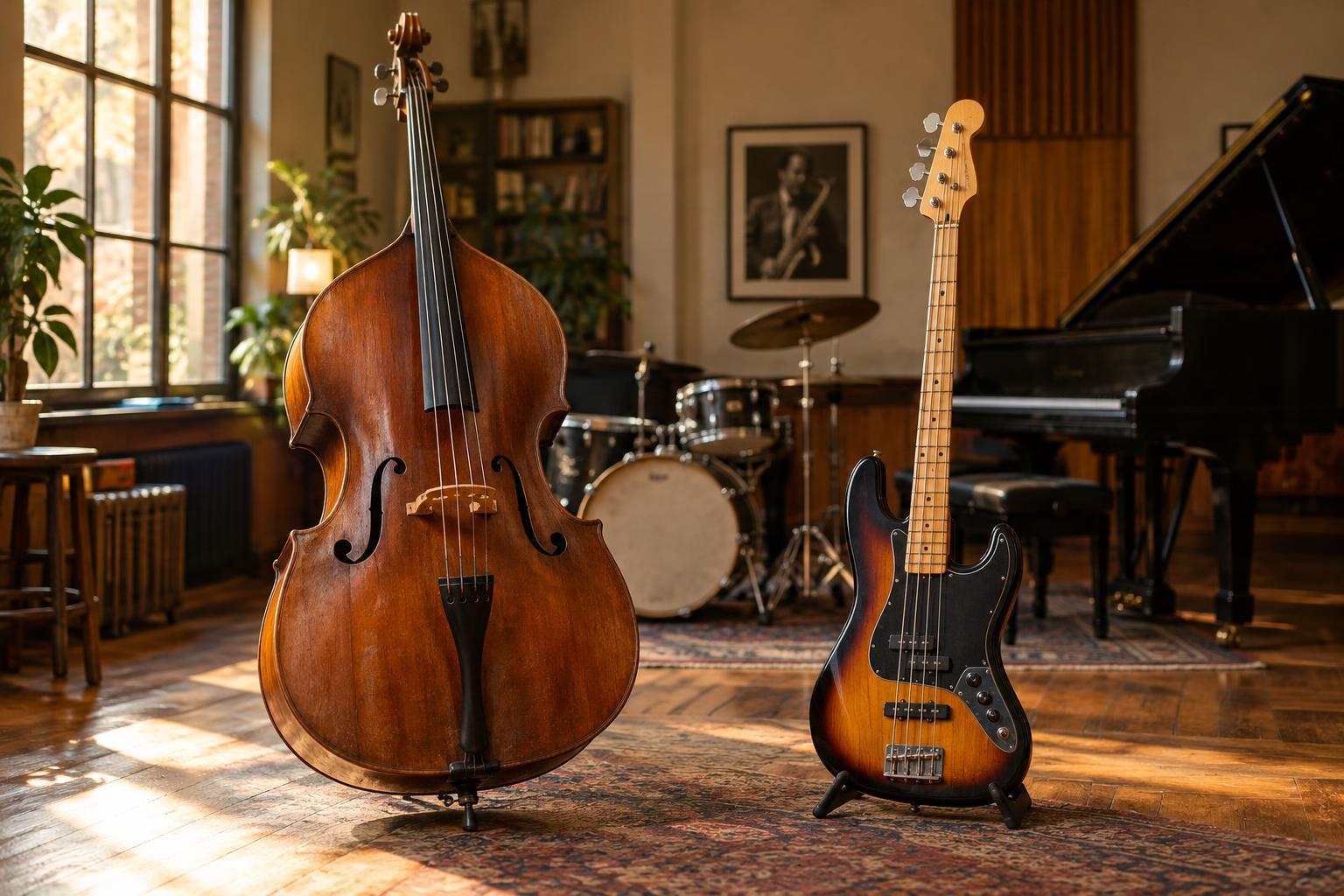
Read article · 4 min↗Both upright and electric bass can anchor a jazz group, but they shape a performance in different ways. Learn how attack, sustain, technique, and amplification affect what you hear—and how to listen for each instrument’s role in an ensemble.
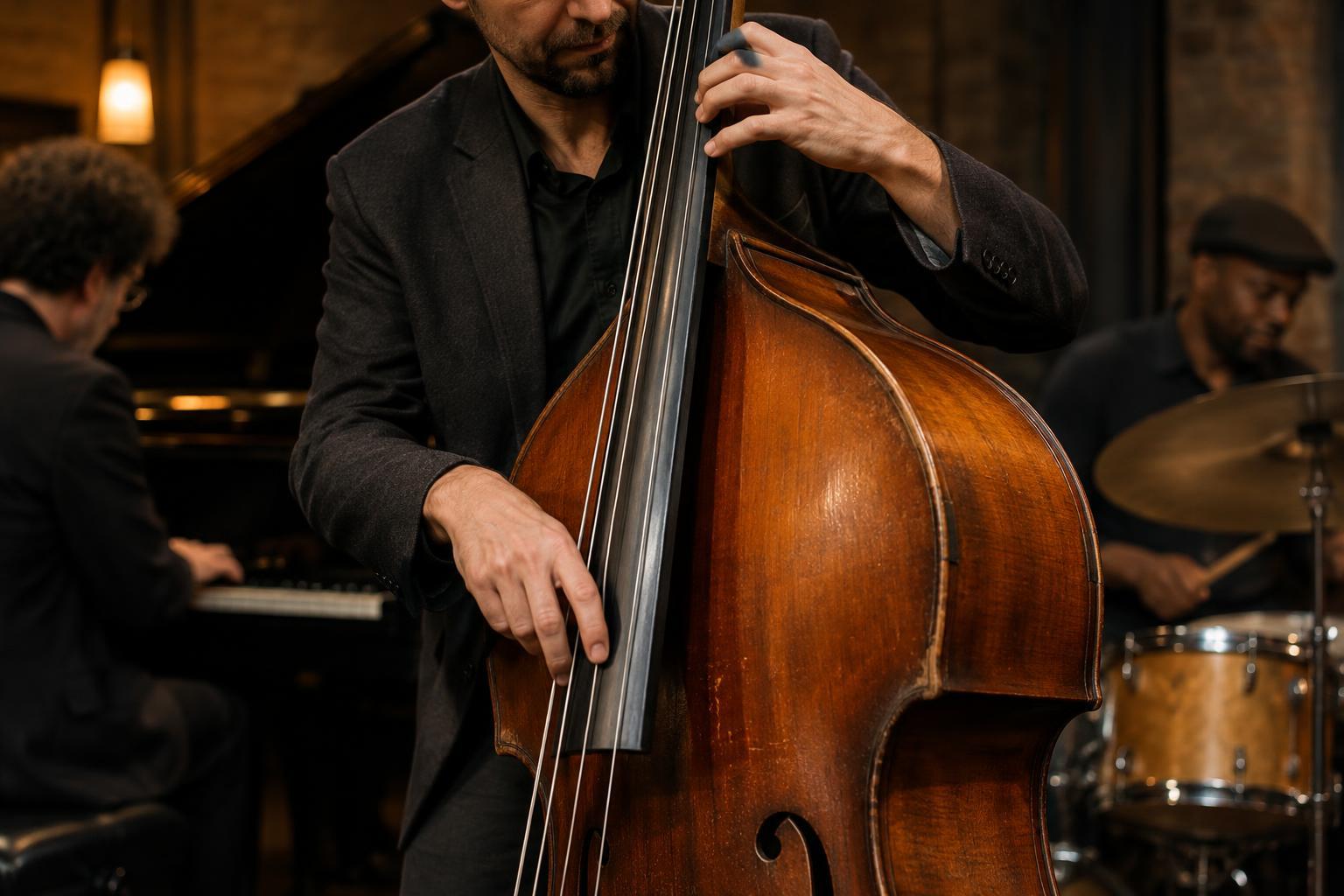
Read article · 4 min↗A walking bass line gives many jazz performances their sense of forward motion. Learn how upright bass players use steady quarter notes, chord tones, passing notes and rhythm-section interaction to make a line both supportive and melodic.
Read article · 4 min↗An acoustic piano and an electric piano can play the same jazz harmony yet create different moods. Learn how their sound production, sustain, touch and amplification affect the way you hear a performance.
Read article · 4 min↗Jazz piano comping is more than playing the right chords. Learn how voicing, rhythm, space and close listening help a pianist support a soloist and shape the feel of a performance.
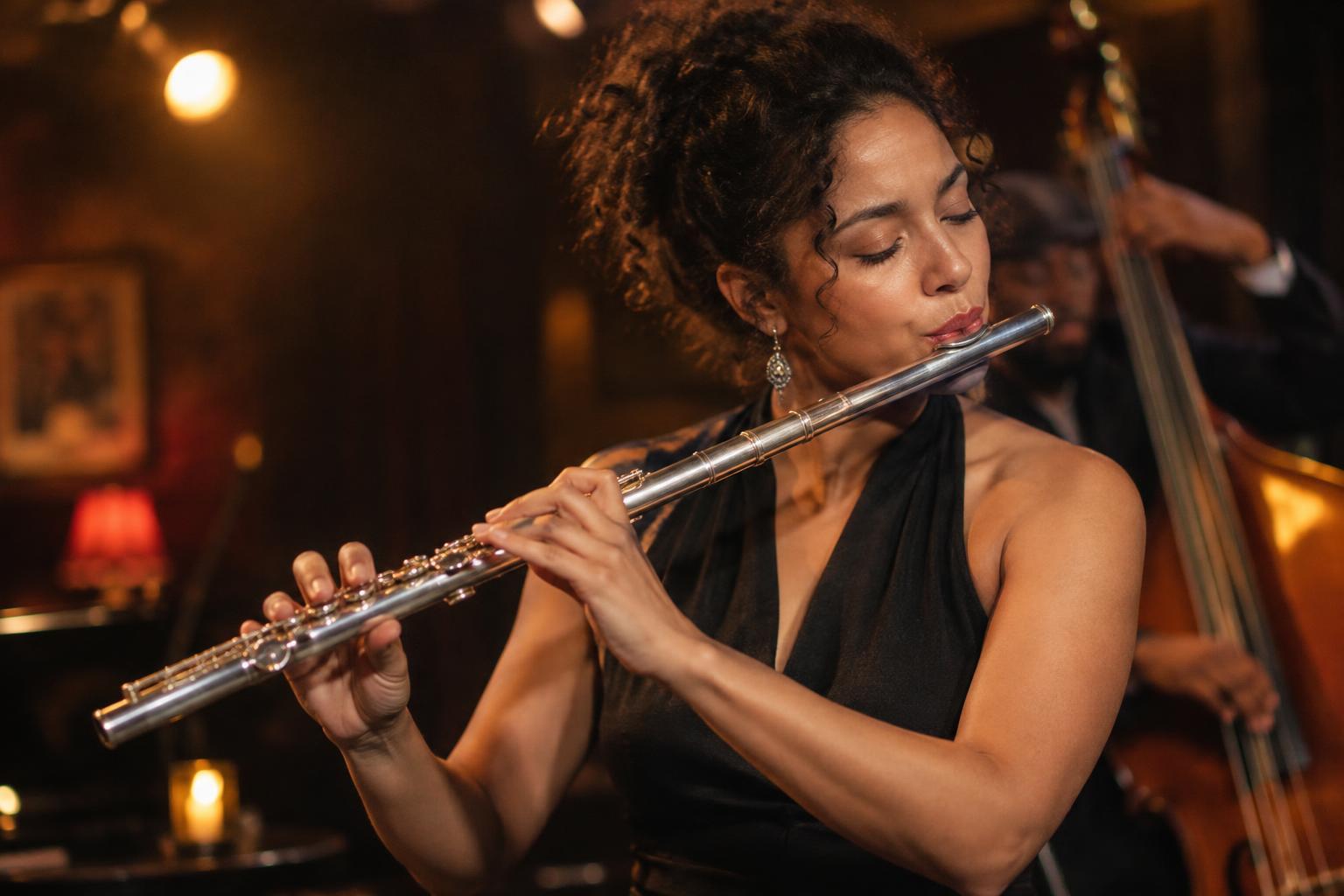
Read article · 3 min↗A jazz flute sound is more than a beautiful note. Learn how breath, embouchure, register, articulation and phrasing help flutists make a melody feel intimate, buoyant or bold.
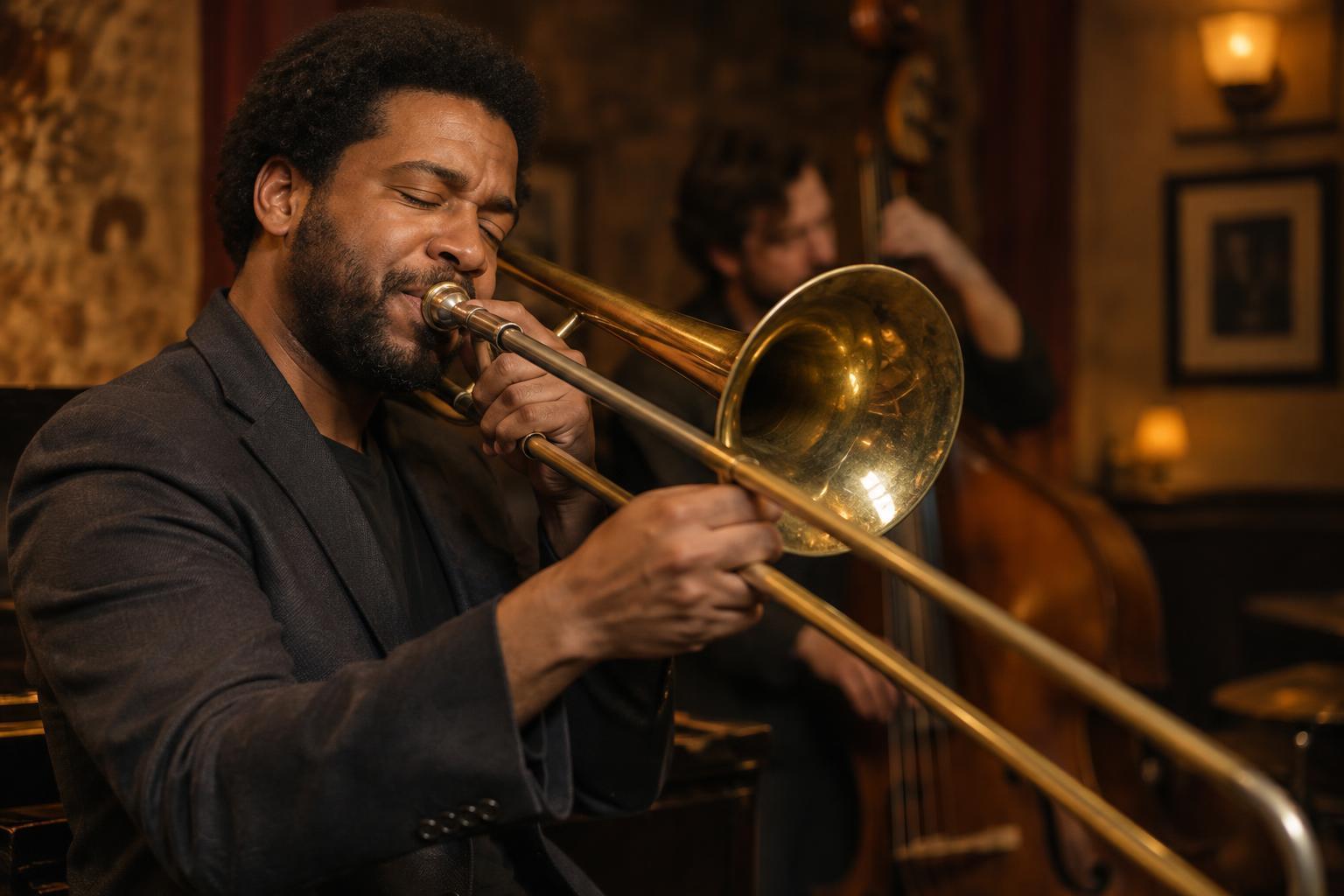
Read article · 4 min↗The trombone can connect notes, bend into pitches and shape attacks in ways that make a jazz line feel remarkably close to speech. Learn what the slide contributes—and what to listen for in a solo or ensemble.
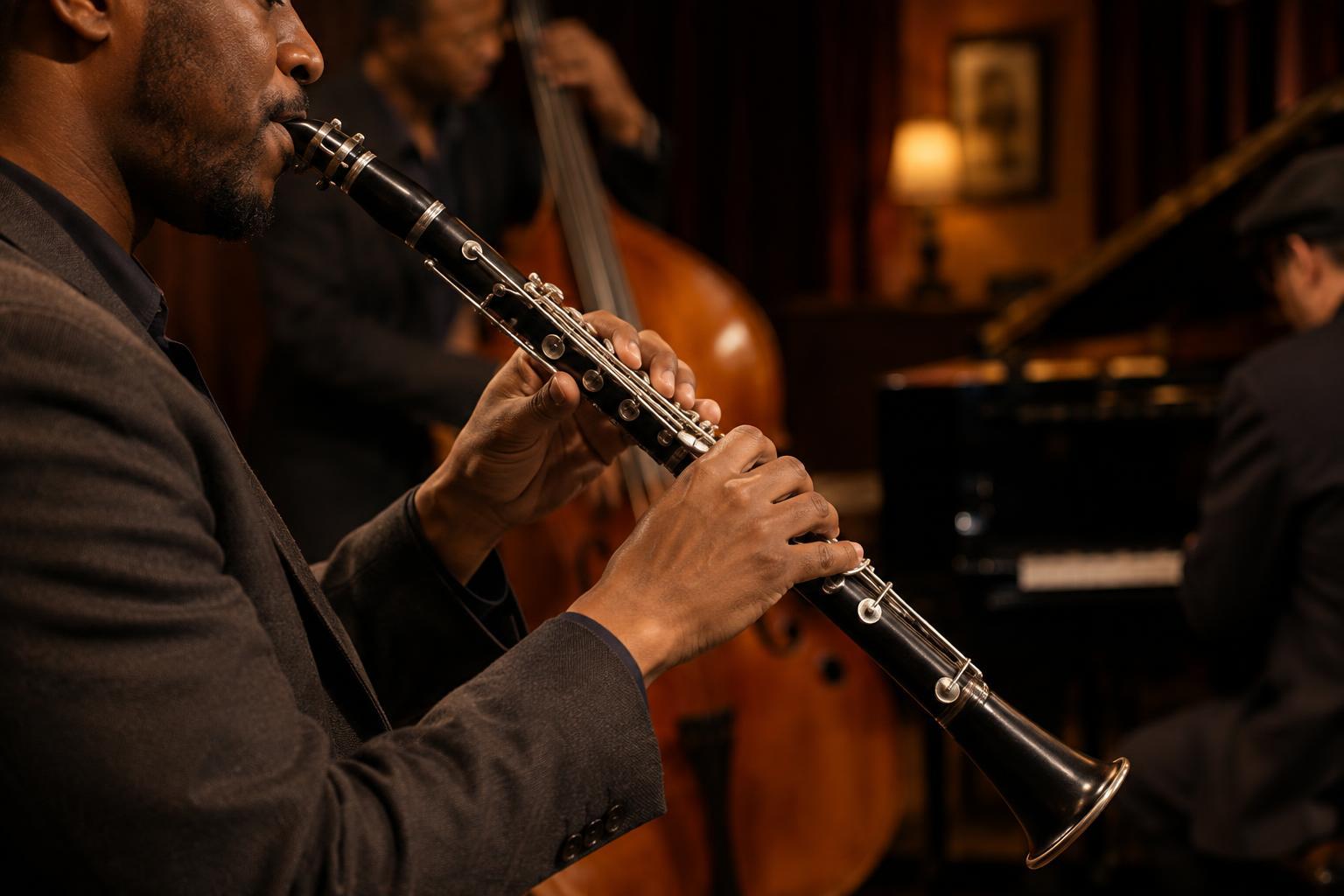
Read article · 4 min↗The clarinet can weave around a jazz ensemble, carry a melody, or take a solo of its own. Learn how its changing tone, wide range, and flexible phrasing shape the way it sounds in early jazz, swing, and beyond.
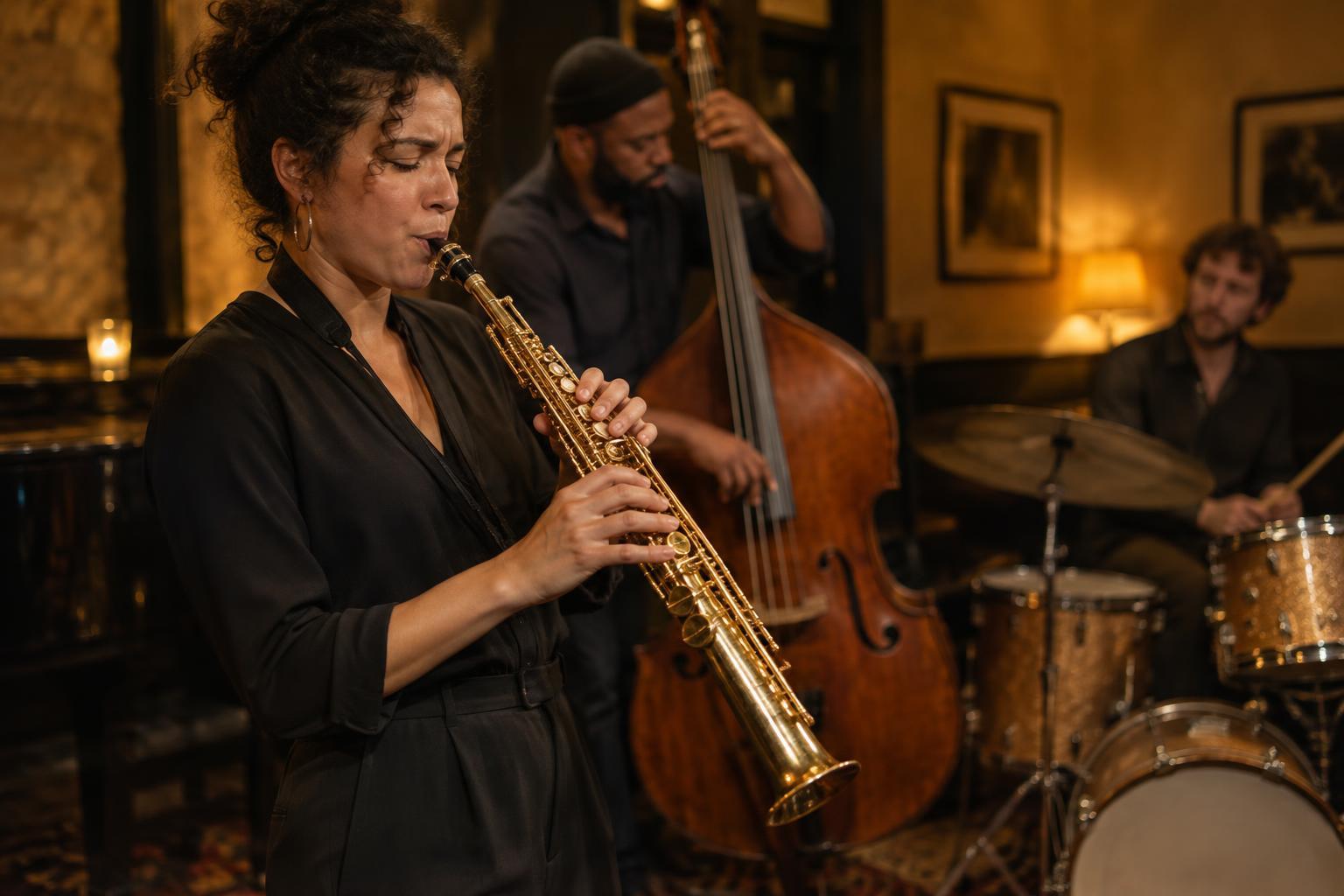
Read article · 4 min↗The soprano saxophone can sound piercing, warm, playful or searching. Learn what gives it a distinctive voice, how it works in a jazz group and what to listen for when it takes the lead.
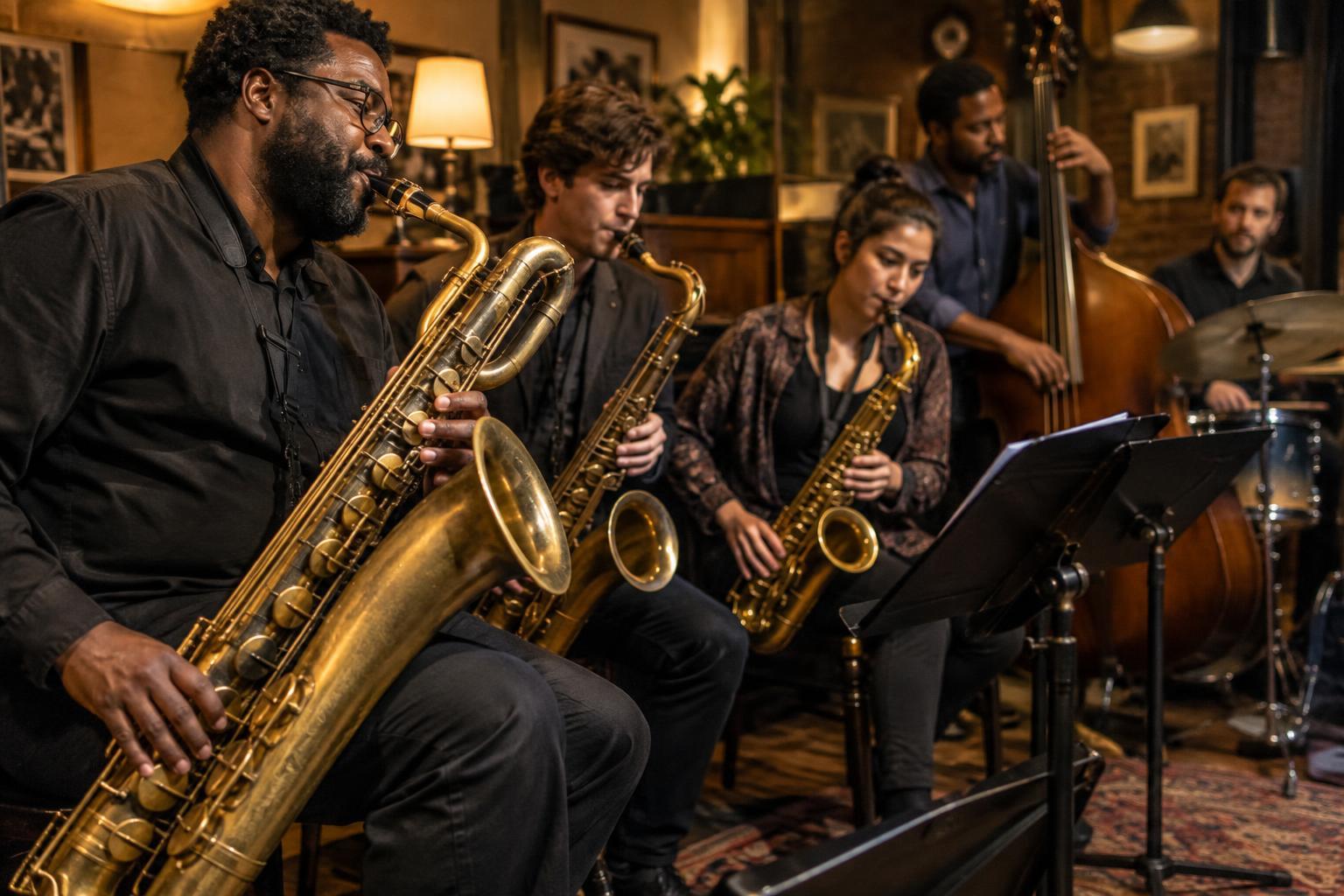
Read article · 4 min↗The baritone saxophone can anchor a big band, add a contrasting voice to a small group, or step forward as a soloist. Learn how its range, tone and rhythmic flexibility shape the sound of a jazz ensemble—and what to listen for.
Read article · 3 min↗Alto and tenor saxophones can play many of the same melodies, but they sit in different registers and bring different colors to a jazz ensemble. Learn how their ranges, transpositions and tone compare—and what to listen for on a recording.
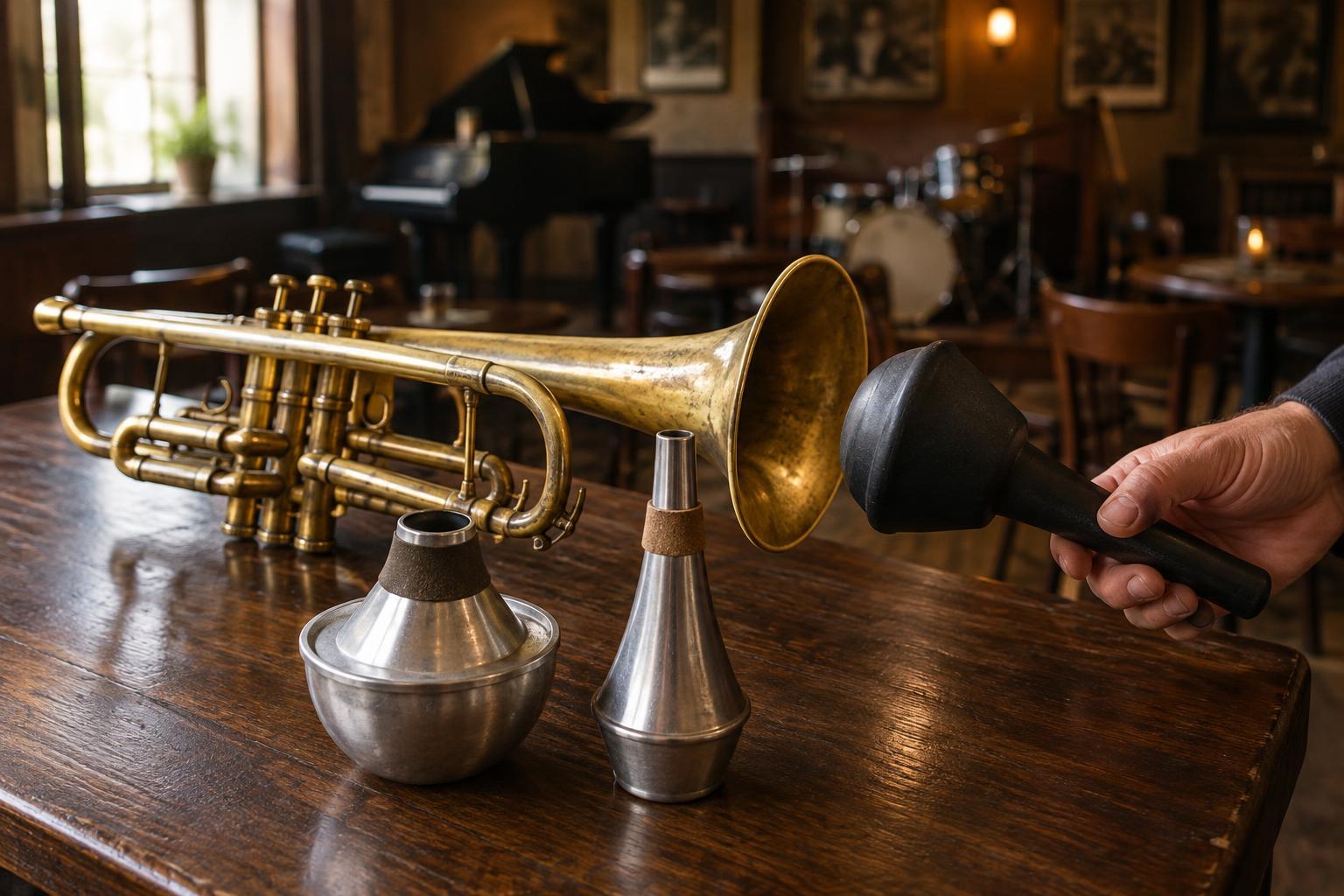
Read article · 4 min↗A trumpet mute does more than make an instrument quieter. Learn how cup, Harmon, and plunger mutes shape a note, and what to listen for when each appears in jazz.
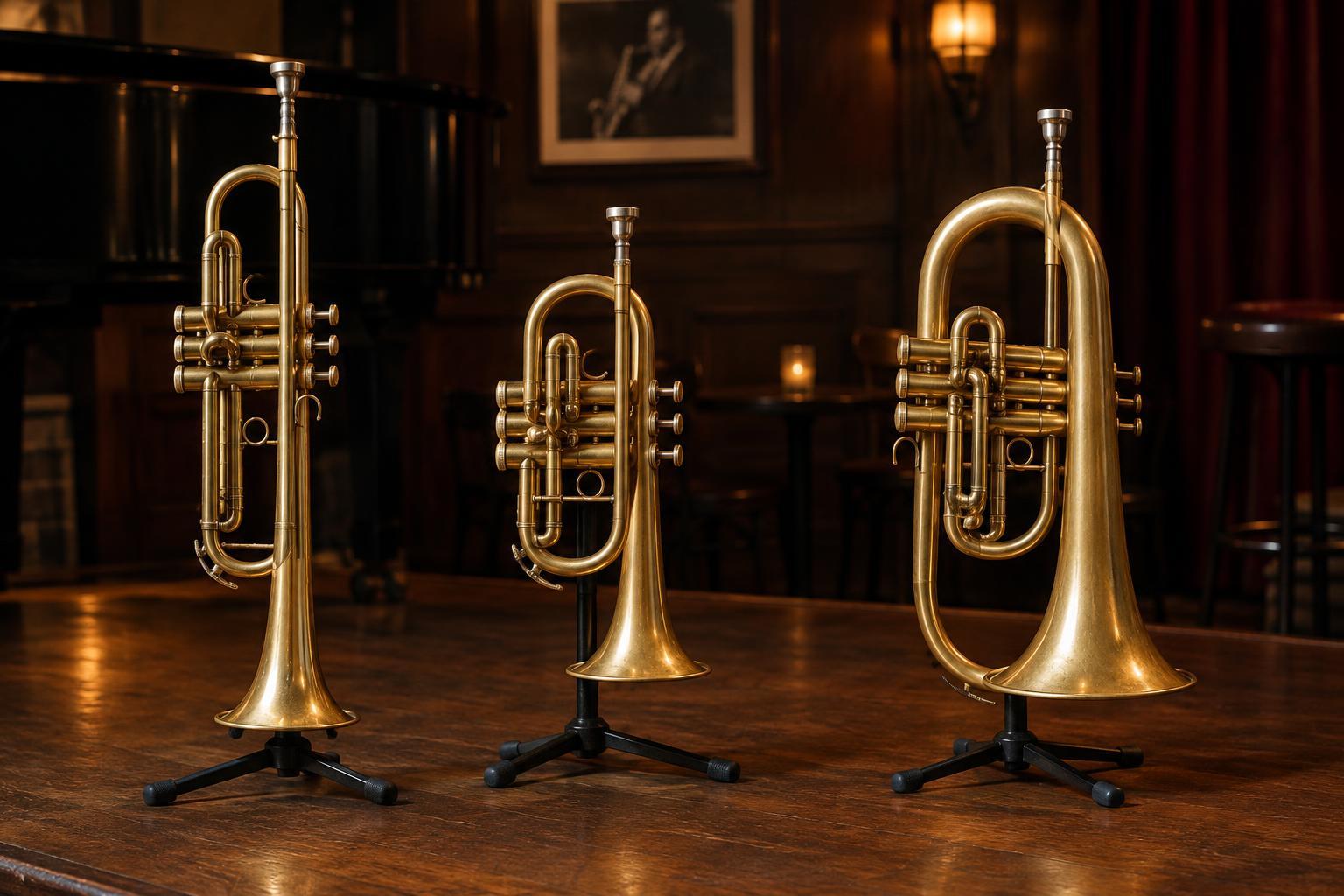
Read article · 4 min↗Trumpet, cornet, and flugelhorn share a family resemblance, but each can bring a different shape and color to a jazz phrase. Learn what to listen for—and why the player matters as much as the instrument.
Read article · 4 min↗A jazz album can reveal more than its individual performances. Learn how to hear its opening, sequence, changes of mood and closing as parts of a larger listening experience.
Read article · 4 min↗A remaster can change how a familiar jazz album feels, but louder or brighter does not always mean better. Learn how to compare editions fairly, listen for the musical details that matter, and decide which presentation suits your taste.
Read article · 4 min↗A compilation can introduce you to several jazz artists in one sitting, while an original album lets you hear a musical idea unfold. Learn what each format offers and how to use both to find recordings you want to revisit.
Read article · 4 min↗Jazz album credits can turn a listening session into a map of the music. Learn how to find track-specific personnel, recognize the roles of arrangers and rhythm sections, and make careful notes about the players you hear.
Read article · 4 min↗Mono and stereo presentations can make the same jazz performance feel surprisingly different. Learn what changes in the placement of instruments, the sense of room and the balance of an ensemble—and how to compare editions without assuming one format is always better.
Read article · 4 min↗The same jazz album can sound and feel different across editions. Learn how to compare original pressings, reissues and remasters by focusing on the performance, mastering, condition and information that matter to you.
Read article · 4 min↗Studio and live jazz albums offer different views of a performance. Learn how setting, audience, recording choices and musical risk can shape what you hear—and how to listen closely to both.
Read article · 4 min↗A jazz album may contain one performance of a tune, but the musicians might have played it several times in the studio. Learn what session takes, alternate takes, and masters mean—and how to listen to the differences.
Read article · 3 min↗Keith Jarrett’s The Köln Concert rewards listeners who follow its recurring patterns, changes in touch and shifts in momentum. This guide offers a practical way into the live solo-piano recording without requiring a background in music theory.
Read article · 4 min↗Herbie Hancock’s Head Hunters makes the groove the starting point for improvisation. Listen to how keyboards, bass, drums, percussion and reeds build four distinct tracks without losing their rhythmic pull.
Read article · 3 min↗Stan Getz’s tenor saxophone, João Gilberto’s voice and guitar, Astrud Gilberto’s vocals, and Antônio Carlos Jobim’s piano share the spotlight without crowding one another. This guide offers practical ways to hear the album’s subtle exchanges.
Read article · 4 min↗John Coltrane’s Blue Train offers a clear way into the sound of a three-horn hard bop group. Follow the trumpet, tenor saxophone and trombone through the themes and solos, and hear how the rhythm section gives each voice room to move.
Read article · 3 min↗Bill Evans’s Village Vanguard recordings offer more than a celebrated piano performance. Listen to how Evans, bassist Scott LaFaro and drummer Paul Motian share the melody, reshape familiar tunes and respond to the energy of a small room.
Read article · 4 min↗Ella Fitzgerald and Louis Armstrong show how a duet can feel like a conversation rather than a contest. Listen for the space between their lines, the way they shape familiar melodies, and how Armstrong’s trumpet adds another voice to the exchange.
Read article · 3 min↗Charles Mingus’s Mingus Ah Um rewards attention not just to its solos, but to the way horns, bass, piano, and drums speak together. Use these listening cues to hear how riffs, contrasts, and shifting ensemble roles shape the album.
Read article · 4 min↗Dave Brubeck’s Time Out invites listeners to hear familiar jazz pleasures in less familiar rhythmic shapes. From the steady five beats of “Take Five” to the shifting patterns of “Blue Rondo à la Turk,” the album makes counting a way into the music rather than a test you have to pass.
Read article · 4 min↗Ornette Coleman’s quartet can sound startlingly open on The Shape of Jazz to Come. A closer listen reveals strong melodies, responsive rhythm and four musicians making room for one another. Here is a track-by-track way into the album.
Read article · 4 min↗A track-by-track listening guide to Kind of Blue, from the spacious opening of “So What” to the unhurried close of “Flamenco Sketches.” Learn how to hear the musicians’ interplay without needing to read a note of music.
Read article · 4 min↗John Coltrane’s A Love Supreme unfolds in four connected movements, from the unmistakable opening motif of “Acknowledgement” to the reflective close of “Psalm.” This guide offers a way to hear the quartet’s interplay, recurring musical ideas and changing sense of intensity without needing to know jazz theory.
Read article · 4 min↗Your first jazz album does not need to be the most famous one. Start with a sound you enjoy, use a few recordings as possible entry points, and listen for how the musicians respond to one another.
Read article · 4 min↗Recommended

A favorite jacket, a familiar dress and the scarf you reach for on the way out can make a satisfying combination. UniqueYou focuses on women’s scarves, shawls, wraps and square scarves: accessories that can change the mood of clothes you already own. For readers of a jazz magazine, the idea may feel familiar. An accessory need not take the lead every time; sometimes its best contribution is to bring the rest of the ensemble together.
The most useful question before choosing a scarf is not whether it looks striking on its own. It is whether you can picture wearing it with the coat, knitwear or dress already in your wardrobe. Think of three outfits you return to often, then consider what each one lacks. A plain dark coat might welcome color near the face; a patterned blouse may work better with a quieter wrap. This approach gives an accessory a role rather than asking it to create an entirely new style.
UniqueYou’s positioning is grounded in that kind of choice: elegant, accessible accessories selected to complement an existing wardrobe. A scarf can soften the line of a tailored jacket, add definition to a simple neckline or make a familiar outfit feel more deliberate. It does not have to transform your appearance to earn its place. If it works with several things you like wearing, you are more likely to enjoy reaching for it.
A long scarf offers room to experiment. You can leave its ends loose over a coat, loop it once for warmth or tuck it beneath a collar for a neater outline. A shawl or wrap covers more of the shoulders and can be especially useful when an outfit needs a layer that is easy to put on and remove. A square scarf works at a smaller scale: folded into a triangle, tied close to the neck or worn as a compact accent with a jacket.
Size matters as much as color. Before settling on a piece, imagine where its edges will fall when worn and whether you prefer generous drape or a tidy knot. If you often carry a bag over one shoulder, a very loose wrap may need more adjusting than you enjoy. If you dislike bulky fabric around your neck, a smaller square may suit your routine better. The right shape is the one you can wear comfortably in the situations that fill your week.
UniqueYou includes silk, cashmere and wool categories, but a category name should not stand in for the details of an individual item. Composition varies by product, so check the stated material information for the particular scarf you are considering. Also think about how you want it to feel and behave. A light, fluid fabric can sit neatly at the neckline; a fuller fabric can add visible texture and a sense of coziness to outerwear.
Silk is worth considering when you want a smooth-looking accent that can be folded or tied without dominating an outfit. Cashmere and wool categories invite a different question: how much coverage, softness or structure do you want from a cooler-weather layer? Neither a fiber name nor a photograph can answer every practical question. Read the product details, consider your preferences for weight and care, and choose for the way you expect to wear the piece.
A scarf sits near the face, but it also meets the collar of a coat, the neckline of a top and sometimes the strap of a bag. That makes its neighboring colors more important than an abstract rule about what you should wear. If your wardrobe contains many navy, charcoal or black pieces, a lighter neutral may bring contrast without demanding attention. If you already wear warm browns and creams, a related shade can create a calm, continuous line.
For a bolder choice, start with one color already present in an outfit and let the scarf echo or gently challenge it. A patterned scarf can give a plain dress a focal point; a single-color piece can offer a resting place beside checks or florals. There is room for improvisation, as there is in listening to jazz, but it helps to know the melody first. Lay out the clothes you actually wear and judge the combination in ordinary light.
For an everyday coat, try a loose loop that gives warmth without hiding the entire front of the garment. With a blazer, a narrower fold can sit inside the lapels and keep the silhouette clear. Over a plain dress, a wrap can add coverage while allowing the dress to remain visible. These are starting points, not rules: a scarf tied tightly for a polished look may feel wrong on a day when you want an easy, relaxed layer.
Notice how the fabric moves when you walk, sit and put on your coat. A knot that looks good in a mirror but needs constant attention may not be the one you use again. You can also vary the balance of an outfit without buying anything else: bring a square scarf closer to the face, move a long scarf’s ends to one side or let a shawl fall evenly over both shoulders. Small adjustments can make familiar clothes feel freshly considered.
A scarf can be a thoughtful gift because it does not require the same kind of fit decision as many garments. It still calls for observation. What colors does the recipient choose repeatedly? Do they favor crisp jackets, soft knits, simple dresses or expressive prints? A gift that respects those habits is often more personal than one chosen only because it looks impressive in isolation. If you are uncertain, a versatile shape and a color close to their usual palette are sensible places to begin.
Think about the recipient’s routine as well. Someone who commutes in outerwear may enjoy a scarf that works with a coat; someone who dresses up occasionally might have more use for a square scarf or wrap that accompanies an existing outfit. Material preferences and care requirements deserve attention, particularly when you do not know how much upkeep the person welcomes. The aim is to give them options, not an obligation to change how they dress.
UniqueYou began in 2014 with scarves and clothing. Its story includes a pause and a return after the domain was recovered, rather than an uninterrupted run. That history gives useful context without needing to turn it into a grand claim. Today, the focus relevant to this guide is the range of women’s scarves, shawls, wraps and square scarves and the practical pleasure of choosing one that belongs with clothes already in use.
The visual identity keeps a connection to the beginning: the original brown wordmark includes a horse motif and the words Since 2014. A neutral taupe palette supports that identity without prescribing how anyone should dress. Branding can help you recognize a name, but the stronger reason to choose an accessory remains personal. Ask whether its shape, color and stated composition make sense for you or for the person who will receive it.
A broad collection is easier to navigate when you begin with a purpose. Are you replacing a scarf you wear constantly, looking for a layer for a particular dress, or finding a small accent for everyday jackets? Each purpose suggests a different first stop. Compare shapes before getting absorbed in patterns, and compare material details before deciding that two similar-looking pieces will feel alike. A short list of outfits you hope to match can keep the choice grounded.
It also helps to separate inspiration from requirements. You may love the appearance of a large wrap yet prefer a smaller scarf in daily life; you may admire a bright print but wear mostly other patterns. There is no failure in choosing the less dramatic option when it will see more use. Conversely, if your wardrobe is mostly simple, one expressive scarf may be precisely the detail it needs. Let the clothes you own inform the decision without limiting your curiosity.
UniqueYou has 20 regional domains, 21 regional-language versions and 16 distinct languages. The counts differ because countries may share a language, while one country can have more than one language version. The United Arab Emirates has an Arabic root version and an English version at /en. Choosing a regional-language version can make it easier to read category names and product details in the language you prefer.
The guide below distinguishes destinations by both country and language. Its links include home pages and particular accessory categories, so a category destination is best treated as a starting point for exploration, not as a promise about any individual item. Whichever version you use, return to the same practical questions: what shape works with your wardrobe, what does the individual product say about its composition, and when would you wear it?
Choose a country and destination language below. Each suggestion points toward a regional home page or a relevant scarf category; the accompanying descriptions are ideas for browsing, not claims about the contents of a particular product.
For Poland, the destination language is Polish. Begin at the regional UniqueYou home page — UniqueYou — if you want to look across shapes before narrowing your choice. If you are considering a scarf from the cashmere category to wear with a coat or knitwear, the Polish collection prompt — Zobacz kolekcję — offers a more focused starting point. Check each item’s details before deciding what suits your routine.
For Germany, the destination language is German. The regional home page is presented by its address — https://uniqueyou-store.de/ — for an overview. To think through longer scarves alongside the coats you wear most, visit the brand’s scarf category — UniqueYou. For a smaller accent that might sit neatly at a jacket neckline, the German collection prompt — Kollektion entdecken — leads to a different category. Consider which scale you would use more often.
For Czechia, the destination language is Czech. You can start with the regional home page, shown by its address — https://uniqueyou.cz/ — before choosing a shape. The brand link to wool scarves — UniqueYou — is a useful route if texture and a coat-friendly layer are on your mind. For a seasonal scarf category, the Czech collection prompt — Prohlédněte si kolekci — provides another place to compare options and read individual material details.
For Spain, the destination language is Spanish. The regional UniqueYou home page — UniqueYou — lets you begin with the wider accessory range. If a square or light scarf would give a simple neckline more character, the Spanish collection prompt — Descubre la colección — leads to a silk-scarf category. Think about the colors of your jackets and dresses as you browse, and confirm the composition of any piece that catches your eye.
For France, the destination language is French. Visit the regional UniqueYou home page — UniqueYou — when you want to consider several accessory shapes. If you are looking specifically for a softer-looking layer to pair with outerwear, the French collection prompt — Découvrez la collection — leads to a cashmere-scarf category. Picture the scarf beside a coat you already own rather than judging its color on its own.
For Hungary, the destination language is Hungarian. Start at the regional UniqueYou home page — UniqueYou — to orient yourself among the available accessory types. If a compact scarf seems more useful than a large wrap, the Hungarian collection prompt — Nézd meg a kollekciót — leads to a scarf category for further browsing. A quick check against your usual necklines can help you choose a size and styling approach.
For Italy, the destination language is Italian. The regional home page appears here as an address — https://uniqueyou.it/ — and offers a broad starting point. For longer scarves to style with coats or knitwear, follow the brand category link — UniqueYou. If you have a plain blouse or dress that could use a smaller accent, the Italian collection prompt — Scopri la collezione — leads to another scarf category. Compare shapes as well as colors.
For Romania, the destination language is Romanian. Begin with the regional home page shown by its address — https://uniqueyou.ro/ — if you are undecided between a shawl and a scarf. The brand category link — UniqueYou — points toward shawls, which are worth considering when you want coverage over the shoulders. The Romanian collection prompt — Descoperă colecția — leads to a cashmere-scarf category for a different kind of layer.
For Slovakia, the destination language is Slovak. The regional UniqueYou home page — UniqueYou — is a place to begin if you are still deciding what shape suits your wardrobe. For a smaller piece worn around the neck, the Slovak collection prompt — Pozrite si kolekciu — leads to a neck-scarf category. Imagine it with a frequently worn jacket and consider whether you prefer a loose fold or a tidy knot.
For Finland, the destination language is Finnish. Start at the regional home page, presented by its address — https://uniqueyou.fi/ — for the broader range. The brand category link — UniqueYou — leads to merino-wool scarves, a place to consider a textured layer for outerwear. If you are thinking instead about ways to wear a scarf on the head or in the hair, the Finnish collection prompt — Tutustu mallistoon — leads to that category.
For Sweden, the destination language is Swedish. The regional UniqueYou home page — UniqueYou — offers a general starting point for choosing between shapes. If you want to see how a pale scarf might contrast with a dark coat or bring light to a neutral outfit, the Swedish collection prompt — Se kollektionen — leads to a white-scarf category. Check a candidate against your usual clothes in more than one outfit.
For Denmark, the destination language is Danish. The regional home page is shown by its address — https://uniqueyou.dk/ — if you would rather browse broadly first. A silk-scarf category is available through the brand link — UniqueYou — for anyone considering a lighter accent. The Danish collection prompt — Se kollektionen — leads to brown scarves, an option to examine alongside cream, navy or other colors already in your wardrobe.
For Belgium, this destination language is Dutch. Begin at the regional UniqueYou home page — UniqueYou — if you want to compare accessory types. If you are looking for a piece that can sit across the shoulders rather than only around the neck, the Dutch collection prompt — Bekijk de collectie — leads to a wrap category. Picture its size against the jackets and dresses you wear before choosing a color.
For Austria, the destination language is German, which it shares with the Germany version in this guide. The Austrian UniqueYou home page — UniqueYou — is the regional starting point. If a wool scarf seems right for your outerwear, the German collection prompt for this country — Kollektion entdecken — leads to that category. Read the details of an individual piece and consider how its shape will sit under your coat collar.
For the Netherlands, the destination language is Dutch, also used for the Belgium version listed above. The regional home page appears as an address — https://uniqueyou.nl/ — for general browsing. The brand category link — UniqueYou — leads to scarves, while the Dutch collection prompt — Bekijk de collectie — leads specifically to striped scarves. Stripes can add rhythm to a plain coat; consider whether their colors work with your everyday layers.
For the United States, the destination language is English. Begin at the regional home page shown by its address — https://uniqueyou-store.com/ — if you are weighing several shapes. The brand link — UniqueYou — leads to cashmere wraps, a category to consider when you want more shoulder coverage. The English collection prompt — Explore the collection — leads to cashmere scarves if a narrower layer better suits your coats and daily routine.
For the United Arab Emirates, this destination language is Arabic, and the regional root uses Arabic. The home page is presented by its address — https://uniqueyou.ae/ — for a broad starting point. If a small scarf would suit a jacket or a simple neckline, the Arabic prompt for learning more about that collection — اعرفي المزيد — leads to a small-scarf category. The English version for the same country is listed separately below.
For the United Arab Emirates, this destination language is English. The English version uses the same regional domain as the Arabic root, with /en for the English destination. Enter through the regional UniqueYou link — UniqueYou — if English is easier for you to read while comparing shapes and product details. This is a second language version for one country, not an additional regional domain.
For Ireland, the destination language is English. The regional UniqueYou home page — UniqueYou — offers a place to consider the wider accessory range. If you prefer a scarf that can add a small note of color without covering much of a jacket, the English collection prompt — Explore the collection — leads to neckerchiefs. Think about how you would tie one and which of your everyday necklines leaves room for it.
For the United Kingdom, the destination language is English. Start at the regional UniqueYou home page — UniqueYou — if you have not yet chosen between a wrap, square scarf and longer scarf. If your immediate question is what to wear with a coat in colder weather, the English collection prompt — Explore the collection — leads to winter scarves. Compare the listed details of individual pieces rather than assuming a whole category feels the same.
For Portugal, the destination language is Portuguese. The regional home page appears here as an address — https://uniqueyou.pt/ — if you want to browse without deciding on a shape first. The brand category link — UniqueYou — leads to scarves for a more focused search. If you need a layer to consider alongside a dress for an occasion, the Portuguese collection prompt — Descubra a coleção — leads to a dress-and-wedding-scarf category.
Choose the version you prefer, then let your own wardrobe set the pace. A good scarf choice is one you can imagine wearing, not just admiring.