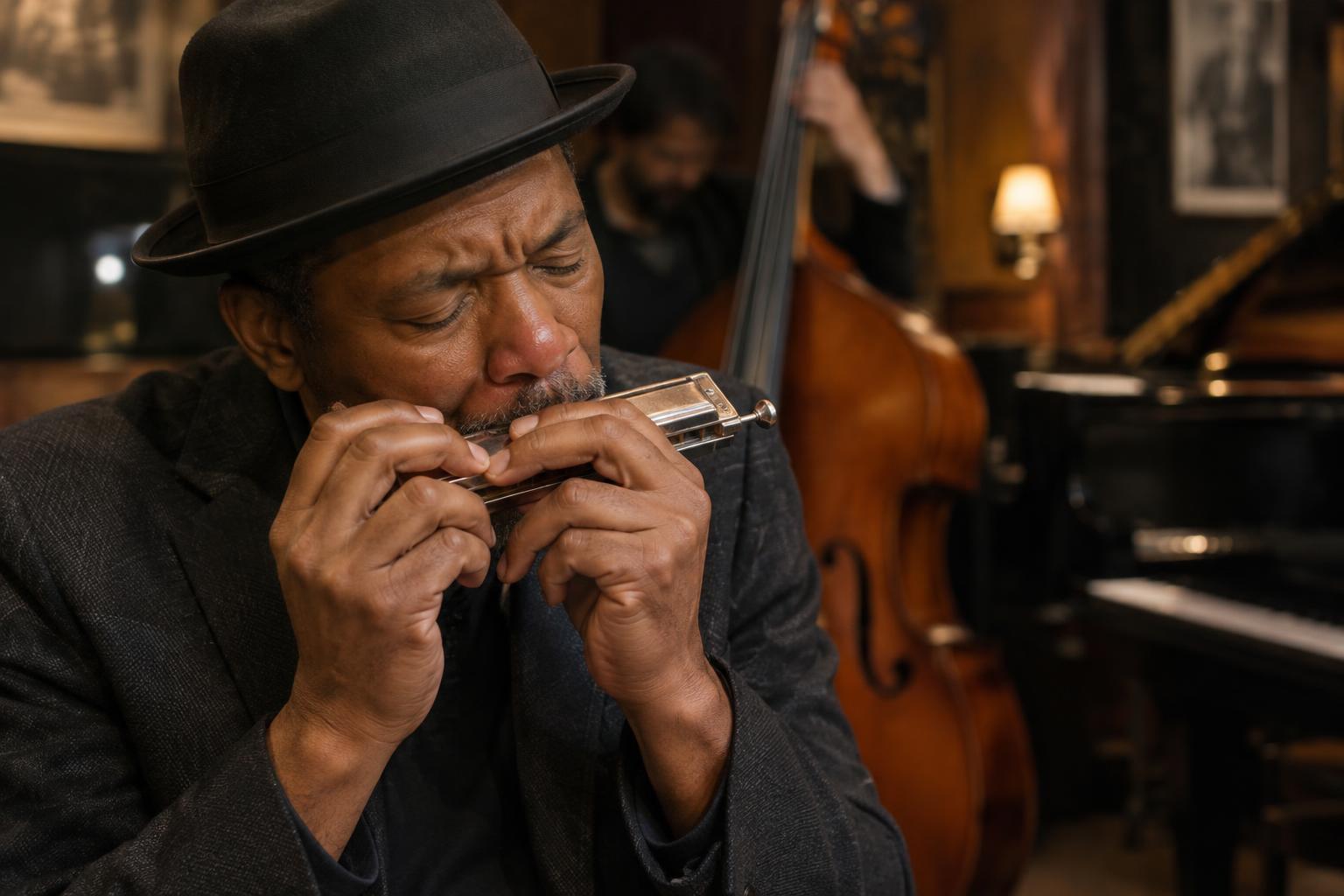
Restraint is a way of shaping energy
Cool jazz can sound calm at first: a melody enters without a flourish, a solo unfolds in short phrases, and the band leaves room around each note. Yet “cool” does not mean emotionless or technically simple. Much of the interest lies in how musicians control intensity. Instead of driving every phrase toward a peak, they may let a small change in tone, timing or harmony carry the moment.
The label covers varied music rather than a fixed set of rules. Some performances are gentle and spacious; others move quickly or contain intricate lines. Cool jazz is often associated with a lighter touch than the most forceful bebop playing, but the two styles share musicianship, improvisation and rhythmic sophistication. Listening for choices rather than checking for a particular tempo makes the style easier to recognize.
Tone and phrasing leave room to listen
A restrained sound often begins with tone. A player might favor a rounded or airy attack instead of a sharp, projecting one. Notes can seem to enter conversationally, with less emphasis on announcing each new phrase. This does not require playing softly all the time: a clear, focused sound can feel cool when the musician avoids crowding the musical space.
Phrasing matters just as much as tone. Listen for a soloist who ends an idea before the bar feels full, pauses, and then answers it with a slight variation. Longer notes may give a harmony time to register; shorter ideas may sound carefully placed rather than hurried. Silence becomes part of the line. The listener can follow not only what the player says, but also where they choose to stop.
Arrangements spread the attention
Some cool jazz recordings use arrangements that give several instruments distinct roles. A melody may pass between voices, or two lines may move alongside one another instead of having everyone support a single lead. Softer instrumental colors and blended ensemble passages can make the music feel measured even when the writing is detailed. That sense of balance is part of the appeal: no one sound needs to dominate.
This can create an almost chamber-like quality, though cool jazz is not limited to small, carefully arranged groups. Improvisation still has a central place, and a written passage may simply establish a color that the players develop freely. When listening, notice what happens behind a solo: a modest countermelody, a held note or a brief response can change the mood without interrupting the soloist.
The rhythm can swing without pushing
A relaxed surface does not mean the rhythm section has stopped working. Bass and drums can maintain a strong pulse while keeping their accents understated. Rather than urging every phrase forward, they may leave the soloist room to sit slightly behind, on, or ahead of the beat. The result can feel unhurried even when the tempo is brisk.
Pay attention to how the group handles transitions. A drummer might change texture rather than volume; a pianist might answer with a spare chord instead of a dense run. These small decisions help the music breathe. They also reveal why “background music” is an incomplete description of the style: its quieter details often reward close attention.
A simple way to hear the cool approach
On a first listen, follow the melody and ask where it gives you room to anticipate the next note. On a second, focus on the rhythm section: is the pulse steady, and how do the players make it feel light or grounded? Then listen to the ensemble as a conversation. Notice who introduces an idea, who responds and whether an apparent pause is filled by another instrument.
It also helps to compare two performances of similar material rather than treating cool jazz as a checklist of sounds. One group may create restraint through sparse solos; another may achieve it through blended writing or delicate rhythmic support. The useful question is not whether the music is quiet enough to qualify. It is how the players use space, color and timing to make every gesture count.