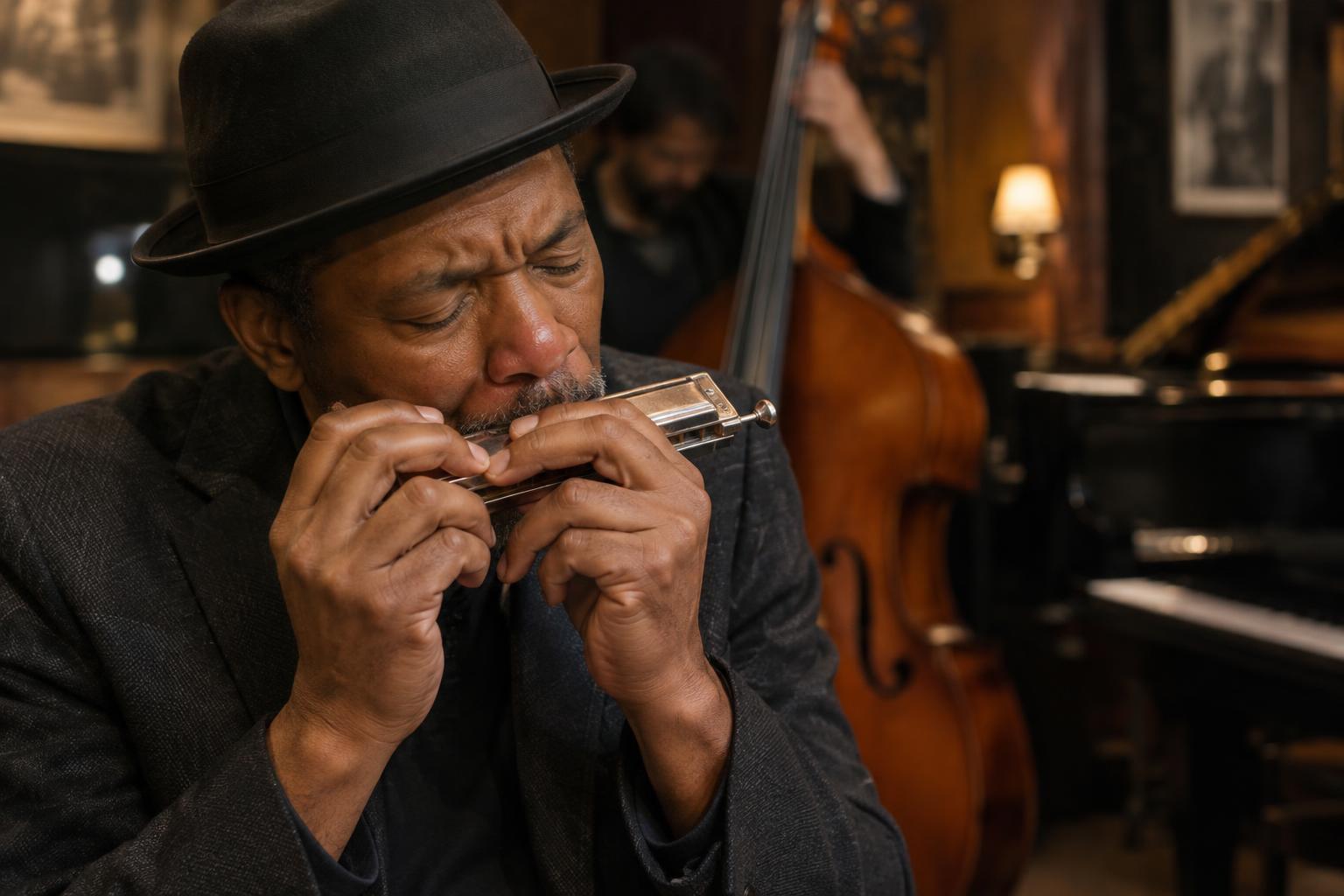
Start with the kind of evening you want
There is no single best seat in a jazz club. A place near the band can make a performance feel immediate: you may catch a pianist’s hands, a drummer’s subtle cues, or the expressions musicians exchange as a solo changes direction. A seat farther back may offer a more complete view of the group and a sound that has had room to blend. Neither experience is more authentic. The useful question is what you most want to hear and see.
Think, too, about whether you plan to listen closely or spend part of the evening talking with a companion. If your main purpose is the music, choose a seat where you can face the stage without turning your body and where conversation around you is less likely to compete with quieter passages. If you are new to jazz, being able to see several players at once can make it easier to follow how they respond to one another.
Look for a view of the whole group
A clear sightline helps you follow a performance, even if you do not know the names of every instrument or musical technique. From a central seat, you may see a soloist turn toward the rhythm section, a bassist signal the pulse, or a drummer shift from brushes to sticks. Those small movements can reveal how much of jazz is conversation rather than a sequence of isolated solos.
Check what might interrupt that view. Pillars, tall chairs, standing areas, and the angle of a raised stage can matter more than raw distance. A front-row seat directly beside the piano might offer a wonderful view of the keyboard but hide the horn player behind its lid. If the room allows you to choose on arrival, pause for a moment before sitting. Imagine where other guests and servers will be once the club fills up.
Listen for balance, not just volume
Sound changes across a room. Close to a drum kit or a brass instrument, one player may dominate what you hear. Near a loudspeaker, amplified vocals or keyboards may feel especially prominent. Farther away, the instruments may blend more naturally, though room noise can become more noticeable. The arrangement varies by club, band, and sound system, so treat any seating rule as a starting point rather than a guarantee.
A middle-distance seat with a reasonably direct view of the stage is often a useful first choice. If you can hear music playing before your set, notice whether you can distinguish the bass line and softer details without straining. Hard walls and ceilings can make some spots sound lively or muddy; an overhang or corner may change the sound again. When selecting a seat, consider what you will be hearing from the stage as well as from any speakers nearby.
Decide how close you want to feel
Proximity can bring you into the physical detail of a performance. You might hear the air in a saxophone’s tone or the contact of a brush against a snare drum. You may also become more aware of stage monitors, instrument mechanics, and the difference between acoustic sound and amplified sound. Close seats reward attention, but they are not always the easiest place to hear the ensemble as a whole.
If you enjoy watching interaction between musicians and audience, a small table near the stage can be memorable. It also asks you to be considerate: keep conversation low, avoid blocking someone else’s view, and follow the venue’s policy on photography. If you would rather absorb the set without feeling visible to the performers, a seat a little farther back may help you relax. Comfort can make sustained listening easier.
Make the practical choice before the music starts
A promising seat can become distracting if it is beside a busy doorway, service station, or walkway. Think about legroom, table height, temperature, and how easily you can leave your seat between sets. If you have an access need, ask the venue about entrances, seating, and sightlines before booking when possible. A club’s layout is difficult to judge from a seating chart alone.
When reservations offer fixed seats, choose according to your priorities rather than assuming the most expensive or closest option will suit you best. If seating is flexible, arrive with enough time to take in the room and ask staff which areas tend to be quiet or have a clear view. Then let your choice stand. Once the music begins, the most valuable seat is usually the one that lets you stop evaluating the room and start listening to the band.