The ride cymbal: a moving center
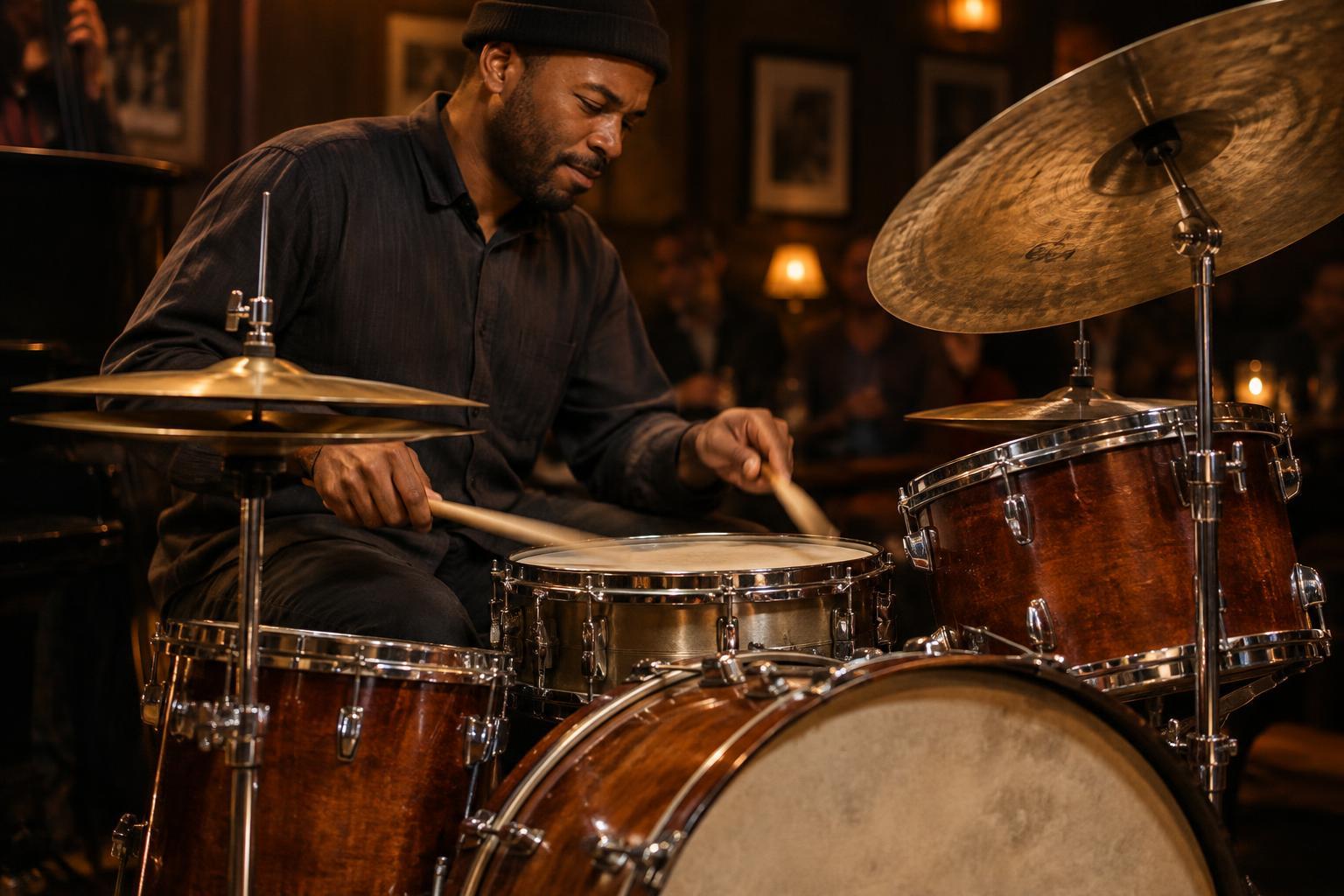
In many small-group jazz performances, the ride cymbal carries the clearest sense of forward motion. Listen for a repeating pattern of taps, often with a longer space followed by two closer notes. Drummers may vary that pattern, but its flowing sound can help the band and the listener feel where the beat is going. Unlike a metronome, a ride cymbal does not need to sound identical from moment to moment. Changes in spacing, volume, and touch can make the music feel relaxed, urgent, or buoyant.
The cymbal also has more than one sound. A tap near its edge may produce a broad wash; a strike nearer the bell can sound sharper and more defined. A drummer might use that contrast to bring out a phrase or lift the energy behind a solo. When listening, try following the ride for one chorus without focusing on the melody. Notice how its pulse stays recognizable even as the drummer changes the details.
The hi-hat: marking time and shaping space
The hi-hat is a pair of cymbals operated by a foot pedal, though a drummer can also strike them with sticks. Pressing the pedal brings the cymbals together for a short, crisp sound. In a common swing approach, the drummer closes the hi-hat on beats two and four. Those little clicks can make the pulse easier to locate without filling every gap in the music.
That is only one approach. A drummer may leave the hi-hat open for a softer hiss, use it to mark a different subdivision, or play a passage with very little hi-hat at all. Pay attention to how long each sound lasts. A tight click can give the groove a light outline, while a more open sound adds texture. The hi-hat is often quieter than the ride, but it can strongly influence how settled or animated the rhythm feels.
The snare drum: accents and conversation
The snare drum can make a crisp snap, a gentle tap, or a brushed whisper. In some jazz settings, drummers use it for “comping”: short rhythmic ideas that support and answer what the other musicians play. Rather than striking it on the same beats throughout a tune, a drummer might place a soft note between ride-cymbal taps, add an accent after a piano phrase, or leave space for a horn player’s next idea.
Listen for the difference between an accent and a response. An accent can underline a moment the whole band reaches together. A response may seem to pick up a soloist’s rhythm and turn it around. Quieter snare notes matter, too: they can add movement without pulling attention away from the melody. Brushes change the texture again, allowing the drummer to sweep across the drumhead or play delicate taps when the music calls for a lighter touch.
The bass drum: weight without heaviness
The bass drum provides the kit’s low sound, but in jazz it is not always a loud thump. Some drummers play a very soft note on each beat, an approach often called “feathering.” It can reinforce the pulse alongside the bassist while remaining barely noticeable on its own. Other drummers use the bass drum more selectively, placing notes that emphasize a phrase or add a sudden push.
The room, the ensemble, and the style all affect how prominent the bass drum sounds. In a quiet passage, even a restrained note may be clear; in a busier passage, it may be felt more than heard. To find it, listen beneath the cymbals for a short, low attack. Then notice whether it follows a regular pattern or appears at particular turning points in the music. Neither choice is automatically better: each gives the band a different kind of support.
Hearing the kit as one instrument
These parts rarely work in isolation. The ride may carry a flowing pulse while the hi-hat gives it a crisp outline. A snare accent can interrupt that flow for an instant, and a bass drum note can give the same accent more weight. Together, those sounds let a drummer maintain time and participate in the musical conversation.
For a simple listening exercise, play a passage twice. On the first pass, follow only the cymbals and notice which sound seems to guide the pulse. On the second, focus on the drums beneath them: where do the snare and bass drum add emphasis, and where do they stay out of the way? You may hear the drummer making small choices that change the feel of the performance without changing the tune itself. That is part of the pleasure of listening closely to a jazz rhythm section.