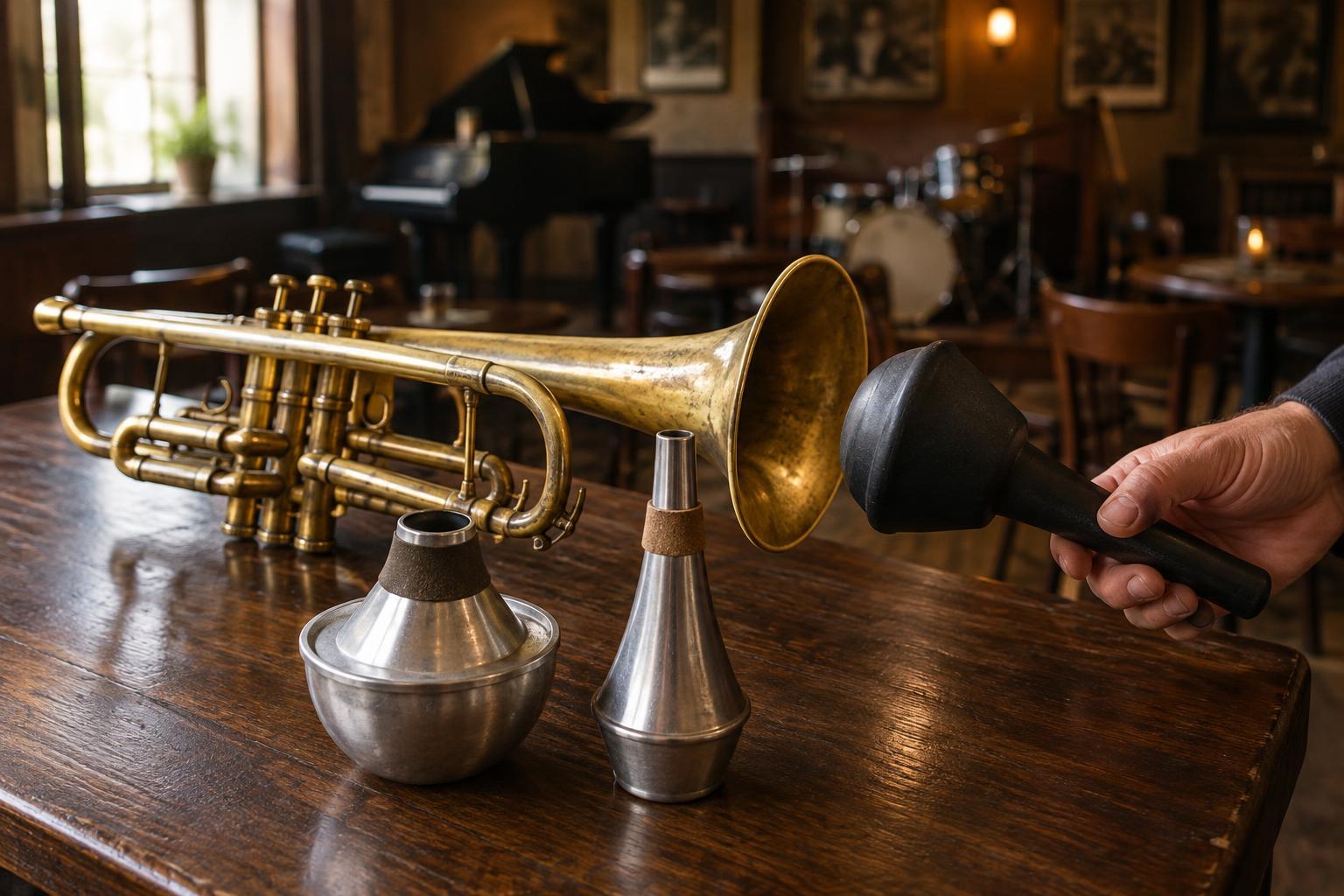
Start with the shape of the sound
A trumpet mute changes the instrument’s tone by altering how sound leaves the bell. It can soften an edge, emphasize a narrow band of frequencies, or give a note a voice-like inflection. In jazz, that color can be as important as the notes themselves: a muted phrase may sound private and restrained, sharply focused, or playfully conversational.
When trying to identify a mute by ear, listen beyond volume. Notice whether each note has a rounded or pointed attack, whether the tone feels open or enclosed, and whether its character changes while the note is held. The player’s register, articulation, and microphone placement can affect all of these impressions, so treat them as clues rather than strict rules. Comparing a few phrases within the same recording is often more useful than comparing unrelated performances.
Cup mute: a rounded, shaded tone
A cup mute fits into the trumpet bell and places a cup-shaped piece in front of its opening. The result is often a warm, covered sound with less brilliance than an open trumpet. Notes may seem to have softened edges, while still retaining a clear pitch and enough presence to carry a melody. Depending on the mute’s design and how it is adjusted, the sound can range from gently shaded to quite enclosed.
Listen for a tone that stays relatively consistent through a phrase. A cup mute can help a trumpet blend with other horns or make a solo line feel intimate without turning every note into a special effect. If you hear a compact, rounded sound but little deliberate change in its color during sustained notes, a cup mute is one possibility.
Harmon mute: a focused buzz
The Harmon mute, often called a wah-wah mute, sits in the bell and produces a distinctly concentrated, sometimes buzzy or metallic tone. Many have a removable stem. With the stem out, the sound can be especially tight and direct; with the stem in, a player can use a hand near its opening to vary the tone and create a wah-like effect. Not every player uses the mute in the same configuration, so the name alone does not tell you exactly what you will hear.
Compared with the cup mute’s rounded shading, a Harmon mute often makes the center of a note stand out while the surrounding sound feels thinned or filtered. Try listening to a held note and then to a short run. Does the tone have a narrow, electric-like focus even when the player is not visibly or audibly making a wah gesture? That quality can be a useful clue.
Plunger: sound shaped by the hand
A plunger mute is usually a rubber cup held in front of the bell rather than fixed inside it. By moving it closer and farther away, the player changes the tone as a note sounds. A nearly covered bell can produce a dark, pinched quality; opening the space can let a brighter sound emerge. This motion gives the plunger its speech-like personality, from a small vowel shift to an exaggerated growl or cry.
The clearest listening cue is movement within a single note or gesture. You might hear a sound open abruptly, close at the end of a phrase, or pulse in response to the rhythm. Players may combine the plunger with other techniques, which makes some sounds hard to identify with certainty. Still, when the trumpet seems to be forming syllables rather than simply sustaining notes, the plunger is worth considering.
Put the differences to work while listening
For a simple exercise, follow one trumpet line and describe it without naming the mute. Is the tone evenly mellow, steadily narrow and buzzy, or changing shape as though it is speaking? Then listen again for the note endings. A cup-muted phrase may remain smoothly shaded; a Harmon-muted one may keep its focused edge; a plunger phrase may close or open dramatically at just the right moment.
These are tendencies, not a test with an answer for every recording. A musician can vary air, articulation, and distance from the microphone, and a recording may obscure details you would notice in a room. The reward for listening closely is not merely identifying equipment. It is hearing how a trumpeter uses tone to give a phrase character: the cup can make it tender, the Harmon can make it incisive, and the plunger can make it talk.