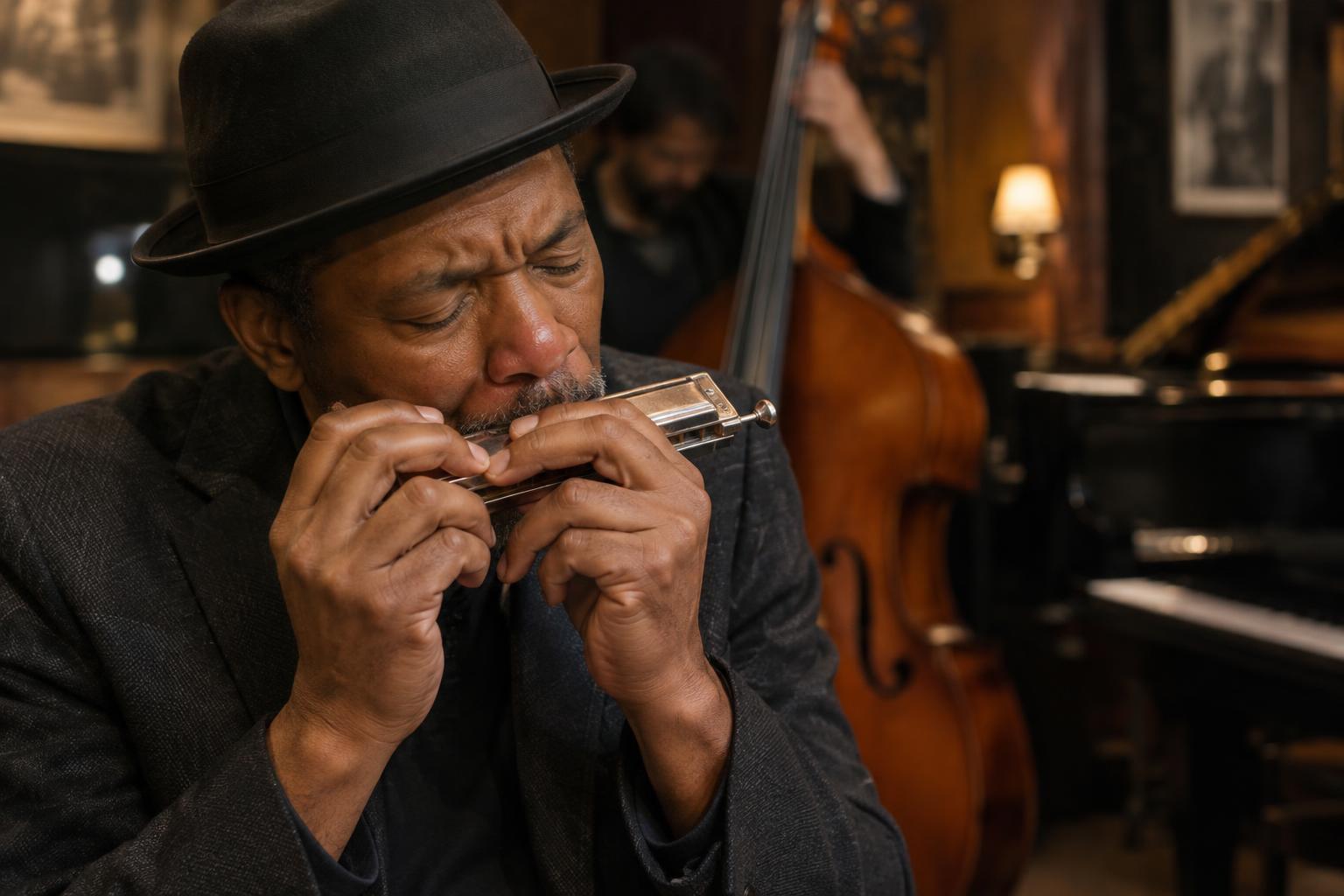
Start with the room’s rules
Live jazz often happens in close quarters. The audience may be only a few steps from the players, and a small movement or bright screen can draw attention. Before taking out a camera, look for the venue’s posted photography policy. Rules may differ between performances, even at the same venue, so a previous visit is not a guarantee.
If the policy is unclear, ask a staff member before the set begins. Check whether still photos are allowed, whether recording is prohibited, and whether there are restrictions on where you can stand. A musician’s apparent comfort with cameras does not override a venue rule. Likewise, permission to take a photo does not necessarily include permission to record a song or move around the room. If photography is not allowed, put the camera away and enjoy listening.
Leave the flash off and keep the camera quiet
Flash is particularly intrusive in an intimate club. It can startle a performer, interrupt another listener’s view, and change the atmosphere of a room built around focused attention. Turn it off before the music starts, and check that any focus-assist light or screen illumination will not switch on unexpectedly. If the available light is too dim for a usable image, accept a darker photograph or skip the shot rather than adding light.
Sound matters too. Disable camera beeps and other notification sounds, and use a quiet shutter mode if your device offers one. Be aware that a camera’s quiet mode may still make noise. Dim your screen and avoid reviewing every image during the set: a glowing display can be as distracting as the act of photographing. A few deliberate frames usually serve the music better than repeated bursts.
Choose moments without hunting for them
Good timing is not simply a matter of catching a dramatic solo. Notice what is happening across the bandstand. A player might be listening closely while someone else solos, or the group might be preparing for a change in dynamics. These moments can make expressive images, but they are not invitations to move closer or lift a camera into someone’s sightline.
From your seat, frame a photograph when you can do so without blocking a neighbor. Avoid standing up mid-song, crossing in front of the stage, or photographing during a hushed passage if your shutter is audible. If the venue permits movement, a break between sets is usually a better time to change position. Resist the urge to capture every musical peak. Missing a picture is preferable to becoming part of the performance in a way nobody intended.
Respect the audience and the working space
A live jazz room is shared space. Keep bags, tripods, and camera straps out of walkways, and do not crowd servers, staff, or other listeners to improve your angle. A permitted photograph from your table is not a reason to lean over the person beside you. In small venues, it is also easy to include audience members in a frame unintentionally; consider whether they would welcome being the subject of a close-up.
The bandstand is a working space, not an open photo area. Do not touch instruments, cables, microphones, or equipment, and do not enter backstage areas without an invitation. If you are attending in a professional capacity, arrange access with the appropriate person beforehand rather than negotiating from the edge of the stage during a set. For a casual listener, staying put and photographing sparingly is often the most considerate approach.
Share thoughtfully after the show
Before posting an image, look beyond the musician at the center of the frame. Is another performer caught in an awkward expression? Is an audience member clearly identifiable in a private moment? A careful crop or a different photograph may better represent the evening. Avoid using a picture to imply that an artist endorsed your work, event, or product when they did not.
If you want a posed portrait or have a specific use in mind, ask at an appropriate time rather than interrupting a conversation or a performance. Be especially clear about any intended commercial use. For ordinary sharing, a straightforward identification of the musicians and venue, when you know it is accurate, helps give context without overstating your access. The best live jazz photograph preserves a moment while leaving the people who made it free to play and listen.