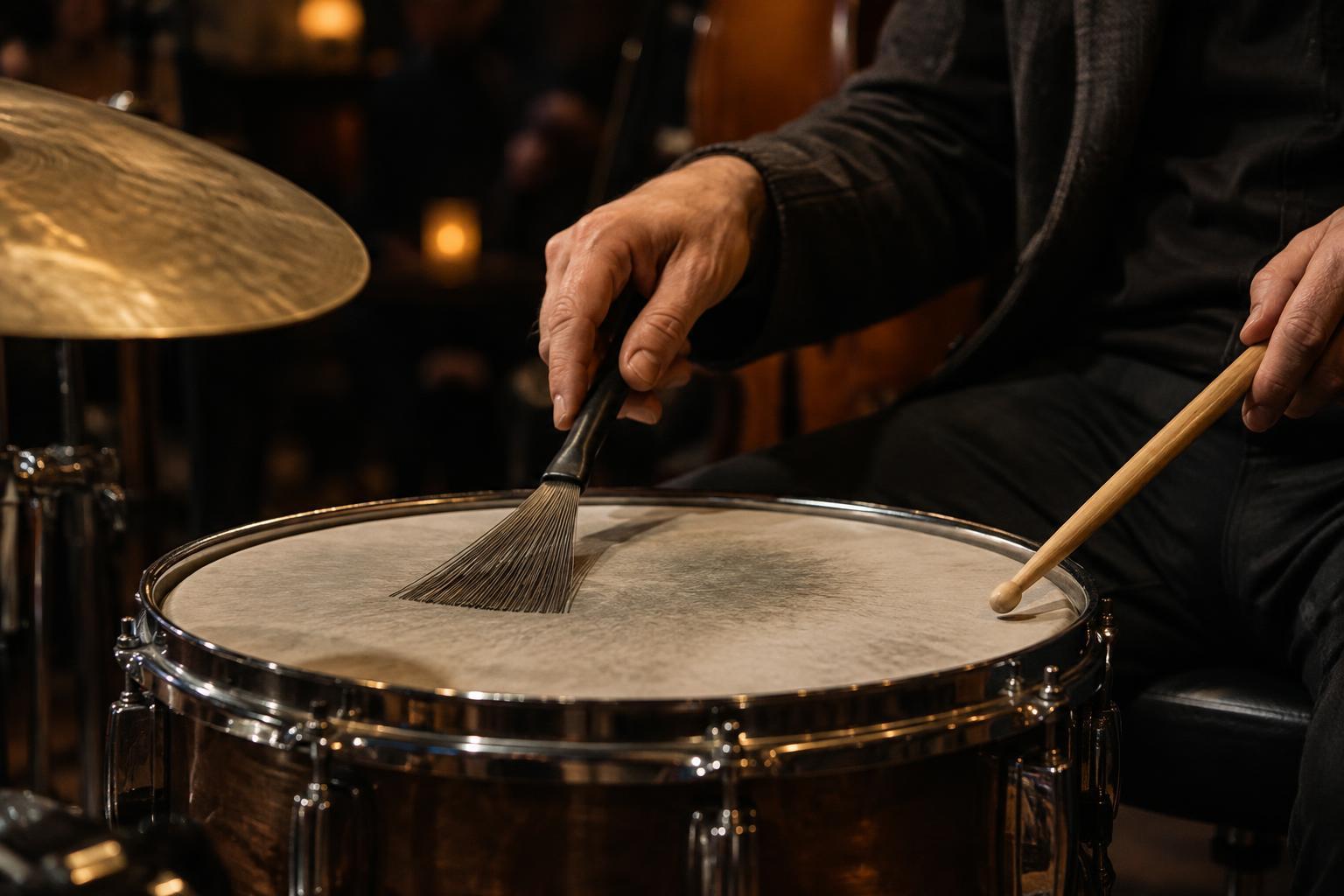
The same beat, a different surface
A jazz drummer can keep the same tempo and basic pulse while changing the character of a performance simply by picking up a different pair of tools. Sticks tend to produce clear attacks: a tap on a cymbal, a note on a snare drum, or an accent on a tom. Brushes can make those attacks softer and less distinct, while adding a sustained sound as their wires move across a drumhead. The difference is not just volume. It changes how the rhythm sits beside the piano, bass and soloist.
Neither choice belongs to a single jazz style or mood. Brushes often suit an intimate setting, but they can drive a brisk performance. Sticks can be forceful, yet a drummer can also play them with remarkable restraint. Rather than treating brushes as the quiet option and sticks as the loud one, listen for the kinds of edges, spaces and motion each makes possible.
What brushes add to the snare
With brushes, the snare drum becomes more than a surface to strike. A drummer can sweep one brush around the head while the other marks accents or subdivisions. That continuous sweep creates a soft, grainy sound between the beats. It can help a slow or medium-tempo groove feel connected, even when the played accents are sparse. Short strokes, taps and sharper flicks can bring definition back into the pattern when needed.
Brushes do not erase rhythm; they distribute it differently. A stick hit gives the ear a precise point in time. A brush sweep may lead into that point and continue past it. This is one reason a brushed passage can feel spacious without feeling empty. The bass may state a steady walking line while the drummer suggests movement with swirls and small accents, leaving room for a melody or solo phrase to breathe.
What sticks bring into focus
Sticks offer a wide range of distinct sounds across the kit. A drummer might use the ride cymbal to carry the pulse, add brief snare responses, and place occasional notes on the bass drum or toms. The cymbal’s sustained ring differs from a brush sweeping on a snare: individual taps remain audible within the wash. That combination can make the time feel both flowing and clearly articulated.
The tip and the shaft of a stick also produce different effects. A light tip stroke on the ride cymbal can sound delicate, while a stronger strike on a drum rim or head can cut through an ensemble. These contrasts help a drummer outline a new section, answer a soloist, or raise the energy without necessarily changing the underlying tempo. Good stick playing is as much about choosing when not to accent as it is about making an accent heard.
Why a drummer might switch
A change from brushes to sticks can signal a shift in intensity, but it need not mean that everyone is about to play louder. It may give the ensemble a clearer rhythmic edge as an arrangement moves from a vocal passage into an instrumental solo. A switch in the other direction can soften that edge and bring attention to the details of a melody. In either case, the drummer is adjusting the texture around the other musicians.
The room and the band matter, too. A brush sweep that is easy to hear in a small, quiet group may be harder to distinguish amid louder instruments. A player might respond by using more pointed brush strokes, choosing sticks played lightly, or changing where they play on the kit. These are musical decisions rather than fixed rules. Drummers also have other tools and techniques between the two familiar sounds, so a performance may offer more than a simple either-or contrast.
A simple way to listen for the difference
On your next jazz recording, begin by following only the drummer for a few moments. Can you hear separate taps on a cymbal, or a continuous shushing sound on the snare? Notice whether the accents land like small punctuation marks or seem to emerge from an ongoing sweep. Then listen to the bass alongside the drums. Does the drummer define each part of the pulse, or leave some of that work to the bass line?
Finally, pay attention when the musical section changes. If the drummer switches tools, ask what changes besides loudness. The groove may acquire a sharper outline, the soloist may gain more open space, or the whole group may feel more settled without slowing down. Hearing those choices turns brushes and sticks from background equipment into part of the conversation that gives a jazz performance its character.


