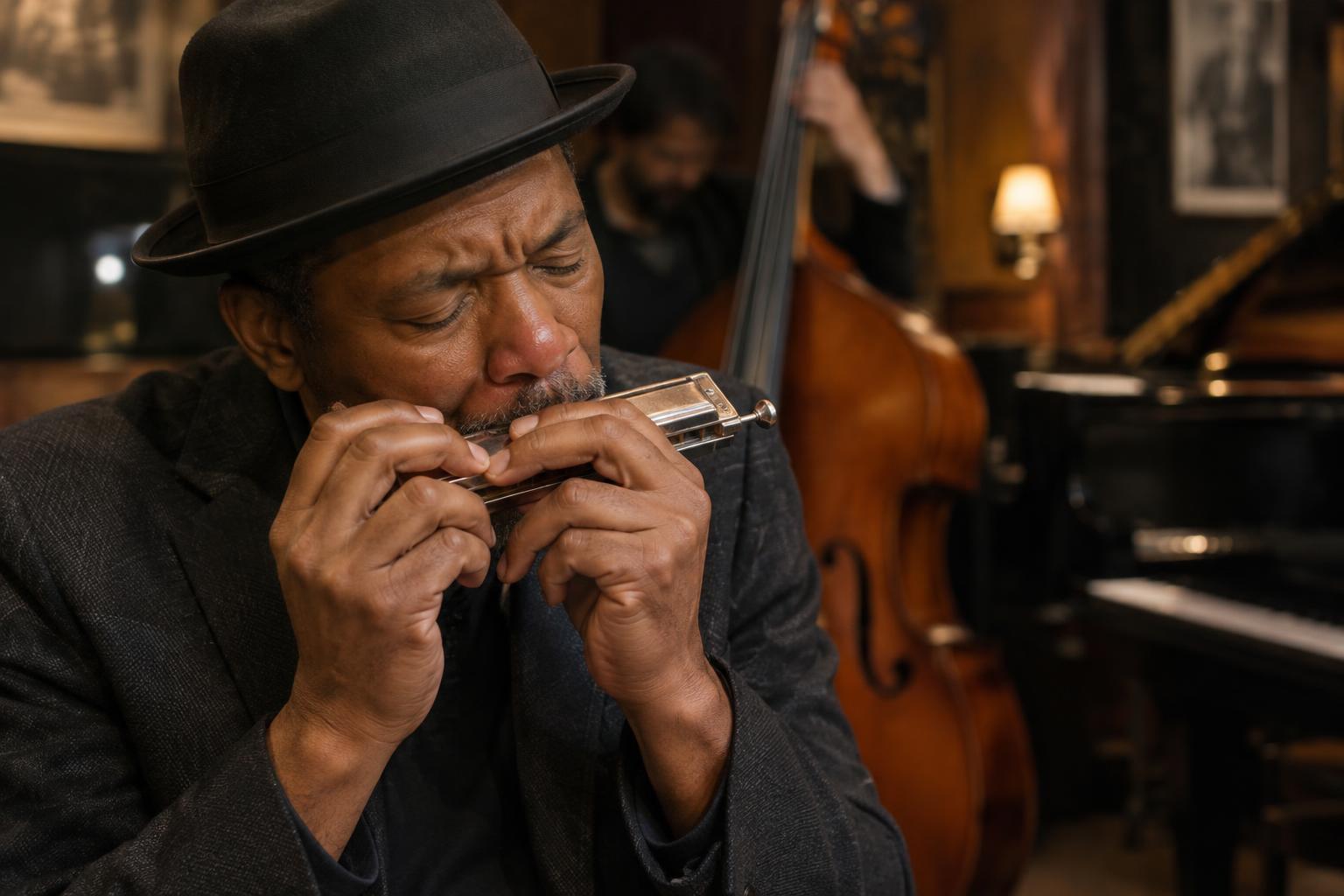
Setting the direction without scripting every note
A jazz bandleader is often the person who brings the group together, chooses the music and gives a performance its overall shape. That does not mean controlling every note. In a club, where players can respond to one another and to the room, leadership is often a balance between preparation and leaving space for something unexpected.
Before the set, the leader may select tunes, suggest an order and discuss arrangements: who begins, how long an introduction might last or where the ending could go. Those decisions provide a shared starting point. Once the music begins, the players can make fresh choices within it. A familiar tune might become quiet and spacious one night, then brisk and hard-driving another, depending on how the group hears it together.
Using cues to keep the music moving
Much of a bandleader’s work onstage is visible but easy to miss. A glance might invite a saxophonist to take the next solo. A raised hand could signal that the band is returning to the melody. A nod might tell the drummer that a break is coming. Players also communicate through sound: a repeated phrase, a change in dynamics or a turn in the harmony can make the next move clear without a spoken instruction.
These cues matter most when a performance stretches beyond a fixed arrangement. If a solo develops into an extended conversation, the leader may let it continue rather than move on at a predetermined point. If the energy feels ready to settle, the leader can guide the group toward a softer passage or a closing phrase. Good direction helps the music feel coherent without making it feel rigid.
Making room for the whole band
A leader’s name may be on the club listing, but a jazz set depends on more than one voice. The pianist, bassist and drummer might reshape the feel under a soloist; a horn player might introduce an idea that everyone else picks up. Part of leading is recognizing those contributions and giving them room. That can mean choosing a tune that features a particular player or stepping back while another musician develops an idea.
The best moment to enter or leave a solo is not always obvious in advance. Onstage, a leader listens for what is happening rather than simply waiting for a turn. If the rhythm section finds a compelling groove, the leader might allow it to breathe before bringing back the melody. If the ensemble needs a clearer path, the leader can offer one. This kind of attention makes leadership feel less like a chain of commands and more like a conversation.
Connecting the set to the room
In a club, a bandleader also helps create a relationship between performers and listeners. Brief introductions can give the audience a way into a tune: perhaps its mood, its place in the set or the reason the group enjoys playing it. Introducing the musicians lets listeners connect names with the sounds they hear. None of this requires a long speech; a few well-chosen words can make the next piece feel more inviting.
The leader may also adjust the set’s pace. Several intense performances in a row can be thrilling, but a quieter tune may give both the band and the audience a chance to listen differently. The room does not dictate every choice, and a leader need not chase an immediate reaction after each piece. Still, awareness of the audience is part of the live setting: the set unfolds with people present, not in isolation.
How to listen for leadership
At your next jazz club performance, watch what happens between tunes and near the end of solos. Who suggests the tempo? Who signals a return to the melody? Does a player introduce an idea that changes the direction of the band? The answers may vary from tune to tune. Some leaders are visibly animated; others guide the group with small gestures or musical phrases.
It is also worth noticing when the leader does nothing. Allowing a bassist’s line to continue, waiting through a pause or letting the drummer shape an ending can be an active choice. The bandleader’s role is not to occupy the center of every moment. It is to help the musicians find a shared direction while preserving the give-and-take that makes a live jazz set worth hearing.