A Voice That Can Weave Through a Band
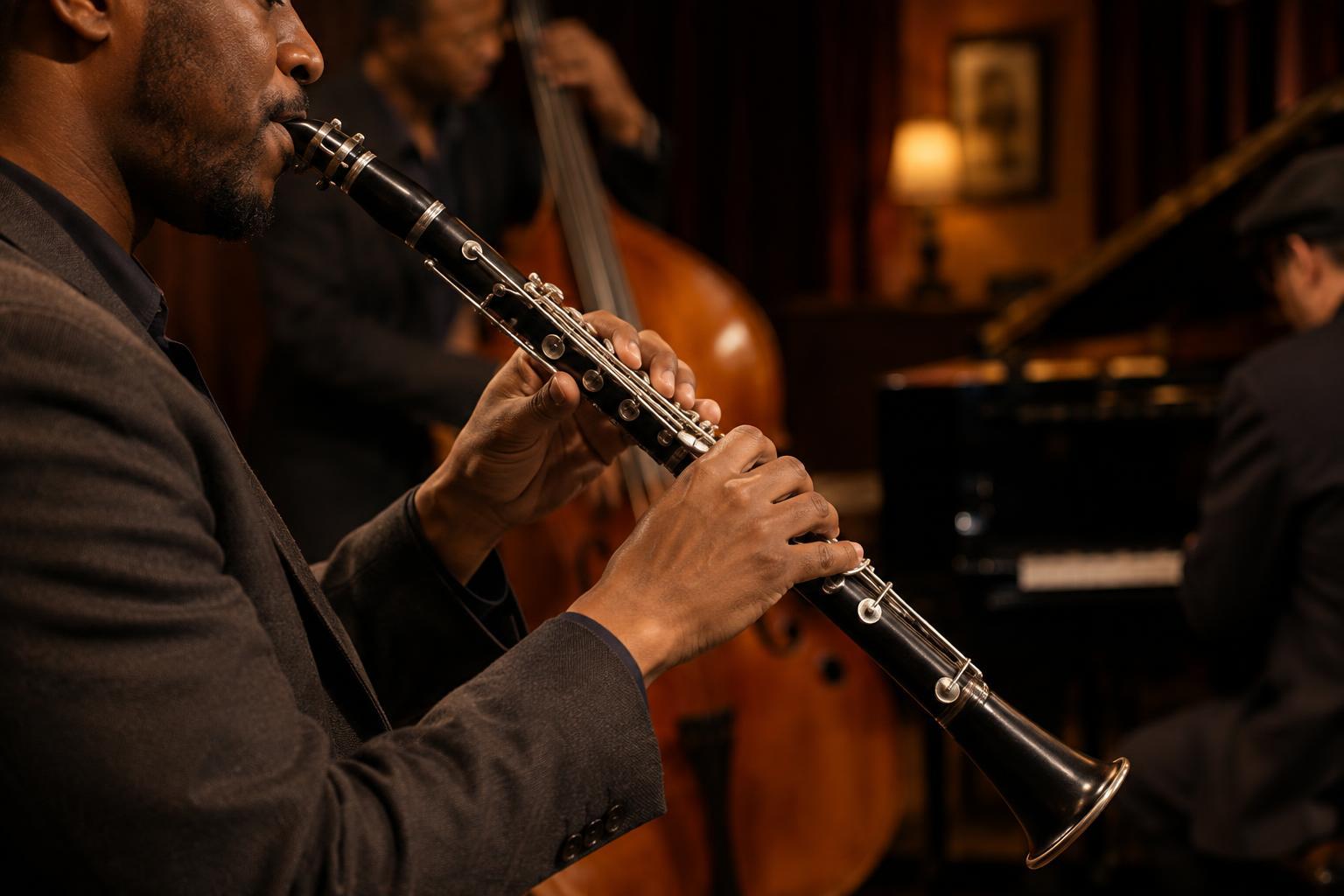
The clarinet has a distinctive way of moving through a jazz ensemble. Its low notes can sound dark and close to a human voice; higher notes can be bright and penetrating. Between them, a player can change the character of a phrase without changing instruments. Listen for a line that curls around the tune, answers another horn, or briefly rises above the whole band.
In early jazz ensembles, the clarinet often shared the front line with cornet or trumpet and trombone. Rather than having everyone state the melody in unison, the trumpet might carry its outline while the trombone moved below it and the clarinet traced a more agile line above. Those parts could vary from performance to performance. The result is sometimes called collective improvisation: several musicians shaping the music at once, each with a recognizable role.
From Ensemble Texture to Featured Solo
As jazz ensembles and arranging practices changed, the clarinet also became a prominent solo voice. In swing-era bands, an arrangement might give it a written passage, a short reply to the brass, or space for an improvised chorus. Its clear attack could make a quick run stand out, while a sustained note could bring a gentler contrast after a full-band phrase.
The instrument did not belong to only one period or style. Its prominence varied across jazz settings, and players continued to find uses for it in small groups and newer musical approaches. That variety matters when listening: a clarinet line in a busy front line serves a different purpose from a solo over a rhythm section. In one setting, notice how it fits between other instruments. In the other, notice how the player develops an idea over time.
Why the Clarinet Sounds So Flexible
A clarinetist shapes sound with breath, tongue, fingers, and embouchure—the way the mouth meets the mouthpiece and reed. A note may begin sharply, swell into a longer tone, or bend slightly for expressive effect. Smoothly connected notes can make a solo feel like one unfolding sentence; clipped notes can lock into a lively rhythmic pattern. Even a simple melody can change character when the player alters those details.
The clarinet’s registers add another source of contrast. Its low register is often called the chalumeau register and tends to sound warm or woody. Higher up, the tone can become clearer and more forceful. Moving between registers is not merely a display of range: a player might repeat a phrase higher for emphasis or drop low to soften the mood. The precise sound also depends on the musician, instrument, and musical setting.
How to Listen to a Clarinet Solo
Start with the melody before concentrating on fast notes. Does the soloist quote part of the tune, stretch its rhythm, or begin with a fresh idea? Then listen for repetition. A player might return to a short figure, change its ending, and use it to lead into the next phrase. Following that small thread can make an improvised solo easier to understand than trying to hear every note individually.
Pay attention to the rhythm section as well. A clarinet phrase may lean against the pulse, leave a gap for the drums, or settle neatly alongside the bass. Silence is part of the conversation: a pause can make the next entrance feel playful or decisive. If a recording has several soloists, compare how the clarinet’s lighter texture affects the transition from a trumpet, saxophone, piano, or trombone solo.
Hearing the Clarinet in Context
A useful listening exercise is to play one passage twice. On the first pass, follow the clarinet alone: where does it enter, and when does it step back? On the second, listen to everything around it. Notice whether it echoes the main melody, fills a space left by another instrument, or creates tension by moving in a different direction. This works for a tightly arranged band as well as for a looser small-group performance.
In live jazz, the same questions become easier to explore visually. You can watch a player prepare an entrance, turn toward another musician, or leave room after a phrase. But the essential clues remain in the sound. Whether the clarinet is threading through a front line or holding the floor alone, its role becomes clearer when you hear it as part of a musical conversation.