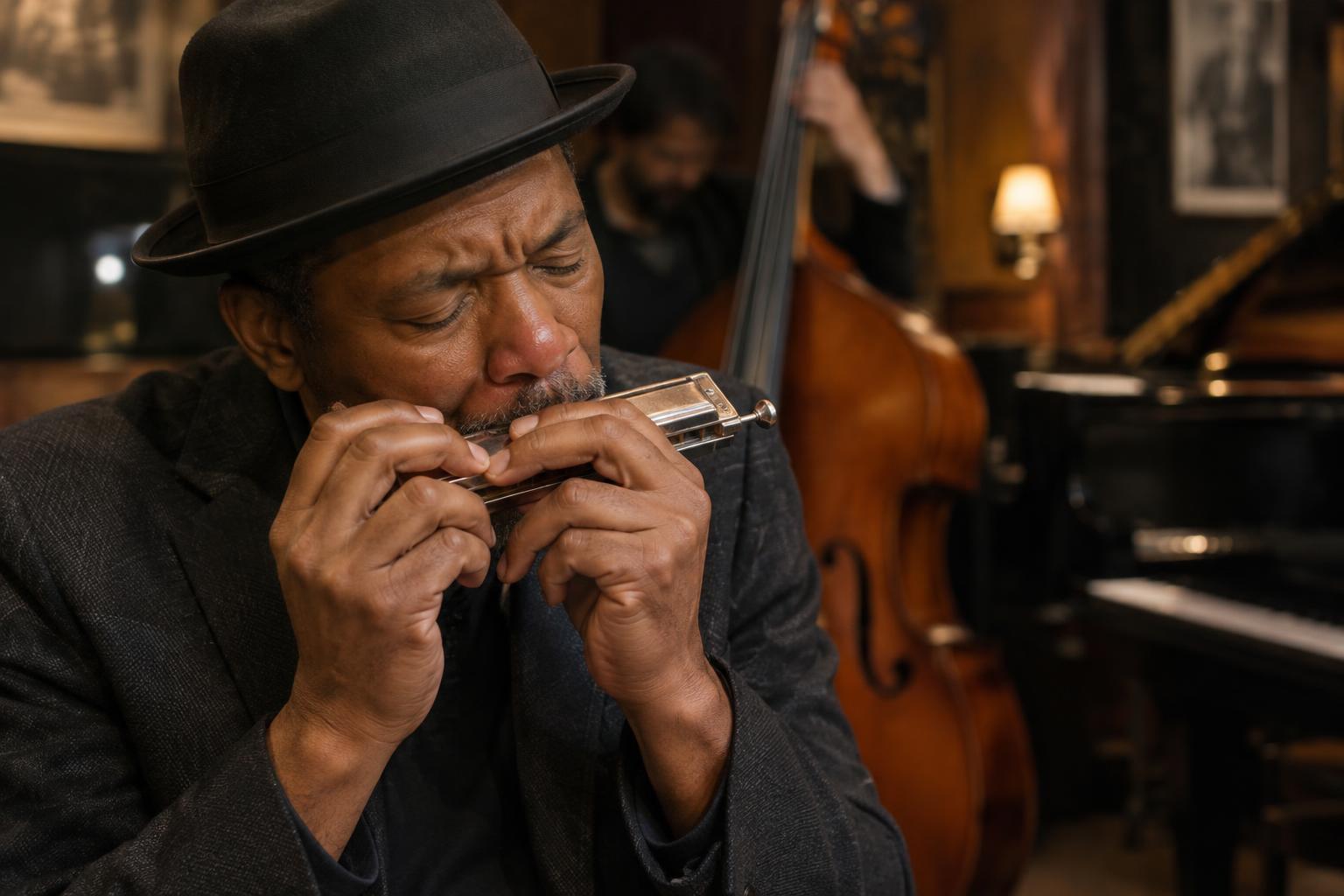
A recording session is a set of decisions
A jazz recording session brings musicians, recording staff, and a plan into the same room. The group may know which tunes it wants to record, but each performance still involves choices: a tempo, an introduction, the order of solos, and the moment an ending feels complete. Some arrangements leave little room for change; others provide a framework for musicians to reshape as they play.
A session can include rehearsals, incomplete attempts, and full performances. What ends up on an album is a selection from that work, not necessarily everything played that day. The amount of preparation and the recording method vary widely, so it is worth treating each album’s session notes as a description of that project rather than a rule for all jazz.
What counts as a take?
A take is an attempt to record a piece or a defined part of it. Musicians might stop after a difficult entrance, play through and decide the ending needs work, or finish a version everyone likes. Session documentation may number these attempts, though the numbers alone do not tell you which performances were complete or considered usable.
Playing the same tune again does not mean trying to make an exact copy. One take may move at a slightly different pace or leave more space behind a soloist. A drummer might change an accent; a pianist might answer a phrase differently. In music that allows improvisation, these changes can alter the shape of the whole performance, even when the tune and personnel stay the same.
Why alternate takes are worth hearing
An alternate take is another recorded performance of a piece alongside a version chosen for release. It might first appear as an extra track on a later edition, or it might be issued in another context. “Alternate” identifies its relationship to a selected version; it does not automatically mean the musicians played worse. A producer could favor one take for its overall momentum while another contains a solo a listener loves.
To compare two takes, start with what remains constant: the melody, the arrangement, and the points where solos begin. Then listen for changes in tempo, phrasing, accompaniment, and how the players respond to one another. Try focusing on the rhythm section during the same solo passage in each version. The comparison makes it easier to hear jazz as a series of live decisions rather than a fixed sequence of notes.
The many meanings of “master”
In session discussions, the master take usually means the performance selected as the primary version for release. On a track list, a label such as “master take” may distinguish that selection from alternate takes of the same tune. It describes a choice about the performance, not proof that the recording was captured without flaws or that everyone agreed it was the best possible version.
Recording staff also use “master” for the prepared recording from which release copies are made. That meaning concerns the production process, not which performance the musicians played. Editing, mixing, and mastering can be separate stages, and their roles depend on how an album was recorded. When reading credits or liner notes, check whether “master” refers to a chosen take or to a finished recording.
How to listen without turning a session into a contest
Start with the album version of a tune, then play an alternate if one is available. Notice the broad arc before judging individual solos: Does the group settle into the tempo quickly? Where does the energy rise or ease back? How does the ending follow from what came before? A take with a striking moment may still feel less cohesive overall, while a quieter version may reveal more of the ensemble’s conversation.
Finally, remember that not every album presents a single uninterrupted performance for every track. Recording techniques and production choices differ across projects. Liner notes can help clarify what was recorded and released, but your ears can still tell you why two versions feel distinct. The goal is not to declare a universal winner. It is to hear how a familiar tune can become a new event each time musicians play it.