What makes a bass line “walk”?
In many swing performances, the upright bassist plays one note on each beat of the bar. The notes move from one harmony to the next with a steady, step-by-step feel: that is a walking bass line. It serves two purposes at once. Its pulse helps the band and listener feel the time, while its choice of pitches outlines the changing chords. A good line feels continuous, even when the harmony changes every bar.
“Walking” describes the effect, not a rule that every note must be a scale step. A bassist might move up or down by step, repeat a pitch, or leap to a note that makes the next chord clear. The line is usually heard in quarter notes, but players may occasionally leave space, add a pair of quicker notes or change the pattern to suit the music. Listening for that balance of steadiness and variation is a useful first step.
The upright bass gives the line its shape
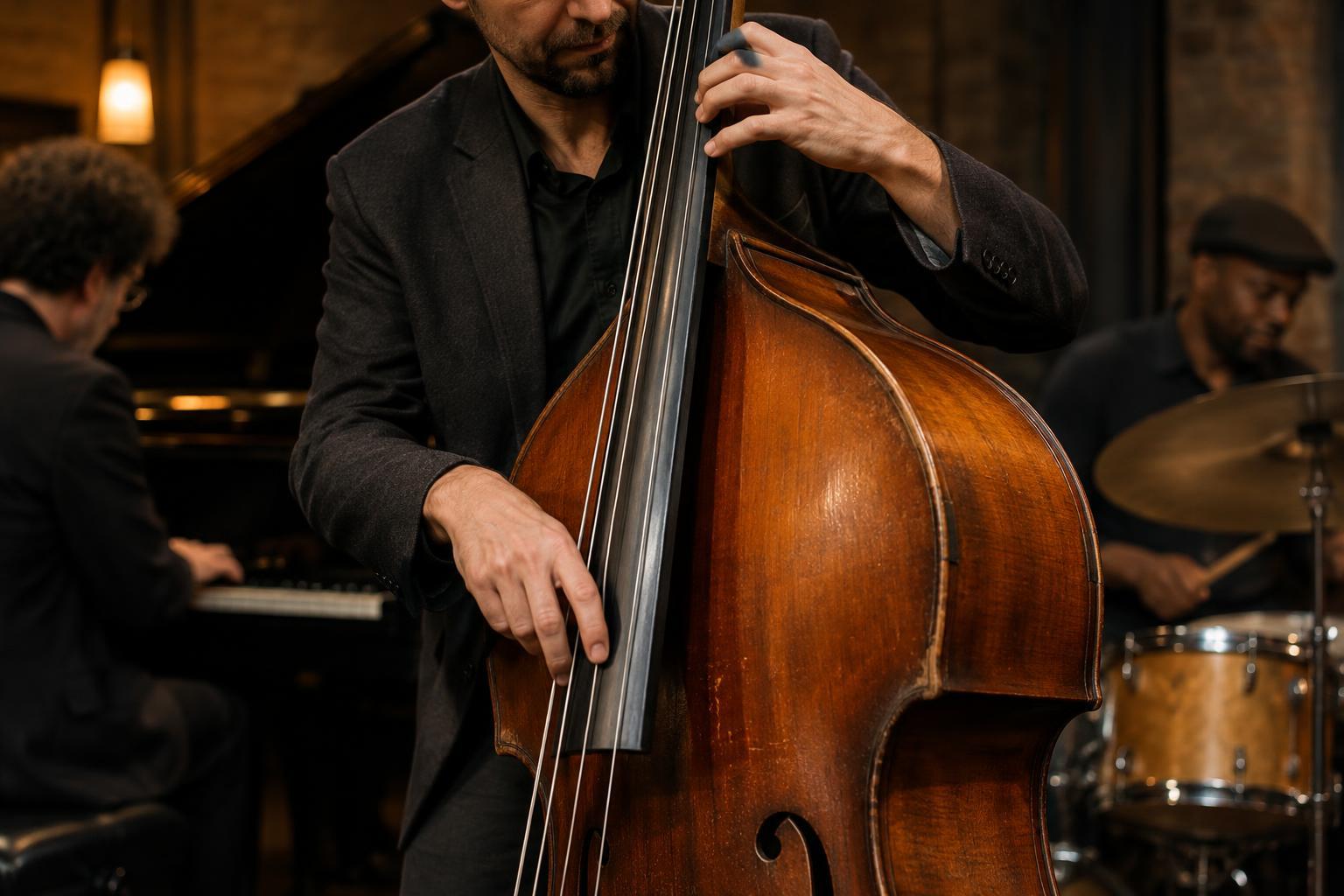
On upright bass, a player typically presses the strings against the fingerboard with one hand and plucks them with the other. Each pluck has a clear beginning followed by a natural decay. That sound helps mark the beat without requiring the note to ring at full volume until the next one. The low register supplies weight, while the pitch of each note remains distinct enough to suggest a melody.
How the player places and releases notes matters as much as which notes they choose. A short note can create space around a drum or piano accent; a more sustained note can let a phrase breathe. The bassist also has to move across a large fingerboard, so a line that looks simple on paper involves decisions about position, fingering and tone. Those physical choices can contribute to the line’s smoothness or its punch.
From chord tones to the next chord
One straightforward way to understand a walking line is to hear its destination notes. At the start of a chord, the bassist may choose its root to establish the harmony. Other notes from the chord, such as its third or fifth, can fill out the sound on subsequent beats. If the chord is C major, for example, C, E and G are notes that clearly belong to it. A line need not play all three, and it need not begin on C every time.
The notes between clear chord tones create movement. A bassist might approach the next chord’s root from one step above or below, making the change feel expected when it arrives. Suppose a bar of C major leads to F major. A line could use C, E, G and E, then land on F at the next bar. Many other paths are possible. The important question is not whether every note names the current chord, but whether the route makes musical sense and leads convincingly onward.
A shared pulse, not a solo metronome
The bassist does not establish time in isolation. In a swinging rhythm section, the bass often works alongside the drummer’s ride cymbal and, at times, a light hi-hat or snare accent. The pianist or guitarist may add chords in a pattern that leaves room for the bass. Together, these parts create a pulse with texture and flexibility. Even when the bass notes are evenly spaced, the surrounding accents can make the groove feel relaxed, driving or playful.
A player also listens to the soloist and to changes in the arrangement. A busy line might crowd a quiet phrase; a simpler one might give it room. Some passages move from a two-beat feel, with fewer bass notes per bar, into steady walking quarter notes. That shift can raise the energy without changing the song’s basic tempo. Walking is therefore both a way to connect chords and a way to respond to the band.
How to hear a walking line more clearly
On your next listen, follow the bass for a short passage rather than trying to track every instrument. First, tap the main beats and notice whether the bass plays on each one. Then listen for the beginning of each chord change: does a bass note make the new harmony feel settled? Finally, notice the notes just before a change. They often point toward where the line is going.
You do not need to identify every pitch to hear the craft. Pay attention to whether the line rises, falls or circles around a small range, and to how its sound fits the drums. The pleasure of a walking bass line lies in that combination: a dependable path through the music that is never quite the same twice.