A keyboard sound built in layers
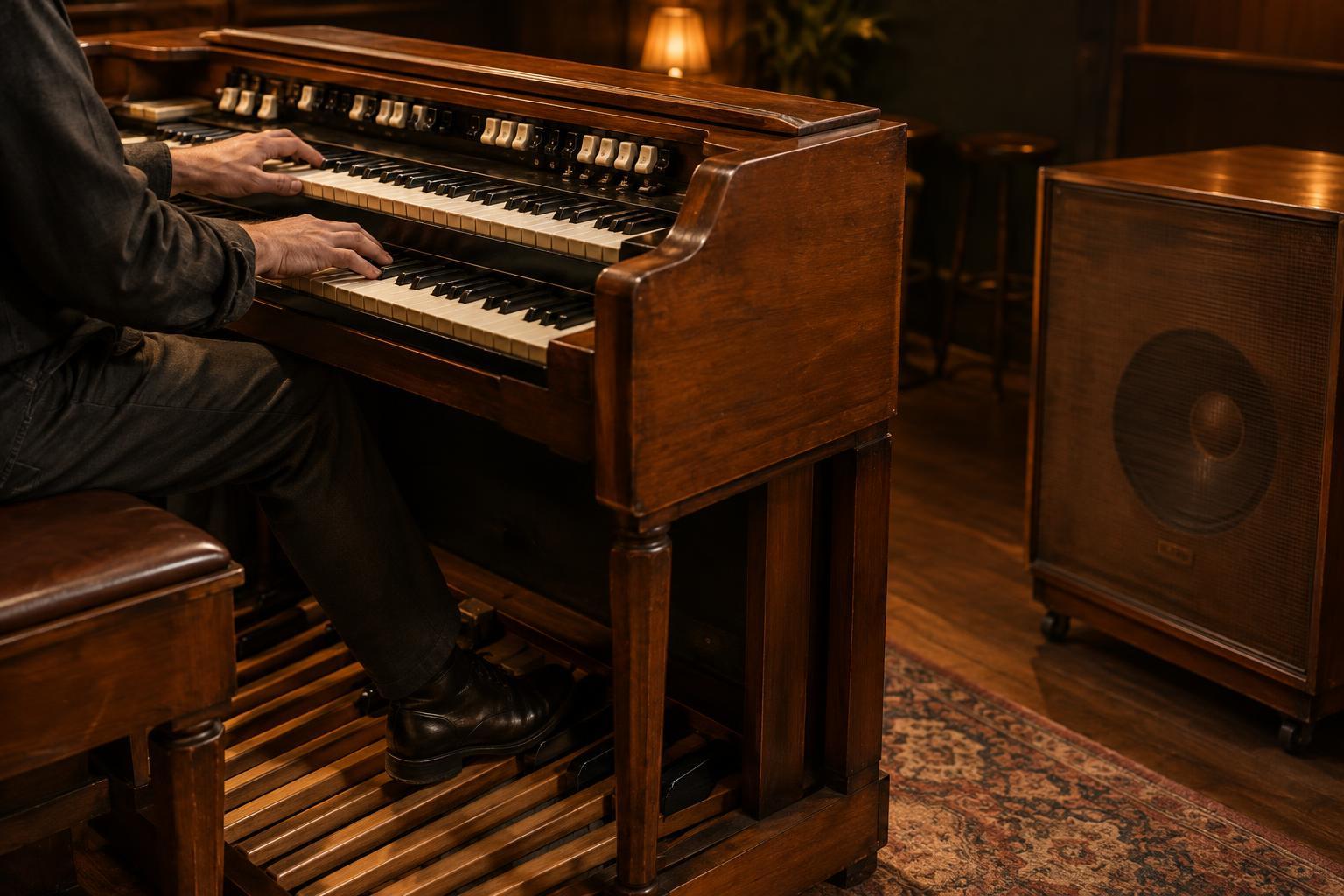
A Hammond organ may look like a pair of keyboards in a wooden cabinet, but its sound behaves differently from a piano. On a classic tonewheel Hammond, a note is assembled from several pitched components. The player selects their blend with drawbars: sliding one out makes its component more prominent, while pushing it in reduces it. A rounded, flute-like sound and a bright, biting sound can therefore come from the same key, played with different settings.
The two keyboards, called manuals, give the organist separate places to work. One might carry chords or a melody while the other handles accompaniment. Pedals underfoot can supply low notes, and a separate expression pedal lets the player change the overall volume while playing. These controls do not dictate a single jazz-organ sound. They give the musician ways to decide which part of the music should stand forward at any moment.
Chords that can support or answer
In a small jazz group, an organist can supply the harmony that a pianist or guitarist might otherwise provide. Short, offbeat chords can give a tune a springy pulse; longer chords can make a ballad feel spacious. The placement matters as much as the notes. A chord held behind a soloist leaves a different kind of room than a sharp chord that answers the end of a phrase.
Drawbars help the organist fit those chords into the group. A restrained setting can sit behind a horn without drawing too much attention. Pulling out more upper components makes the same voicing more assertive. Because the manuals can have different settings, an organist may keep one sound for accompaniment and another for melodic lines, switching roles without changing instruments.
Listen for the number of notes, too. Organ chords need not be large to sound complete. A few well-placed tones can suggest the harmony while leaving space for a guitarist, drummer, or soloist. In groups with both organ and guitar, the players often avoid constant full chords so their parts remain distinct.
Where the bass line comes from
The bass sound in an organ group does not always come from the same place. An organist may walk a line on the lower manual with the left hand, play low notes on the pedalboard with a foot, or combine the two. A player might use a pedal note to reinforce the beginning of a left-hand note rather than play an entire moving line with the feet. The approach depends on the player, the instrument setup, and who else is in the band.
This flexibility helps explain how a trio of organ, guitar, and drums can sound rhythmically full without an acoustic or electric bassist. The organist can mark the harmonic path in the low register while the drummer establishes the beat and the guitarist adds chords or single-note lines. The result is not simply a keyboard imitating a bass: the low notes can have a smooth, sustained character of their own.
When listening, try following only the lowest moving notes for a chorus. Notice whether each note is clipped, allowed to ring, or given a little extra weight at its start. Those choices affect the groove even when the sequence of pitches stays familiar.
Sustain, motion, and the rotating speaker
A piano note begins to fade after it is struck. A typical organ tone can continue at a fairly steady level for as long as the key is held, subject to the player’s expression-pedal movement and the instrument’s settings. That makes sustained notes especially useful for connecting phrases. An organist can hold one tone while changing the notes around it, creating a sense of continuity through a shifting chord.
Steady does not have to mean motionless. Many familiar jazz-organ sounds are heard through a rotating speaker cabinet, often called a Leslie. Its moving parts change how the sound reaches the listener, producing a shifting sense of pitch, volume, and space. Players may switch between slower and faster rotation for contrast. This motion comes from the speaker system, not from the drawbars, which shape the mix of tones at the organ.
Some Hammond settings also add a brief percussive edge to a note, while key click can make its beginning more audible. These details help a sustained instrument articulate a quick line. In a recording, listen for the contrast between the start of a phrase and the tone that remains after the attack has passed.
Hear the roles working together
A useful way into jazz organ is to listen in layers. First find the bass line. Next, notice when chords punctuate the rhythm and when they stretch behind a melody. Finally, follow any held note or changing speaker sound that gives a phrase its shape. On a repeat listen, pay attention to moments when one role drops away. The space left behind can make the next bass note or chord feel more deliberate.
The Hammond’s range is not just a matter of sounding like several instruments at once. Its appeal lies in how one player can coordinate harmony, low-end movement, and sustained color in real time, adjusting each to the rest of the group. Once those roles become easier to hear separately, their interplay becomes easier to enjoy.


