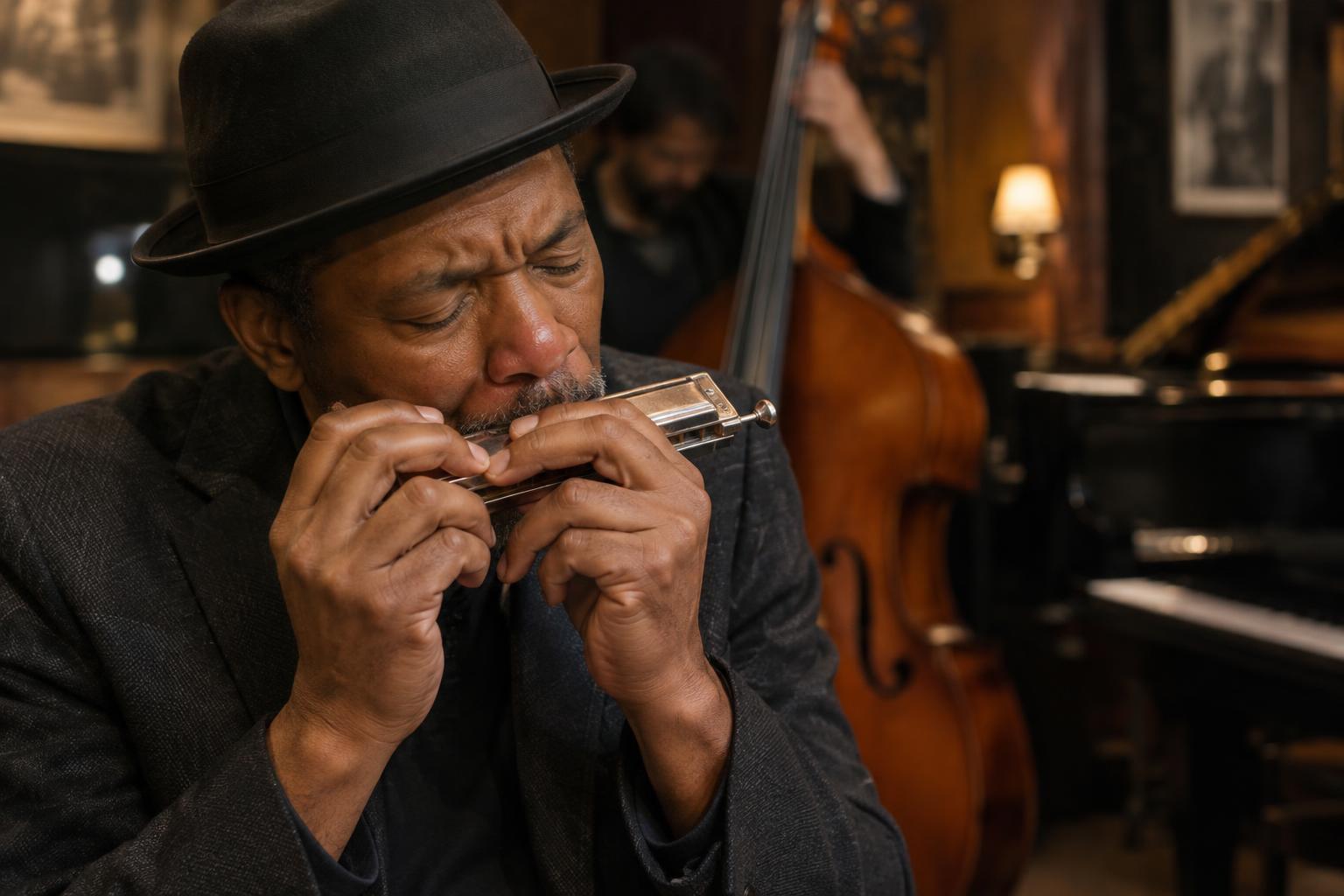
Start by listening, not counting
At a jazz concert, applause is a way to respond to what just happened in the music. Unlike a performance where the audience waits silently until the final note, a jazz set may invite a brief burst of appreciation after an improvised solo. That does not mean you need to identify every musical boundary or clap whenever someone stops playing. If you are unsure, it is perfectly fine to listen and follow the room.
The setting offers clues. A lively club audience may respond quickly to a striking solo, while a quiet room may leave more space around a delicate passage. Neither approach is automatically more knowledgeable. The useful question is whether applause will celebrate a clear musical moment or interrupt one still unfolding.
After a solo: wait for the handoff
Many jazz performances give individual musicians room to improvise. When a soloist finishes and another player takes over, listeners often applaud the person who just played. You might hear a saxophonist bring a phrase to a close, see them step back from the microphone, and then hear the pianist begin a solo. That handoff is a natural place for a short round of applause.
Not every change is so obvious. A player may pause for a breath and then continue, or two musicians may trade short phrases so rapidly that clapping would cover the exchange. Listen for several cues together: a resolved phrase, a change in who is leading, and a shift in the band’s attention. If the music is especially quiet, a smile or an appreciative nod can feel more fitting than loud applause. You can always show your appreciation at the end of the tune.
At the end of a tune: give the last note room
The end of a tune usually brings fuller applause. It can still be harder to spot than it sounds. A band might pause together, then return with a final phrase; a drummer might leave a cymbal ringing; or a pianist might let the last chord fade. Clapping the instant the sound becomes soft can obscure an ending the musicians have carefully shaped.
Look for the band’s shared release. Players may lower their instruments, lift their hands from the keys, exchange glances, or relax their posture. The audience’s response is another clue, though you need not wait for everyone else if the ending is clear. In a small venue, letting a quiet final note disappear before applauding can be a particularly generous way to listen. After an energetic finish, the response may naturally arrive faster.
At the end of a set: follow the larger pause
A set is a group of tunes performed before a break or before the concert ends. The bandleader may thank the audience, introduce the musicians, or announce a break. At that point, sustained applause recognizes the group’s work across the set, not just the final tune. If the musicians leave the stage and the audience continues applauding, they may return, but an encore is never something the audience should assume or demand.
Musician introductions are another common moment to respond. A brief clap after each name acknowledges the player without making it difficult to hear the next introduction. Sometimes the leader introduces a musician during the music, often after that person’s solo. In that case, a short response can fit the moment; if the band is already moving into a soft passage, listening takes priority.
Let the music and the room guide you
Jazz concerts vary widely, from informal club sets to carefully paced theater performances. One group may welcome exuberant responses between solos; another may build long, connected pieces with few clear stopping points. Watch the musicians, notice how the audience responds, and be willing to adjust. Applause works best when it feels like part of a conversation rather than a rule you are trying to pass.
If you clap at an unexpected moment, there is no need to dwell on it. If you choose not to clap after a solo, that is fine too. Put your attention back on the stage. The most reliable concert etiquette is simple: avoid talking over the music, allow quiet moments to breathe, and express your appreciation when a musical thought has come to rest.