A line that can move between the notes
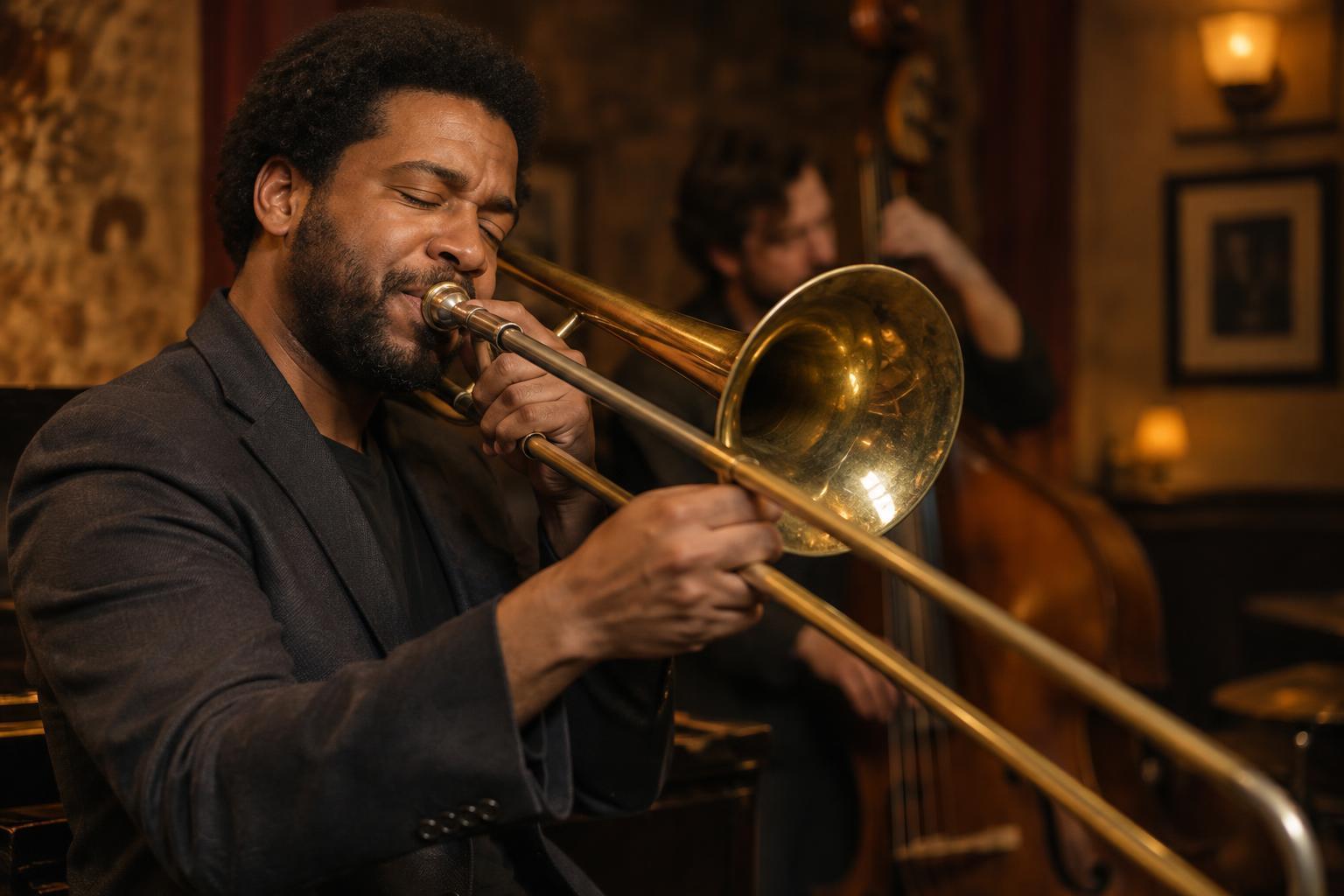
A jazz trombone phrase is more than a sequence of pitches. It can lean toward a note, arrive a little late, or fall away as though finishing a sentence. The slide gives players a direct way to shape those movements. By changing the length of the instrument’s tubing, a trombonist changes pitch; unlike a set of valves, the slide can travel through the space between familiar note positions.
That does not mean every note is a swoop. Much trombone playing is clean and precise, with distinct attacks and carefully centered pitches. The expressive value of the slide lies partly in that choice: a player can state two notes plainly, then connect the next pair with a small bend or a broader sweep. That contrast helps a phrase sound deliberate rather than uniformly smooth.
The difference between a glide and a phrase
The long glissando—an audible sweep from one pitch toward another—is one of the trombone’s most recognizable sounds. In jazz, though, smaller motions can matter just as much. A player might approach a note from slightly below, ease down at the end of a held tone, or let the pitch briefly dip before returning. These gestures can give even a short melody a vocal quality.
The slide works with the player’s breath, lips and tongue, not in place of them. A forceful tongue attack can make a note pop out of the band; a softer entrance can make it seem to emerge from the previous sound. Changes in air and lip tension help determine whether a moving slide produces a connected sound or a series of separate notes. Hearing a slide move, then, is not simply hearing a mechanical effect. It is hearing a player decide how one note should relate to the next.
A broad slide gesture can be playful, dramatic or emphatic, depending on its timing and setting. A tiny pitch inflection may be almost unnoticed on its own but make a line feel more relaxed or more urgent. Neither is required for an expressive solo. Restraint can make a single bend especially effective.
Articulation and timing give the slide context
Jazz phrasing also depends on where notes sit in the beat. A trombonist can enter sharply, place a note just behind the pulse, or leave space before answering another musician. The slide’s movements become most meaningful within that rhythmic shape. A descending smear at the end of a phrase might sound like a full stop; the same motion before a new attack might sound like a pickup into the next idea.
In an ensemble, this flexibility helps the trombone serve different roles. A section can play tightly coordinated notes for a crisp, unified sound, then loosen into a bend or fall that gives the group a collective accent. In a solo, a player may alternate clipped notes with longer, connected ones. The changing texture keeps a repeated rhythm or simple melodic figure interesting without requiring a flood of notes.
The slide also demands planning. A player must reach positions accurately while keeping the phrase moving, and some transitions are more natural than others. Those physical choices can influence articulation: a musician may separate certain notes with the tongue or use breath and timing to make a difficult movement sound effortless. The result listeners hear is musical shape, not a diagram of slide positions.
How to listen for it
On your next jazz recording or at a live performance, follow one trombone phrase from beginning to end. First, notice the attacks: which notes start cleanly, and which seem to grow out of a previous sound? Then listen to the arrivals. Does the player land directly on a pitch, approach it with a small bend, or pass through it on the way elsewhere?
Pay attention to endings, too. A held note may remain steady, fade gently, or tip downward into silence. Afterward, notice what the rhythm section is doing. A slide gesture often feels most expressive because of where it falls against the beat or how much space surrounds it.
The trombone’s slide makes movement between pitches unusually tangible, but its real contribution to jazz phrasing is choice. It lets a player draw a firm outline or soften the edges, connect an idea or break it apart. Listening for those choices reveals a musician shaping a line in real time—not just moving a slide.