Two roles, one instrument
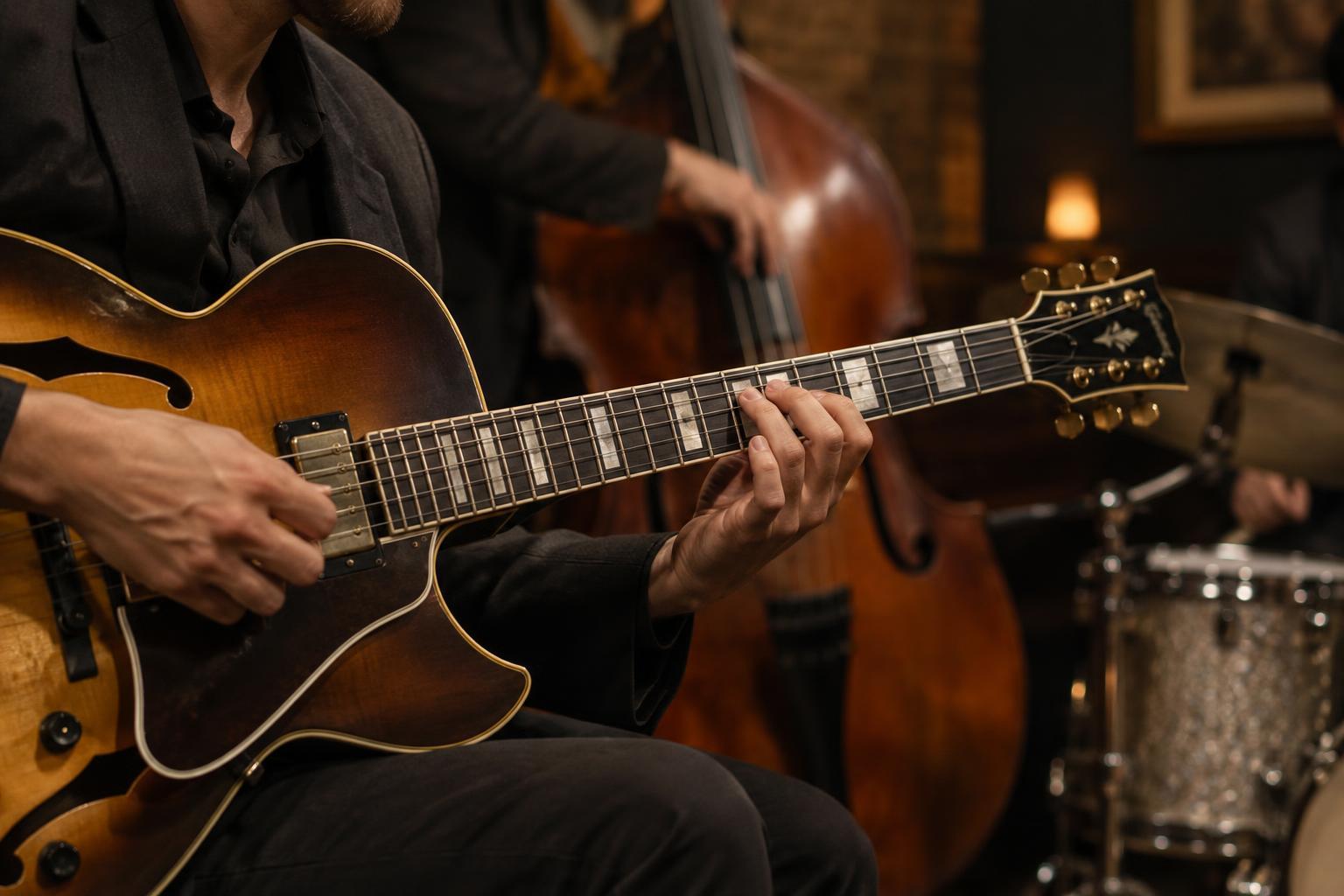
In a jazz group, the guitarist may alternate between accompanying another musician and taking a solo. The accompanying role is often called comping, short for accompanying. It usually involves playing chords or small chord fragments in a way that supports the tune and responds to the other players. Single-note soloing puts a melodic line in the foreground, one note at a time.
The distinction is not simply chords versus notes. A guitarist can slip a brief melody into an accompaniment part or add a chord to a solo. What changes most is the job the music asks the guitar to do. When comping, the guitarist helps frame someone else’s ideas. When soloing, the guitarist develops ideas that the rest of the group can follow.
Comping: harmony with a sense of timing
A written chord symbol might offer many possible notes, but a comping guitarist rarely needs to play them all. A compact voicing can make the harmony clear while leaving room for the bass, piano, horns or singer. Depending on the group, the guitarist may choose notes that define the chord’s character and omit notes already well covered by another instrument. The register matters too: a low, dense guitar chord can crowd a bass line, while a lighter voicing higher on the neck may sit more comfortably beside it.
Comping is also rhythmic. A chord struck just before a beat can create a gentle push; a chord held through a phrase can offer stability. Repeating the same shape on every beat may be useful in some settings, but it can also flatten the conversation. A thoughtful accompanist varies the length and placement of chords, sometimes answering a soloist’s phrase and sometimes letting silence do the work.
The goal is not to fill every gap. Listen for the drummer’s cymbal pattern, the bass player’s pulse and the length of the soloist’s phrases. Those sounds can suggest when a chord will add energy and when it will interrupt.
Soloing: building a line listeners can follow
In a single-note solo, harmony still matters, but the guitarist expresses it over time rather than sounding several notes at once. A line might outline a chord, approach an important note from above or below, or carry a small melodic idea across a change in harmony. The player can make that idea recognizable by repeating it, changing its ending or moving it to a new starting point.
Articulation becomes especially noticeable when one note follows another. Picked notes, slides, bends and deliberate gaps can give a phrase its shape. Speed is only one option: a short line with clear direction may communicate more than a long run of notes. The guitarist also has to decide where a phrase begins and ends in relation to the group’s pulse. A line can lean forward, sit squarely on the beat or relax behind it without losing its connection to the rhythm section.
Although the solo is in the foreground, it is not independent of the band. A drummer’s accent or a bassist’s change in feel can invite the guitarist to repeat, pause or redirect an idea.
Space and volume change meaning with the role
The same musical gesture can serve different purposes in comping and soloing. A brief rest while accompanying gives the featured player more room. A rest during a solo can make the next phrase feel like an answer or a fresh thought. Likewise, a bright, forceful chord may energize a climactic moment, but repeated behind a quiet soloist it could compete for attention.
Guitarists often adjust their touch as they change roles. Comping may call for restrained attacks and shorter chords so the accompaniment remains clear without dominating. A solo might use a stronger attack, longer sustain or a wider range of dynamics to bring out a melodic contour. There is no single required sound: the useful choice depends on the tune, the ensemble and what the other musicians are playing.
How to hear the difference
On your next jazz recording, follow the guitar for one chorus without trying to name the chords. Notice whether it is placing groups of notes around another player’s melody or offering a line of its own. When it comps, listen for the distance between chord attacks and for the way those attacks relate to the drums. When it solos, listen for recurring shapes, pauses and changes in register.
If you play guitar, try a simple exercise over a familiar tune. First, accompany an imagined soloist using only a few small chords, with at least one full beat of silence between many of them. Then play a single-note chorus using a short phrase you can vary. Record both attempts and ask a practical question: can you hear who has the foreground? Clear roles make it easier for a group to sound connected, even as the guitar moves between support and lead.