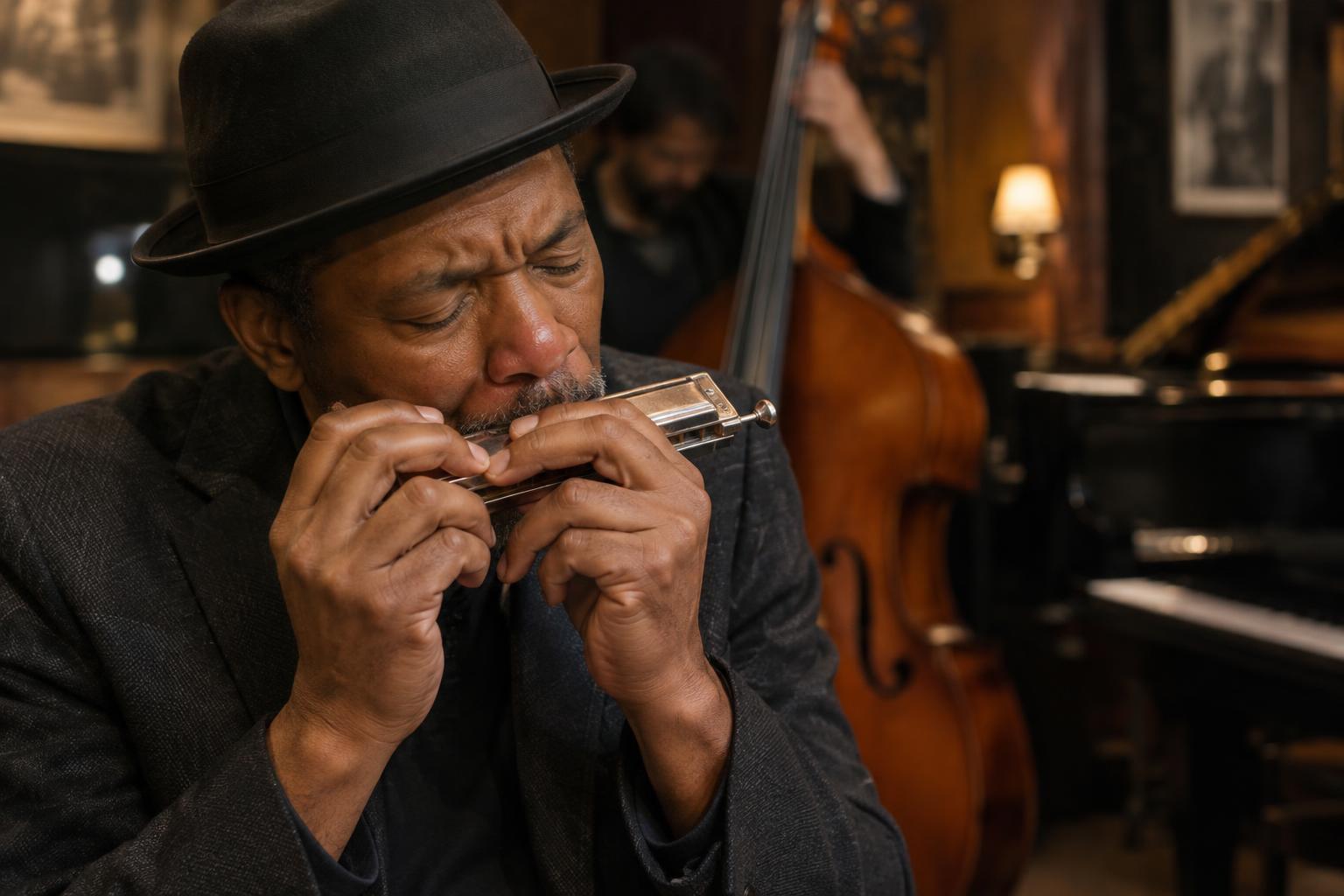
Two ways into the same music
A studio album and a live album can feature the same players and tunes yet feel strikingly different. The distinction is not simply that one sounds polished and the other sounds raw. Each setting gives musicians a different set of possibilities, and each recording gives listeners a particular view of the performance.
In a studio, players may be able to repeat a tune, adjust microphone placement or choose a preferred take. Onstage, they usually have to keep going through surprises, following the energy of the room and one another. Neither situation guarantees a better performance. When comparing albums, it helps to ask what each one makes easier to hear: the detail of a sound, the shape of an arrangement, or the choices players make in the moment.
What a studio album can reveal
Studio recordings often give you a clear view of instrumental detail. A close recording might bring out the breath at the start of a saxophone phrase, the attack of a piano note or the way a bassist places notes around the beat. Without audience noise, quieter passages and subtle shifts in tone may be easier to follow. Those qualities depend on how the session was recorded and mixed; a studio setting does not automatically produce a dry or pristine sound.
The studio can also make an arrangement easier to examine. Listen for how an introduction sets up a theme, how the ensemble supports a solo, and how the ending resolves the piece. Musicians may try several approaches before selecting a take, and some albums use editing or overdubbing. Others capture players performing together with little alteration. Rather than assuming you know how a record was made, attend to what you can hear: the balance among instruments, the space around them and the precision—or looseness—of their entrances.
What a live album can reveal
A live recording can make the pace of musical decisions especially vivid. A soloist extends an idea; the drummer responds; the pianist changes the accompaniment; the bassist holds the pulse while the group turns a corner. These exchanges happen in studios too, but a live set may give them more room to unfold. Longer introductions, stretched-out solos and unexpected transitions can show how a band develops material beyond a compact arrangement.
The audience is part of the setting, though not necessarily the measure of the music. Applause may mark an ending, while a laugh or a sudden hush can help you sense the atmosphere in the room. At the same time, microphone placement, room acoustics and the eventual mix affect what reaches your speakers. A live album may capture excitement while obscuring a soft instrument or a small rhythmic detail. It is a document of a performance, not an unfiltered seat at the venue.
A listening exercise: follow one tune in both settings
If you can find studio and live versions of the same tune by a group, listen first for its framework. Where does the melody enter? Which parts of the arrangement stay recognizable? Does the band move through the sections in the same order? Once you have those landmarks, changes become easier to notice without treating either version as the definitive one.
On a second listen, follow a single player through both versions. Notice whether a phrase is repeated, reshaped or left behind. Then shift your attention to the rest of the band: do the accompanists leave more space, press the rhythm forward or answer the soloist differently? Compare the endings, too. One might close with a planned ensemble figure, while another grows naturally out of an exchange onstage. The point is not to rank spontaneity above preparation. It is to hear how structure and improvisation work together.
Choose the format that serves your curiosity
When you want to learn the contours of a tune or identify an instrumental voice, a clearly recorded studio version can be a welcoming starting point. When you want to hear how a group sustains momentum across a set, try a live album. Switching between the two can reveal details you missed in either one alone.
Leave room for exceptions. Some studio sessions have the urgency of a single shared performance, and some live albums sound remarkably balanced and controlled. Your favorite recording may be the one whose sound, pacing and interplay hold your attention—not the one that best fits a label. Listening for what each format offers turns the comparison from a contest into a richer way of hearing jazz.