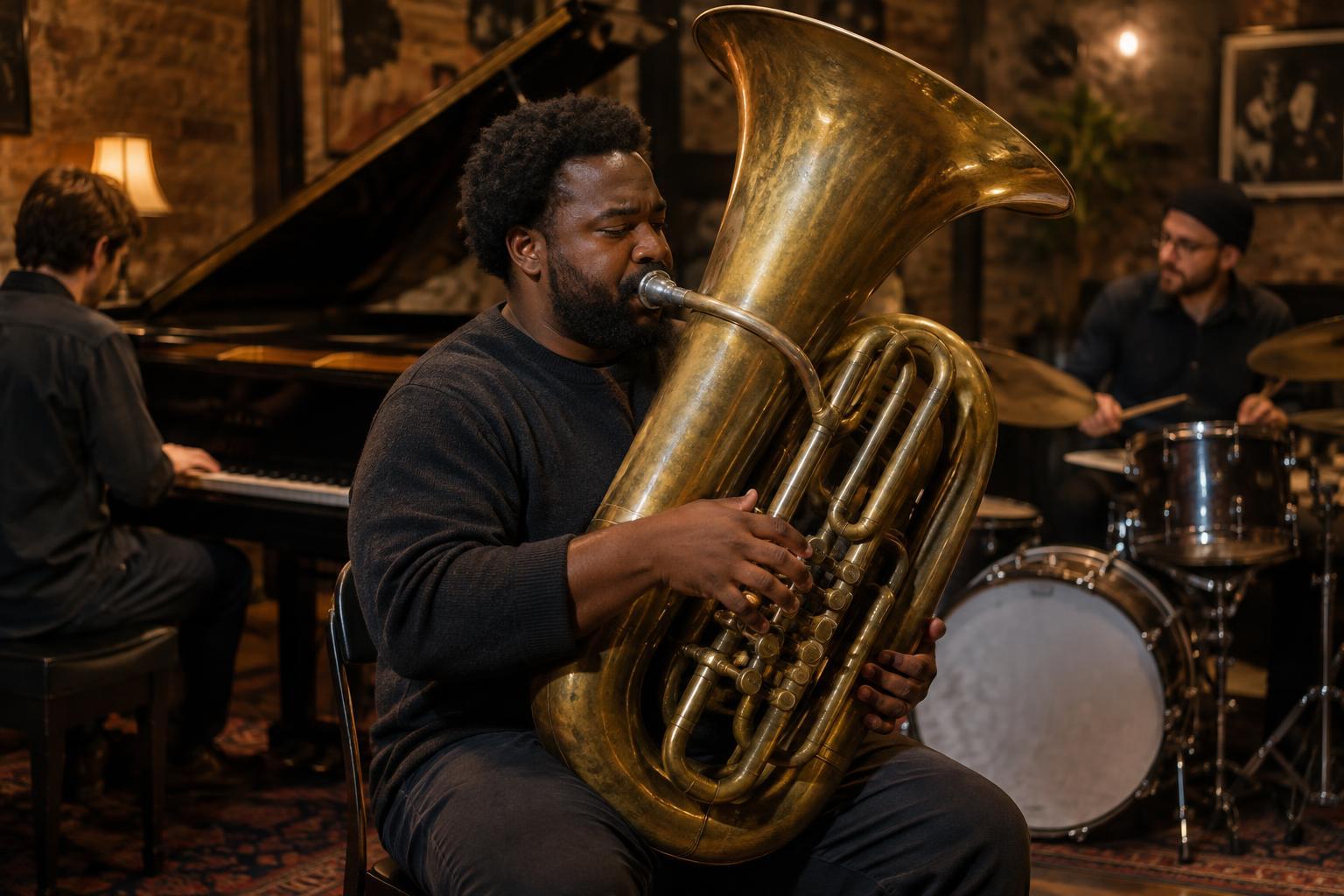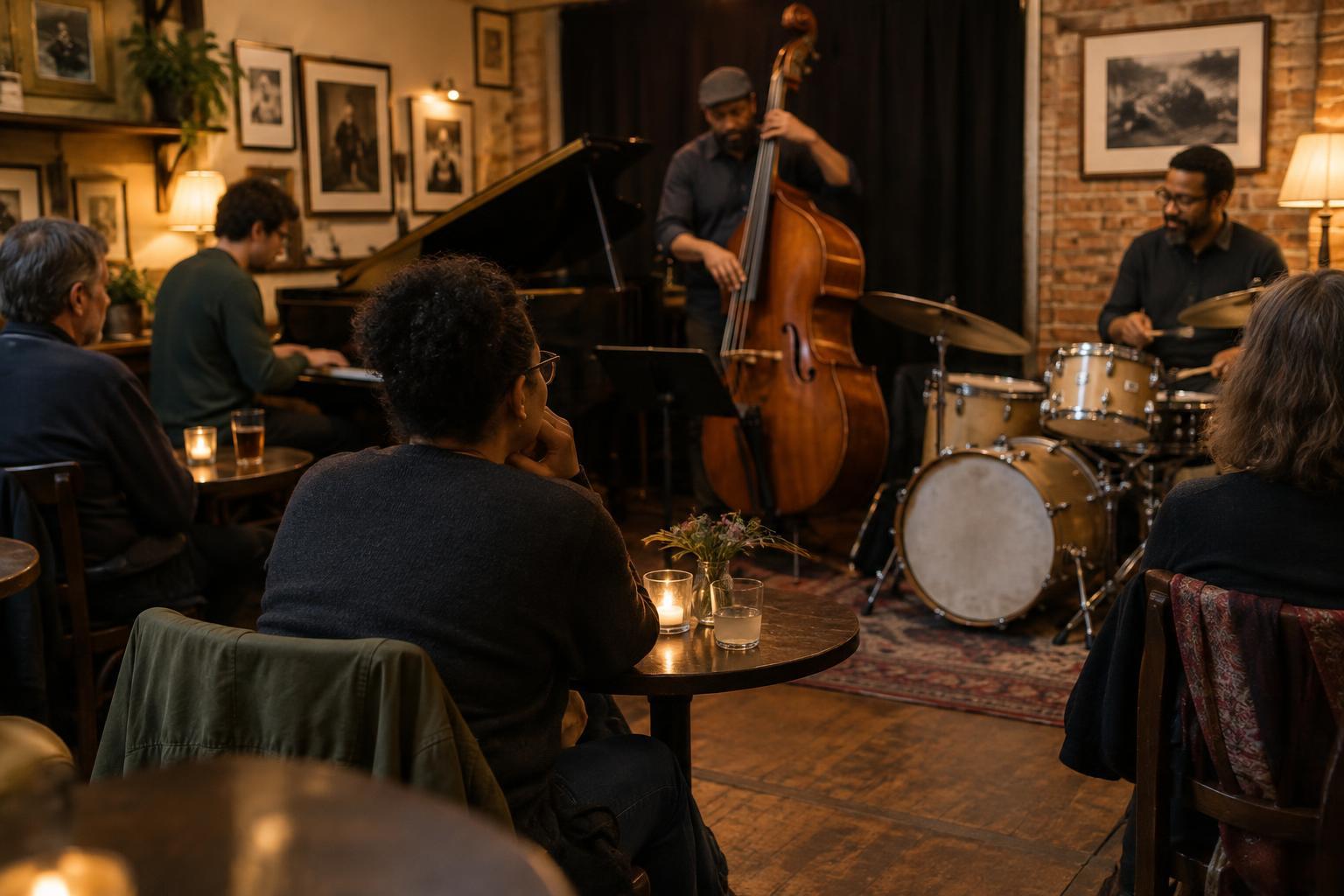
What makes a waltz a jazz waltz?
A waltz groups its beats in threes: ONE-two-three, ONE-two-three. In jazz, that meter is a framework rather than a fixed dance pattern. A pianist might leave the first beat open, a drummer might emphasize a later beat, and a soloist might play a phrase that seems to float over several bars. The count stays in three even when the musicians make its boundaries less obvious.
A jazz waltz also need not have one particular speed or mood. It can be gentle and spacious or brisk and propulsive. Nor does playing in three automatically make the eighth notes “swing.” Meter tells you how beats are grouped; swing describes an aspect of how notes are placed and felt. Keeping those ideas separate makes a wide range of jazz waltzes easier to hear.
Find the pulse before following the melody
On a first listen, set the melody aside and try counting a quiet ONE-two-three along with the rhythm section. If your count keeps slipping, listen for the bass. In some performances it marks the beginning of each bar clearly; in others it moves through the bar with notes that connect the beats. Either way, it can give you a steadier reference than a busy solo.
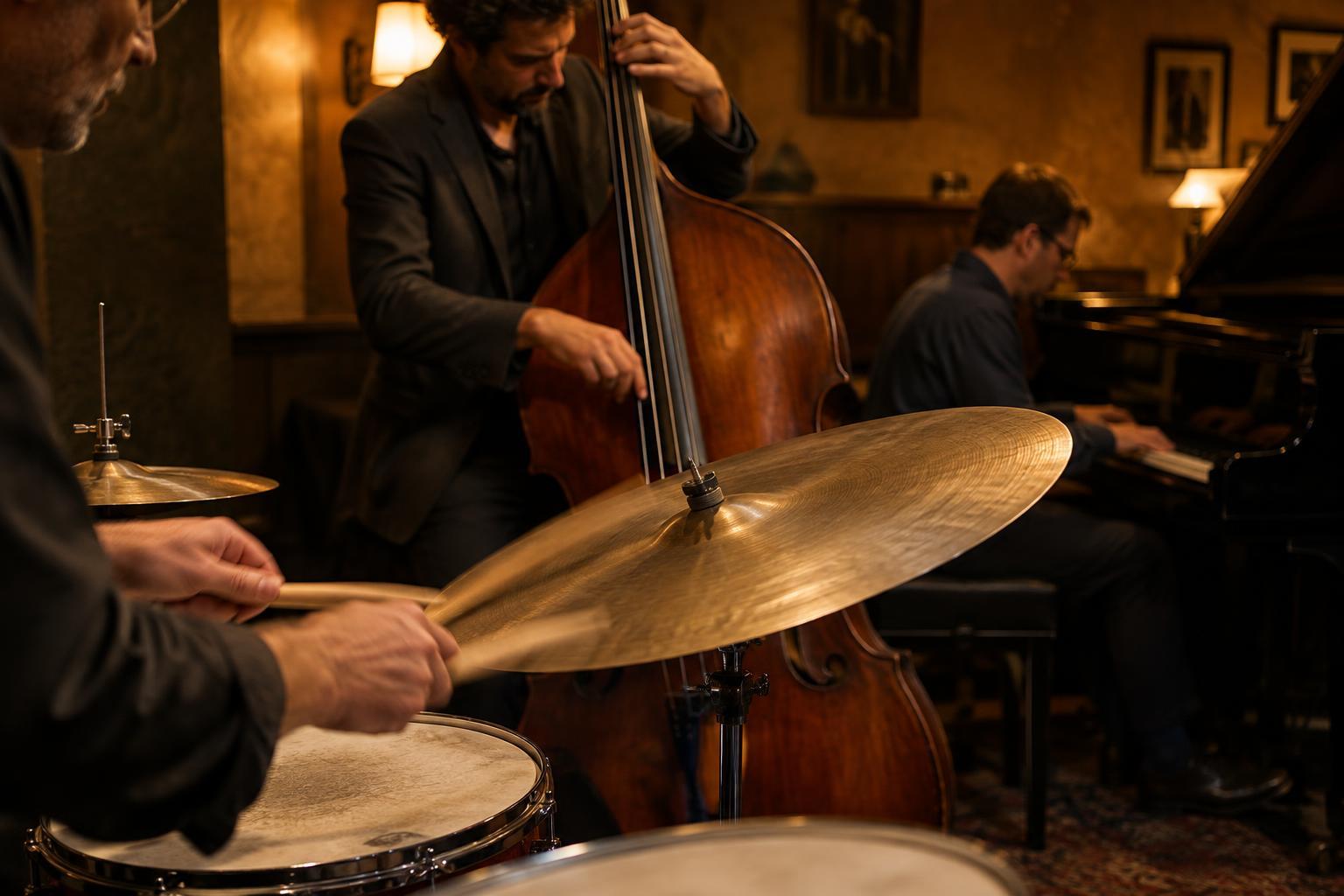
Next, listen to the drums without expecting a repeated “oom-pah-pah” pattern. The drummer may use cymbal taps to keep time, lighter snare sounds to add texture, or a well-placed accent to shift your attention away from beat one. Try tapping all three beats with your hand while listening for which beat feels strongest. You may find that the emphasis changes even though your count remains steady.
Hear how the rhythm section creates motion
In a familiar dance waltz, the accompaniment often makes the bar easy to identify: a strong first beat followed by two lighter beats. Jazz players can use that shape, but they may also loosen it. A pianist or guitarist might place a chord on beat two, answer a melody on beat three, or leave a gap that gives the bass and drums room to speak. These choices turn a simple count into a conversation.
The bass can change the character of the same three beats, too. Notes placed squarely on the beats can make the music feel grounded. A line that approaches the next bar’s first beat can create a sense of forward pull. Rather than searching for one standard jazz-waltz pattern, notice how each instrument helps you anticipate the next ONE—and how often another instrument surprises you before it arrives.
Follow phrases that cross the bar line
Once the pulse feels secure, return your attention to the melody or solo. An improviser does not have to begin a new idea on every first beat. A phrase may start on beat three, continue through the next bar, and come to rest somewhere you did not expect. That can make the music sound temporarily unmoored, even while the rhythm section maintains a clear three-beat cycle.
Try listening to one short passage twice. The first time, count the bars. The second time, follow only the soloist’s entrances, held notes, and pauses. Notice whether the phrase lands with the bar or pushes past it. If it sounds as though the soloist is playing in a different grouping, keep your three-beat count going beneath it. The pleasure often lies in hearing both shapes at once.
A simple way to practice listening
Choose a passage with a clearly audible rhythm section and listen in three passes. First, count the beats without worrying about the tune. Second, focus on one accompanying instrument and note when it reinforces or avoids beat one. Third, listen to the melody and notice where its phrases begin and end. You do not need to identify every chord or drum stroke; the aim is to hear how a steady meter can support flexible playing.
If a brisk passage makes counting difficult, return to a quieter one and tap only beat one of each bar. Gradually fill in beats two and three. As your ear adjusts, the waltz can feel less like a counting exercise and more like a moving space the musicians share.
For an unrelated browsing detour into technology and creative tools, explore Robotics · AcceleratingFuture Horizons. If you are curious about broader questions concerning the energy used by cultural spaces, browse Energy and Climate Tech · AcceleratingFuture Horizons separately.