A bass instrument with more than one job
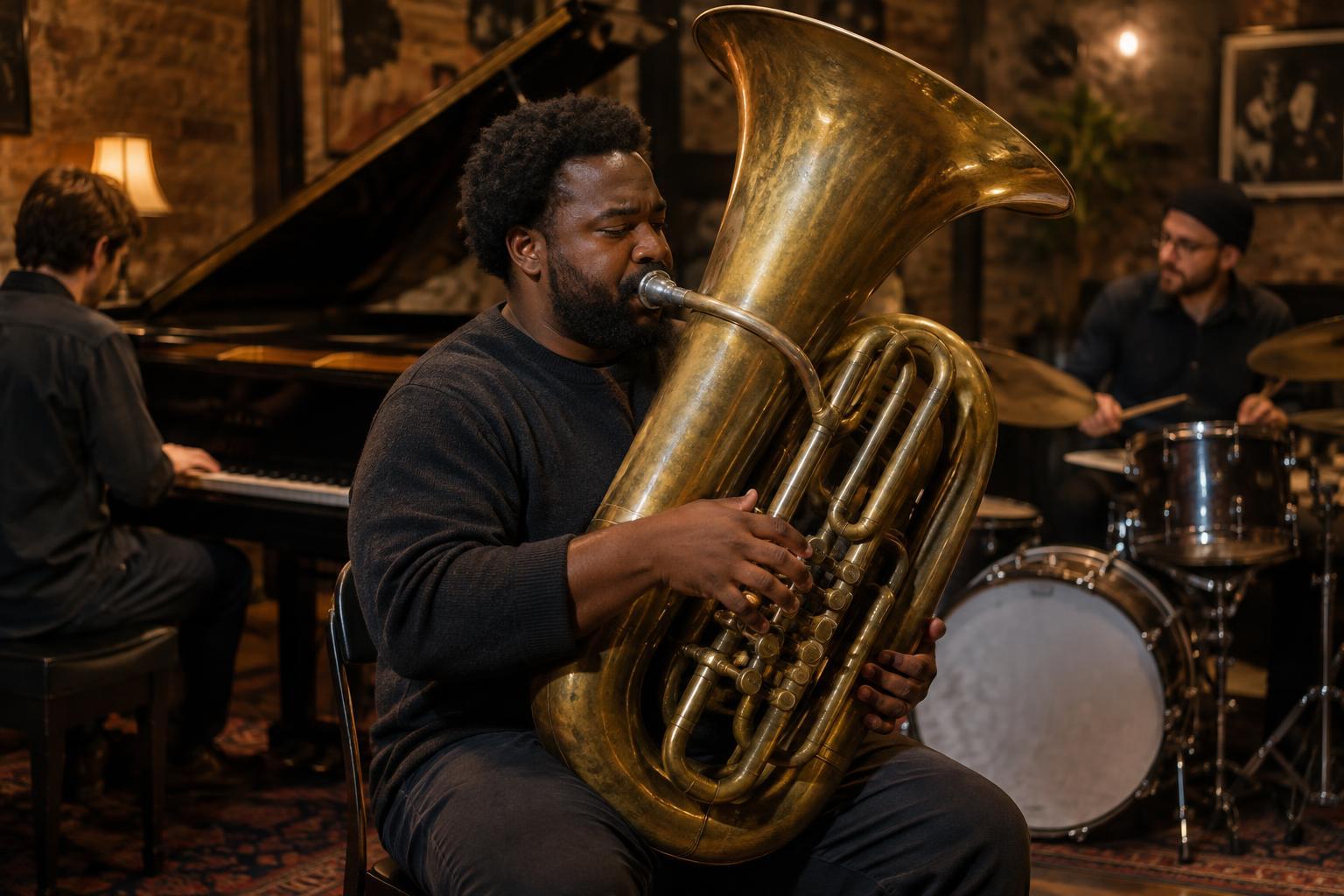
The tuba is often recognized by its low notes, but pitch alone does not explain what it contributes to jazz. A player can mark the beat, outline the harmony, punctuate a phrase, or weave a line around the melody. In an ensemble, those jobs may change within a single tune. Listening for what the tuba is doing, rather than simply noticing when it is present, reveals how flexible the instrument can be.
Its sound begins with breath and has a distinctive rounded attack. Unlike a plucked bass note, which starts with a clear release of the string, a tuba note can be shaped by the player’s tongue and airflow. The result may feel firm and rhythmic or broad and singing. Room acoustics and the surrounding instruments also matter: a low line that stands out in a small group may blend into the texture of a larger one.
Keeping time from the bottom
One common tuba role is to provide the low foundation of a band. Listen for notes placed on the main beats and for small changes that point toward the next chord. The player need not use every available note. A well-placed root, a contrasting pitch, and a brief approach to the next harmony can give the group a clear path through the tune.
Breathing makes this role especially interesting. A tubist cannot sustain a line without taking air, so the shape of a bass part includes spaces. Other musicians may fill those spaces, or the gaps may give the rhythm a buoyant feel. If drums or banjo are present, notice how their sharper attacks relate to the tuba’s rounder notes. Together they can make the pulse clear without sounding like a single instrument doubled at the octave.
Moving around the melody
When the tuba is not responsible for every bass note, it can add a countermelody: a separate line that complements the main tune. This might mean climbing during a pause in the lead instrument’s phrase, holding a note beneath a busy passage, or answering a short melodic idea. The most useful question for a listener is not whether the tuba sounds melodic, but how its line interacts with the melody already in progress.
The tuba can also add short accents that give an arrangement its shape. A low note at the end of a phrase may sound like punctuation; a sudden rise into a higher register may draw attention to a transition. These gestures are easier to hear if you follow one musical phrase at a time. Notice where the lead line pauses, then check whether the tuba continues, answers, or leaves room for someone else.
What changes when the tuba takes a solo
As a solo voice, the tuba offers a different perspective on improvisation. A fast run can be exciting, but speed is not the only measure of expression. Long notes, changes in register, repeated rhythmic figures, and deliberate silences can all build a compelling statement. Listen for how a player starts an idea and then varies it: a phrase may return with a different ending, rhythm, or direction.
A solo also changes the ensemble’s balance. If another instrument takes over the bass function, the tuba has more freedom to move. If no one does, the group may leave the low end relatively open for a while. Neither approach is inherently better. Paying attention to what the other musicians do during the solo can help you hear it as a group conversation rather than an isolated display.
A simple listening exercise
Choose a recording in which the tuba is audible and listen to one short passage three times. First, tap along and ask whether the tuba is marking beats or playing across them. Next, follow the melody and note any moment when the tuba answers it or moves independently. Finally, focus on the beginnings and endings of tuba notes: are they clipped, connected, accented, or allowed to fade?
You do not need to identify every pitch to hear the instrument’s role. Start with the broad distinction between foundation, decoration, and lead voice, then listen for moments when one role turns into another. The tuba’s range may draw your ear downward, but its most revealing contribution is often the way it connects the rhythm and melody around it.