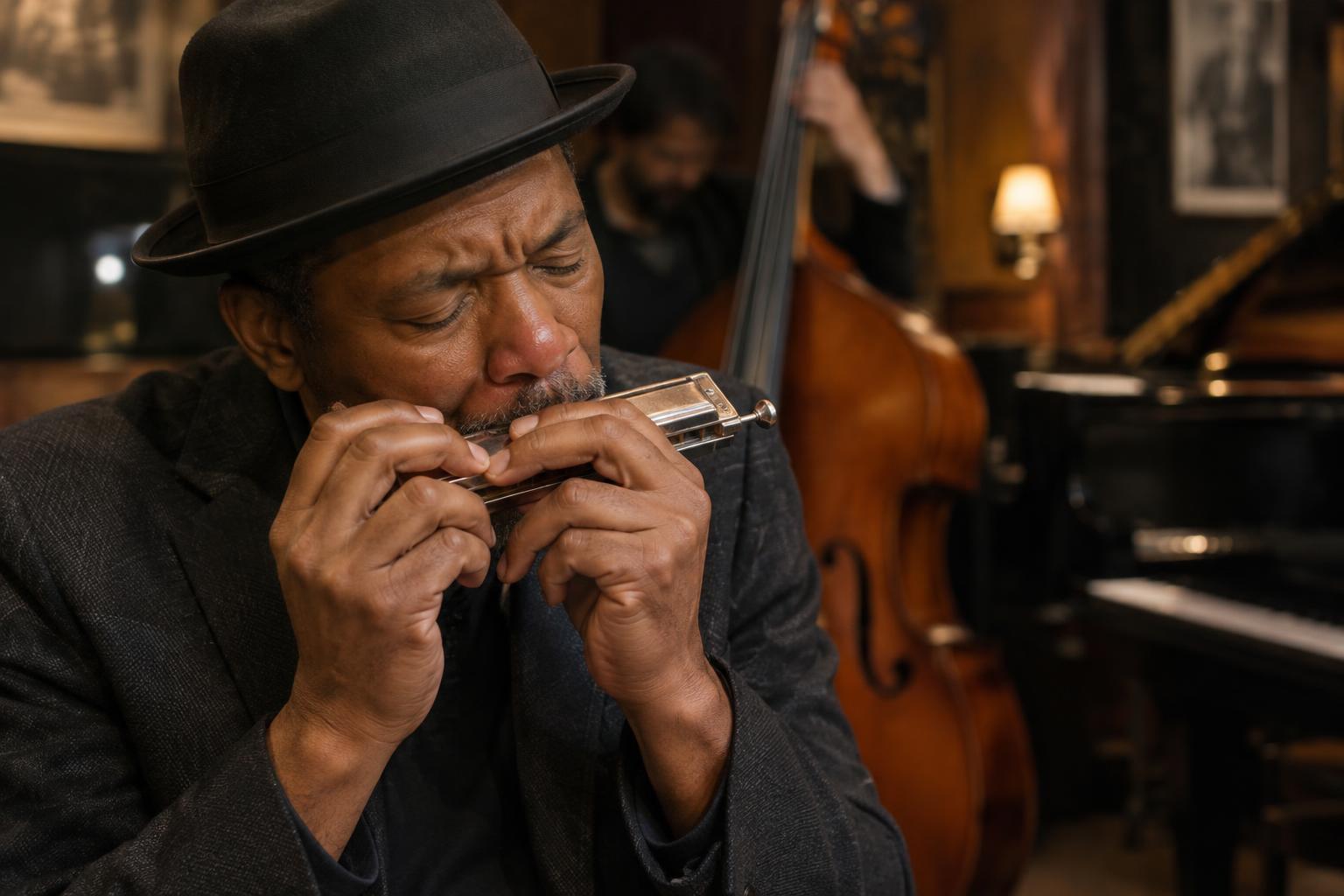
Read the room before the first note
Jazz clubs do not all work the same way. Some are quiet listening rooms where even a brief conversation carries across the tables. Others are lively bars where music and socializing share the space. When you arrive, notice the layout, the volume, and any guidance from the venue. If the audience settles as the band begins, follow its lead. If you are unsure about a house rule, ask a staff member rather than guessing.
The basic courtesy is to let other people choose how closely they listen. A nearby conversation can make a soft bass passage or a singer’s unamplified phrase hard to hear. You need not sit motionless or understand every solo. Paying attention, and allowing others to do the same, is enough.
Keep conversation for the spaces between tunes
A quick, quiet exchange may be unavoidable: someone needs to find a seat, order a drink, or ask where the restroom is. Longer conversations are better saved for a break between tunes or sets. If you came mainly to catch up with a friend, a bar area away from the performance may be a better place to talk, if the venue has one. Try not to speak over a quiet introduction simply because the music has not started yet; the musician may be setting up the next piece.
Volume matters as much as timing. When the band plays louder, it can be tempting to raise your voice, but the music may drop to a whisper without warning. Use a short sentence if you must say something, then return to listening. You can always share your thoughts after the tune—and you may have more to say once you have heard where it goes.
Move with the music, not through it
Plan small trips when you can. Ordering before a set begins, returning to your seat between tunes, and keeping bags out of walkways all help the room run smoothly. If you need to leave during a performance, do so without making it a production. Take care around servers carrying drinks and avoid crossing directly in front of the band or blocking another listener’s view when an alternative route is available.
There is no need to stay seated if you are uncomfortable or need to step out. Accessibility, comfort, and safety take priority over an imagined rule about perfect stillness. If a seat or route is difficult to use, speak with staff about what is possible. A considerate audience makes room for people to enjoy the show in different ways.
Let your phone stay out of the performance
Silence your phone before the set, including alerts that might sound through headphones or a watch. A bright screen can be distracting in a dim room, so check messages outside or during a break when possible. If you need your phone for an urgent reason, lower the brightness and step away from the listening area to use it.
Before taking a photo or recording, check the venue’s policy and any request from the musicians. Permission to photograph does not necessarily mean permission to use a flash, film an entire set, or post a performance. If photos are welcome, take a few without blocking sightlines, then put the phone away. Listening through a screen often means missing the small exchanges between players that make a live set distinctive.
Respond warmly without trying to run the show
Applause after a solo is a familiar part of many jazz performances. It is a way to acknowledge a musical idea, not a test of whether you recognized the exact moment it ended. If you are new to it, listen for the soloist to hand the melody or rhythm to another player and notice how the room responds. Applause at the end of a tune is always easy to place; when in doubt, wait for the music to settle.
Enjoyment can be visible. Smiling, nodding, and moving gently with the rhythm are welcome in many rooms. Calling out over a quiet passage, repeatedly requesting a tune, or addressing musicians while they are concentrating may pull attention away from the performance. Save questions and compliments for a suitable moment after the set, if the musicians are available. Good etiquette is not about being solemn: it is about sharing a room so that the music, and everyone there to hear it, has space.