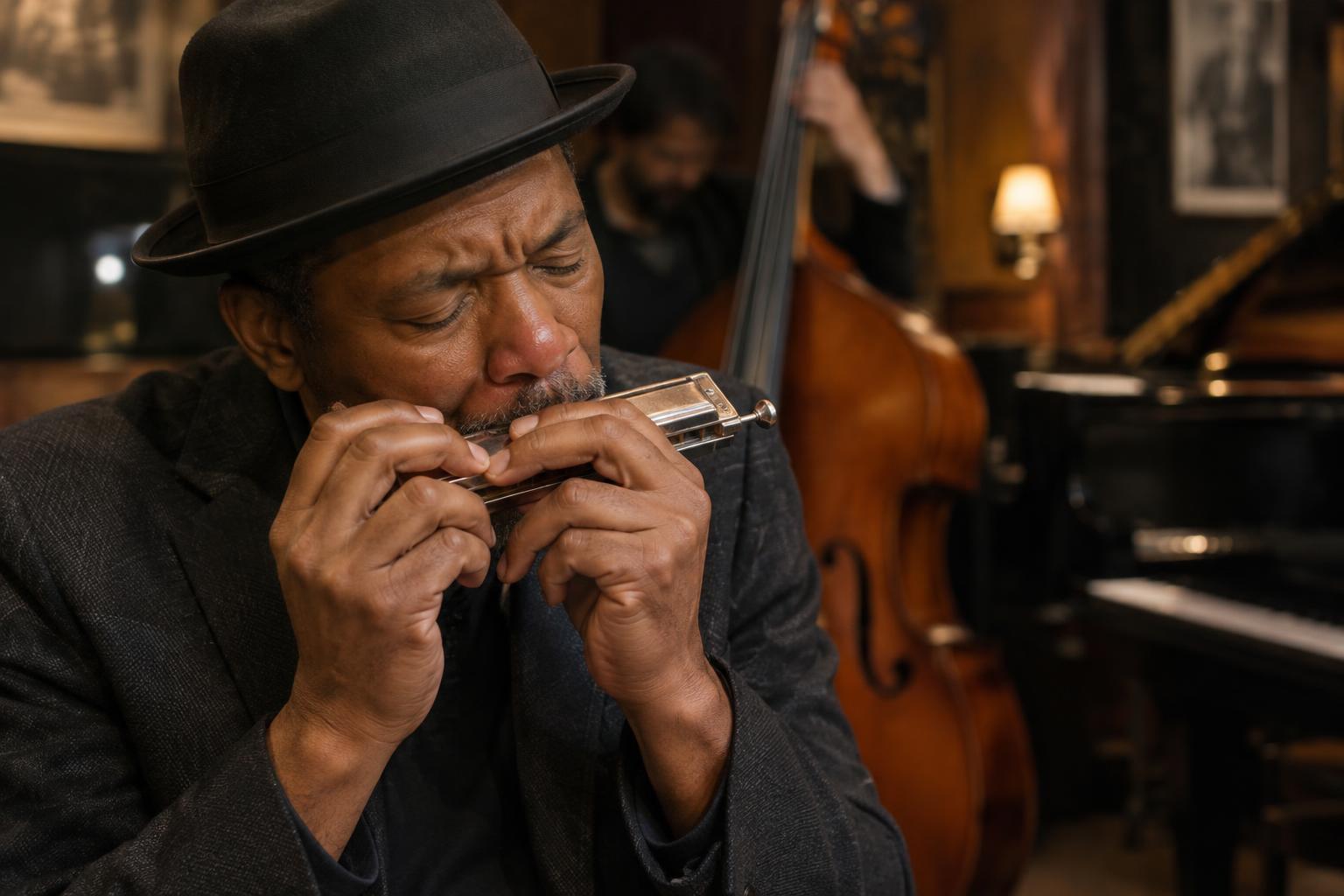
A gathering built around shared music
A jazz jam session is a gathering where musicians play together, often with a changing lineup rather than a fixed band. There may be a house group to get things started, followed by guests who join for a tune or two. Some sessions welcome musicians of many experience levels; others expect players to know a particular repertoire. For a listener, that changing cast is part of the appeal: the same piece can take on a different character as new players step in.
The atmosphere varies by venue. A session might take place on a dedicated stage, in a small bar or in a community space. It may sound polished one moment and exploratory the next. Unlike a concert built around a rehearsed set, a jam often leaves room for musicians to work out ideas together in real time. You do not need to recognize the tune or understand every cue to enjoy watching that happen.
How a tune usually unfolds
A player or session leader will generally call a tune and agree on a starting point, tempo or key. The group may begin with the melody, sometimes called the head. That melody gives listeners a reference point before the musicians move into solos. Often, the rhythm section—commonly some combination of piano or guitar, bass and drums—keeps the underlying pattern moving while soloists take turns.
After the solos, the players may return to the melody and bring the tune to an ending. That is a useful outline, not a rule: some pieces start with an introduction, feature a collective passage or change direction along the way. If you lose track of where the group is, listen for a familiar melodic phrase coming back. It can feel like arriving at a landmark after taking several interesting side streets.
Watch for small signals between players, too. A nod might invite the next soloist; a drummer might change the feel as someone begins a new idea. These cues can be subtle, but they reveal how much listening is happening onstage.
What to listen for beyond the solo
It is natural to focus on whoever is soloing, but the other musicians are not simply waiting. A bassist may keep a steady pulse or choose notes that reshape the harmony. A pianist or guitarist may place short chords behind a soloist, leaving space rather than filling every gap. A drummer can support a quiet phrase, answer it with a brief accent or build momentum without changing the tune entirely.
Try following one relationship at a time. Does the soloist repeat a phrase after the drummer responds? Does the group grow quieter to make room for a softer idea? You might hear a musician pause, then pick up a rhythm introduced by someone else. Those exchanges are often more revealing than the fastest run of notes.
You can also notice contrast across versions. When a new group plays a familiar tune later in the evening, its tempo, mood or balance of instruments may be different. A jam session makes a simple point vivid: a piece of jazz is not only a written melody but also a set of choices made by the people playing it.
Being a considerate first-time listener
You do not need special knowledge to attend, but a little attention to the room helps. Check the venue’s information before going if you need to know about seating, admission, accessibility or whether food and drink are expected; practices differ. Once there, leave clear paths for musicians carrying instruments and follow any guidance about where to sit or stand.
Conversation is part of the social life of many sessions, yet volume matters. If you want to talk at length, wait for a break or move away from the performance area when possible. Applause after a solo is common in many rooms, but you can take your cue from the audience around you. If you plan to photograph or record, ask about the venue’s policy first and avoid distracting the players with a bright screen or flash.
A jam can have pauses while players change places, discuss a tune or adjust equipment. Rather than treating these moments as interruptions, see them as part of the evening’s informal structure. The next combination of musicians may bring an entirely new energy.
Let curiosity lead the way
For your first session, give yourself permission to listen without identifying every tune, chord or style. Choose one thing to follow—the bass line, the return of the melody or the way musicians pass attention around the group. If a passage catches your ear, remember what happened just before it: a change in volume, a pause or a response from another instrument may explain why it felt striking.
The pleasure of a jam session lies partly in not knowing exactly what will happen. Musicians bring shared musical knowledge to the stage, then make decisions together in front of you. Listen for both the individual voices and the moments when they become a conversation. Even if you arrive knowing nothing about the repertoire, you can leave with a clearer sense of how live jazz takes shape.