What makes a vibraphone sound like a vibraphone?
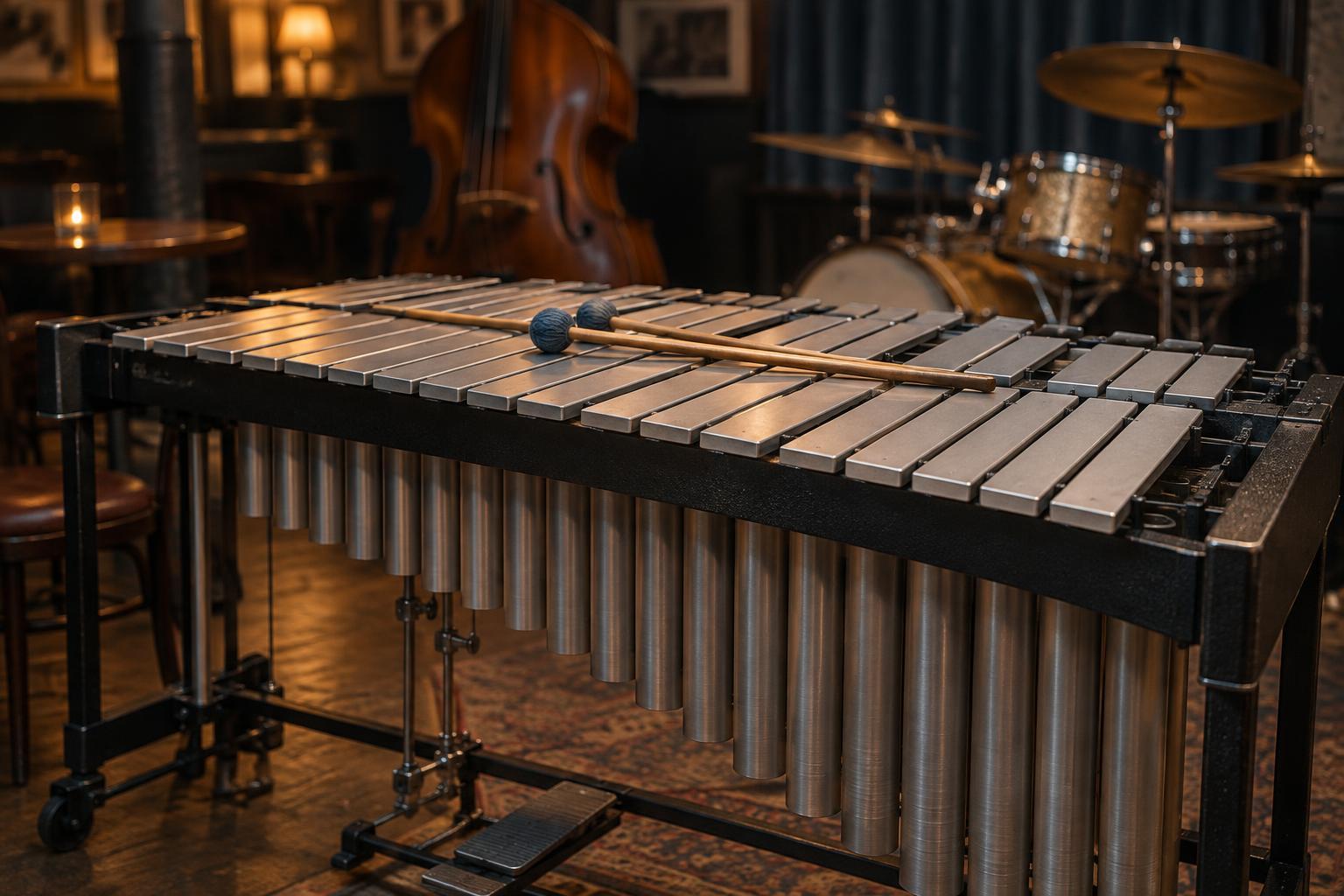
The vibraphone, often called the vibes, is a pitched percussion instrument with metal bars arranged much like a piano keyboard. A player strikes the bars with mallets to produce clear notes that can ring long after the initial attack. That combination of a crisp beginning and a lingering tone gives the instrument a distinctive place in jazz: it can articulate a quick melody, then let a note hang in the air.
The bars sit above resonator tubes that help project their sound. Many vibraphones also have a motor that turns discs inside the resonators, creating a pulsing effect. Players can switch the motor off, and even when it is on, the pulse may be subtle. Despite the instrument’s name, this effect is not the same as bending a note’s pitch back and forth. Listen for a gentle change in the sound’s intensity rather than assuming every sustained note will wobble.
The pedal, the mallets and the space between notes
A vibraphone has a sustain pedal similar in purpose to a piano’s: pressing it lets notes ring, while releasing it brings a damper against the bars and stops their sound. Pedaling shapes the music as much as the notes themselves. A player might sustain a chord beneath a melody, release the pedal to make a phrase end cleanly, or allow a little overlap between harmonies. Too much overlap can blur fast-changing chords, so the spaces between notes matter.
Mallet choice and playing technique also affect the tone. Softer mallets generally give a rounder attack; harder ones can bring out a more pointed sound. Some players hold two mallets for agile single-note lines, while others use four to play chords and melody together. These are possibilities, not fixed rules: a musician may change approach within one performance. As you listen, notice whether the instrument sounds like a line of separate notes, a wash of harmony, or a conversation between the two.
How the vibes fit into a jazz group
In a small jazz ensemble, the vibraphone can serve as a lead voice, stating a tune or improvising a solo. Its bright attack helps melodic ideas register alongside drums and bass, while its sustain lets slower phrases breathe. A vibraphonist may play a short, sharp run and then leave room for the rhythm section to answer. That contrast between motion and stillness is part of the instrument’s appeal.
The vibes can also provide harmony behind another soloist. In jazz, this supportive playing is often called comping. Instead of filling every beat, a player might place a few chord tones at carefully chosen moments or hold a soft chord as the solo develops. Because both piano and vibraphone can supply chords, a group with both instruments may leave space or divide their roles to keep the texture clear. Try listening for when the vibraphone steps forward and when it quietly frames someone else’s idea.
Getting to know the instrument through players
Jazz vibraphone playing is not one uniform sound. Lionel Hampton helped establish the instrument as a jazz solo voice, often bringing strong rhythmic energy to his playing. Milt Jackson is associated with a blues-inflected approach that rewards attention to phrasing and touch. Bobby Hutcherson’s playing offers another way to hear the instrument in adventurous group settings, while Gary Burton is closely associated with a four-mallet approach that can make melody and harmony feel closely connected.
These names are starting points, not a checklist of styles. When comparing players, begin with something you can hear directly: the length of their notes, the density of their chords, or how they respond to the bass and drums. The same instrument can sound spacious in one ensemble and intensely rhythmic in another. Listening for those differences is more useful than trying to identify a player from a single tone.
A simple listening exercise
Choose a jazz performance featuring vibraphone and listen to it twice. On the first pass, follow only the vibes. Can you hear the strike of each note? Which notes stop quickly, and which are allowed to ring? Notice whether any sustained sound pulses, but do not worry if you cannot hear the motor. Recordings and playing choices can make that detail easier or harder to detect.
On the second pass, pay attention to the ensemble. When the vibraphone plays a melody, what do the other instruments do? When it plays chords, whose line comes to the foreground? The goal is not to name every note. It is to hear how attack, sustain and silence help one instrument take on several roles—and how a vibraphonist uses those choices to make a jazz performance feel like a conversation.