Start with how each instrument makes a note
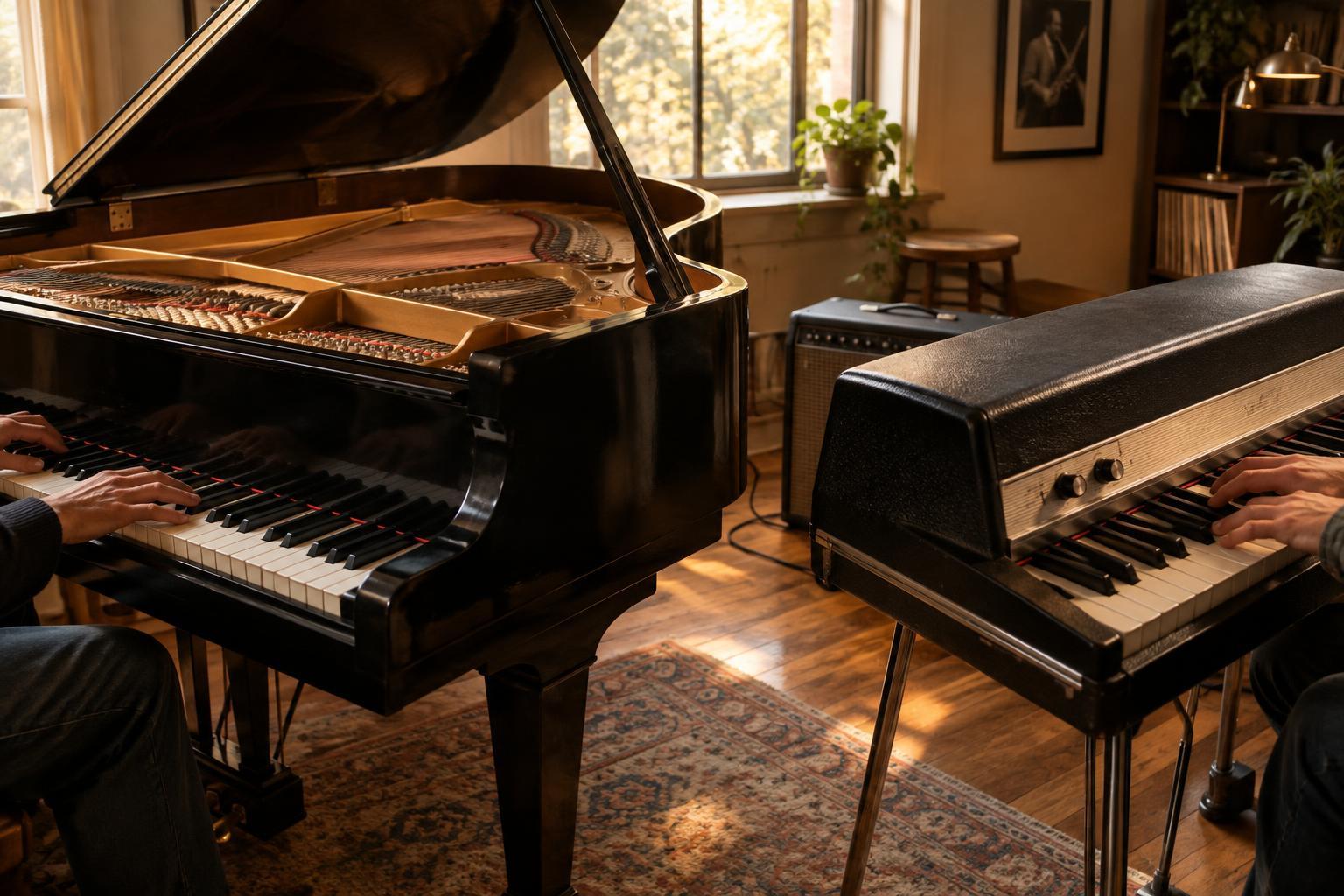
On an acoustic piano, a hammer strikes strings. The strings vibrate within a resonant wooden instrument, giving the note a clear beginning followed by a changing blend of overtones as it fades. An upright and a grand do not sound identical, and the room, tuning, microphone placement and player’s touch all affect what reaches your ears. Still, that struck-string character is a useful starting point when listening to acoustic piano in jazz.
“Electric piano” can mean more than one instrument. Classic electromechanical models produce vibrations mechanically and turn them into an electrical signal for an amplifier; different designs use different sound-making parts. A digital piano instead generates or plays back an electronic sound, sometimes with the aim of resembling an acoustic grand. These instruments can all serve a jazz pianist, but they should not be treated as one interchangeable sound. When comparing recordings, ask which kind of electric piano you might be hearing before drawing conclusions.
Listen to the attack, body and fade
The first instant of a note often gives away the instrument. An acoustic piano may have a percussive, ringing attack, with several strings contributing a complex sound. A classic tine-based electric piano can have a rounded, bell-like tone that becomes sharper or more forceful when played hard. Other electric designs may sound reedier and more pointed. These are tendencies, not fixed rules: the instrument’s condition, settings and recording method can soften or exaggerate them.
Next, follow the note after the attack. Acoustic piano strings interact with the instrument’s other resonances, so a held chord can seem to shimmer and shift as it decays. An amplified electric piano may have a smoother, more even fade, or a distinctive wobble from tremolo and other effects. On a recording, do not assume every spacious or sustained sound comes from the keyboard itself. Amplification, effects and production can shape what you hear just as strongly as the instrument.
Notice what touch and dynamics do
Jazz pianists use differences in volume and articulation to separate a melody from its accompaniment, punctuate a phrase or answer another musician. An acoustic piano offers a broad range of colors through touch, but it also asks the player to balance sound within the instrument and the room. A lightly played chord can sit behind a soloist; a firm accent can cut through without changing the basic identity of the piano.
Many electric pianos also respond expressively to touch, though the response feels and sounds different. Playing harder may bring out a brighter edge as well as more volume. Amplification lets a quiet gesture remain audible in a louder band, while effects can add movement to repeated chords. Listen for the relationship between a player’s soft and strong notes, rather than deciding that one type of keyboard is automatically more expressive.
Hear how the keyboard fits the band
In a small acoustic group, piano voicings can occupy a wide range: low notes support the harmony, middle-register chords converse with the bass and drums, and upper notes can sing alongside a horn. Because piano tones fade after being struck, rhythm matters. Short chords can leave space for the ride cymbal or a walking bass line, while longer, pedaled harmonies can fill a quieter passage.
An electric piano can change that balance. Its amplified tone may blend with bass and drums in a steady groove, and sustained or effect-treated chords can form a continuous backdrop. A bright setting may make compact voicings stand out; a mellow setting may invite the pianist to leave more space around a melody. Neither approach belongs exclusively to one instrument. What matters is how the player chooses register, note length and density in response to the ensemble.
Try a focused listening comparison
Choose two jazz performances with a similar group size, one featuring acoustic piano and one featuring a clearly identifiable electric piano. First, listen only to single notes or short melodic lines. Does each note begin with a sharp tap, a rounded chime or a nasal edge? Then follow a held chord until it disappears. Notice whether its color changes as it fades and whether an effect seems to make the sound pulse or spread.
On a second pass, listen to the spaces between notes. Does the pianist use brief chords, lingering harmony or repeated figures? How does the keyboard sit beside the bass and drums? The goal is not to declare a winner. Acoustic and electric pianos give jazz musicians different ways to shape time, harmony and texture; learning to hear those choices makes both kinds of performance more rewarding.